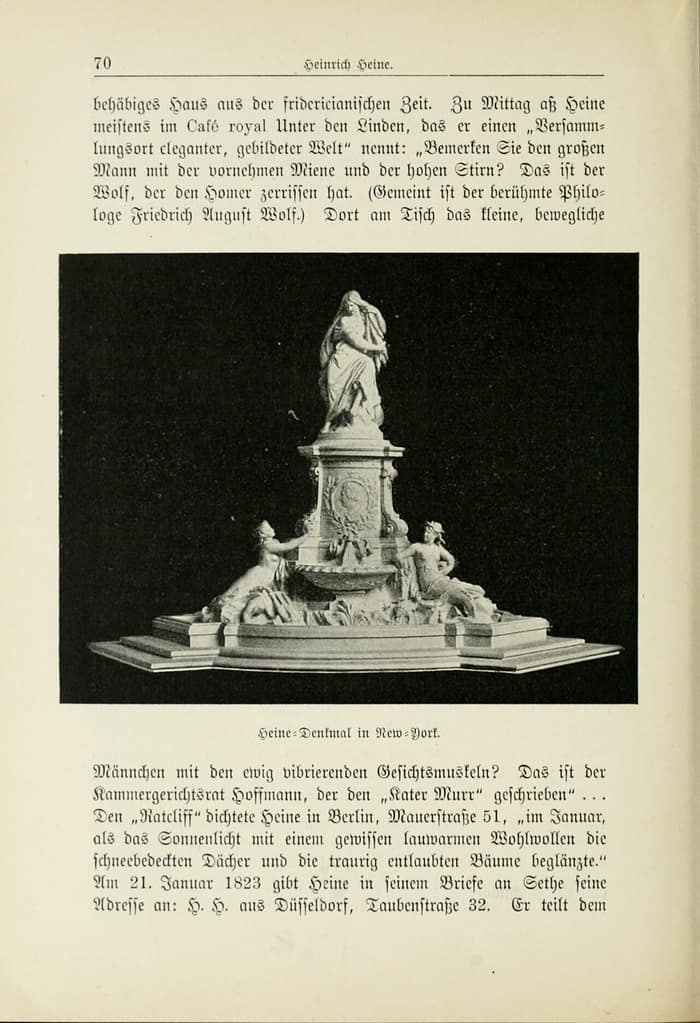
The Lorelei Fountain, the Bronx’s Exiled Heine Memorial
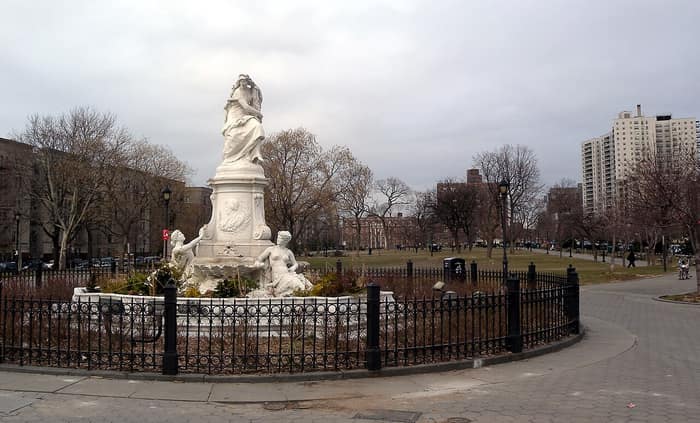
The Lorelei Fountain, also called the Heinrich Heine Memorial, stands in Joyce Kilmer Park on East 161st Street in the Concourse section of the Bronx, close to the Bronx County Courthouse. It is a free outdoor monument with sculpted mermaids and a story of political fights across two continents, a good stop for anyone looking for hidden gems in the Bronx.
A marble mermaid fountain meant for the poet Heinrich Heine’s hometown was blocked in Germany amid antisemitism, then turned down for Central Park. It ended up on the Grand Concourse in the Bronx.
The history of the Lorelei Fountain, from Düsseldorf to the Bronx
The story begins in the autumn of 1887, when a committee in Düsseldorf, the hometown of the poet Heinrich Heine, set out to raise a memorial for his 100th birthday in 1897. The Austro-Hungarian Empress Elisabeth, an admirer of the poet, sent 50,000 marks on the condition that the Berlin sculptor Ernst Herter build it. In March 1888 the city council approved the plan by a tie of eleven votes to eleven, and the idea set off fierce public debate, including pamphlets written against Heine.
By January 1889 the Empress had withdrawn her support, and public donations reached only 15,000 marks, well below the 32,000 to 40,000 that Herter estimated. Key supporters resigned. In 1893 the construction permit was withdrawn, partly because of the antisemitism that was widespread in the German Empire at the time, and the committee sued the city. Mainz then agreed to host the monument, but a newly elected city council rejected it in October 1894.
With no home in Germany, the project went abroad. A German-American singing group, the Arion Society of New York, backed it, and in 1893 members of the Little Germany community, including Carl Schurz and George Ehret, formed a Heine Memorial Association. Fundraising towards 100,000 gold marks culminated in a Heine Memorial Fair at the Lenox Lyceum in November 1895.
New York’s Board of Parks turned the project down. The National Sculpture Society judged the design weak, and the association’s hope of placing it at the Grand Army Plaza entrance to Central Park met criticism, including from the New York Times. Brooklyn, Queens and even Baltimore were considered before a state art commission, created in 1896, chose the Bronx. The fountain was unveiled on July 8, 1899, before a crowd of 4,000 to 6,000 people, with Herter present.
The monument suffered abuse almost from the start. In 1900 the arms of the mermaids were cut off, and some critics called it indecent. In 1940 it was moved and partly repaired, but later the heads of the female figures were cut off again and graffiti covered it; by the 1970s it was considered the New York statue most hurt by vandalism. Restoration plans began in 1987, the work was paid for by private donations, and the fountain reopened on July 8, 1999, three blocks from its original site.
Little-known facts about the Lorelei Fountain
- The sculptor Ernst Herter carved it in 1896 from white marble from Laas, in South Tyrol, Italy.
- The Lorelei is a female water spirit, much like a mermaid, linked to the Lorelei rock at St. Goarshausen in Germany and the subject of a poem by Heine.
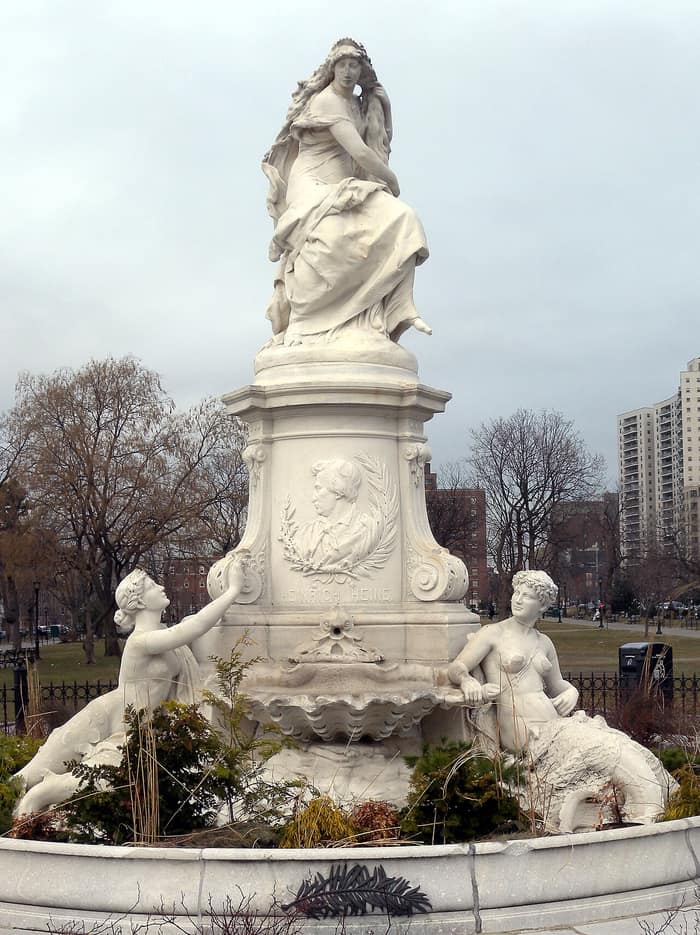
- Three mermaids sit in the fountain bowl, and the base carries figures meant to symbolize poetry, satire and melancholy, plus a relief portrait of Heine with his signature below it.
- One relief shows a sphinx embracing a young man in what Herter’s admirers read as a kiss of death, because the sphinx’s riddle goes unsolved; another shows a boy with a dunce cap pointing his pen at a dragon, a symbol of humor.
- The unveiling in 1899 was attended by an estimated 4,000 to 6,000 people, while a New York Times writer had earlier called the design academic mediocrity.
- The restoration of the 1990s combined an “Adopt a Monument” program of the Municipal Art Society with private donations, and the fountain reopened on the 100th anniversary of its unveiling.
Tours near Lorelei Fountain
Experiences in the area that you can book online with Viator:


Visiting the Lorelei Fountain in Joyce Kilmer Park
- The fountain is an outdoor monument in a public park, so it can be seen from the street. Check the current conditions of the park before you go, since a fountain may not always be running.
- It stands near East 161st Street and the Grand Concourse, across from the Bronx County Courthouse, which makes it easy to combine with a walk along the Concourse.
- Look for the details: the three mermaids in the bowl, the portrait relief of Heine and the figures on the base representing poetry, satire and melancholy.
- The park is named after Joyce Kilmer; the monument stands at one end of it. Exact placement within the park differs between sources.
- The sources mention no guided visits or special access rules for the fountain; check the park’s current rules before you go.
Opening hours, access and conditions can change. Check before you go.
Map: where Lorelei Fountain is
Photos of Lorelei Fountain
Where to stay near Lorelei Fountain
Hotels close by, with ratings and current availability.

Highbridge Hotel
Check availability ›
Melrose Hotel
Check availability ›
Opera House Hotel
Check availability ›Hotel photos: Expedia Group. Ratings are shown as published there. Availability and conditions change; check the booking page. Affiliate links: we may earn a commission at no extra cost to you. All hotels by borough
Questions
What is the Lorelei Fountain in the Bronx?
It is a white marble fountain and memorial to the German poet Heinrich Heine, designed by the sculptor Ernst Herter and unveiled in 1899 in the Bronx. It is also known as the Heinrich Heine Memorial.
Why is a German poet’s memorial in the Bronx?
Plans to build it in Heine’s hometown of Düsseldorf failed amid antisemitism and nationalist opposition in the German Empire. German-Americans in New York then raised money to bring it to the city.
Where exactly is the Lorelei Fountain?
It is in Joyce Kilmer Park in the Concourse section of the Bronx, near East 161st Street and the Grand Concourse, across from the Bronx County Courthouse.
Who or what is the Lorelei?
The Lorelei is a female water spirit, similar to a mermaid, associated with the Lorelei rock near St. Goarshausen on the Rhine in Germany. Heine wrote a poem about her.
Why was the fountain not placed in Central Park?
New York’s Board of Parks rejected it, and critics, including the New York Times, disliked the design and the idea of putting it at Grand Army Plaza. The state art commission finally chose the Bronx.
Has the fountain been damaged?
Yes. It was vandalized several times, starting in 1900, and was restored with private donations, reopening on July 8, 1999.
Also nearby

Morris–Jumel Mansion
Morris–Jumel Mansion · Washington’s 1776 headquarters
1.5 km away
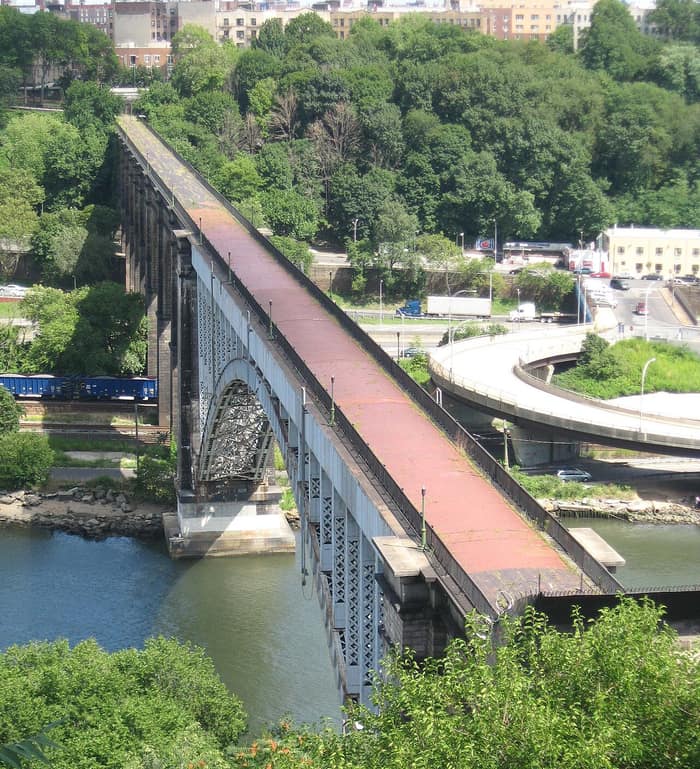
High Bridge
High Bridge · the city’s oldest bridge, now a walkway
1.5 km away
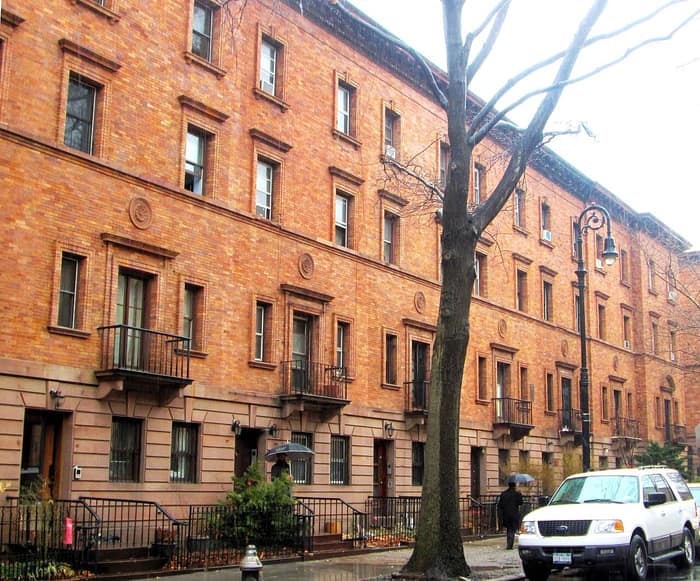
St. Nicholas Historic District (Striver’s Row)
Striver’s Row · Gilded Age row houses and a Harlem milestone
2 km away

Hispanic Society of America
Hispanic Society · Goya, Velázquez and Sorolla uptown
2 km away