
The Bennett Building, a Cast-Iron Landmark on Nassau Street
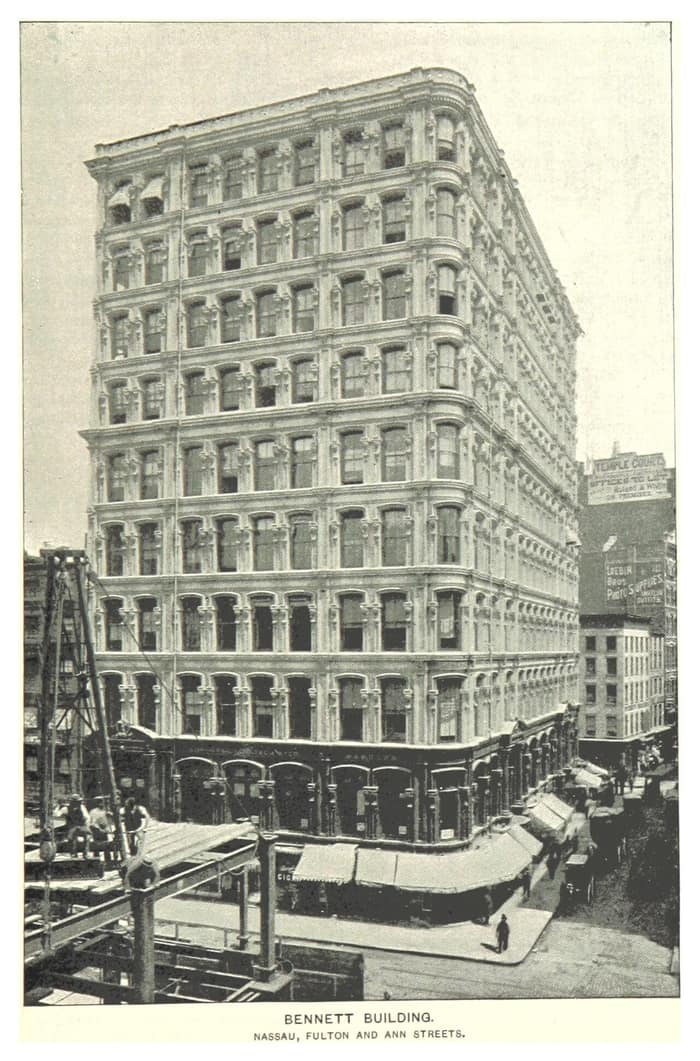
The Bennett Building fills a whole block of Nassau Street in the Financial District of Lower Manhattan, between Fulton and Ann Streets. Built in the early 1870s for the owner of the New York Herald, it is a French Second Empire office building whose three street fronts are made of cast iron. It is an easy stop for anyone looking for hidden gems in NYC, right beside the Fulton Street subway entrance.
A newspaper tycoon’s office block was once among the tallest buildings in New York. Today it hides among Nassau Street’s shops, yet its cast-iron front is the largest known anywhere.
The history of the Bennett Building, from newspaper empire to landmark
The story starts with the newspaper business. James Gordon Bennett Sr. founded the New York Herald in 1835, and within ten years it was one of the most profitable papers in the country. In 1843 he bought the northwest corner lot at Fulton and Nassau Streets and eventually owned the buildings along Fulton, Ann and Nassau Streets. In 1867 he handed the paper to his son, James Gordon Bennett Jr., who decided to replace the old buildings on the corner with a new investment property.
The architect was Arthur D. Gilman, who filed his plans in June 1872, a few days after the elder Bennett died. He proposed a seven-story cast-iron building with a mansard roof, the sloped roof typical of the French Second Empire style. It was designed with fireproofing, a precaution taken after the great fires of Chicago in 1871 and Boston in 1872, and with elevators that reportedly ran at a then-unprecedented speed. The first tenants moved in by May 1873. It was one of the tallest buildings in the city, but the location was not ideal, neither close to the courts to the north nor to the banks around Wall Street, and by the 1880s other buildings were taller.
In 1889 the real estate investor John Pettit bought the building and hired the architect James M. Farnsworth. The old mansard roof was removed and three more floors plus a penthouse were added between 1890 and 1892, followed in 1894 by an eleven-story annex on Ann Street. Farnsworth followed Gilman’s design so carefully that the additions are hard to tell apart from the original. Pettit fell into debt and left New York in 1898, and the building passed through several owners during the 20th century, with only minor changes.
In the 1980s new storefronts were added at street level and the main entrance moved to Fulton Street. In 1995 the New York City Landmarks Preservation Commission designated the building a city landmark, after preservationist Margot Gayle led a campaign to protect it. Since 2005 it is also part of the Fulton–Nassau Historic District, listed on the National Register of Historic Places. Gilman’s Bennett Building is the only building he designed that still stands in Manhattan.
Little-known facts about the Bennett Building
- The New York Times described it as probably the world’s tallest building with a fully cast-iron facade; most cast-iron buildings of its day had no more than six stories.
- It is one of only two remaining Second Empire office buildings with a cast-iron front south of Canal Street. The other is 287 Broadway.
- An 1873 advertisement in the Herald promised offices that ranged from small “cubicles” to rooms about 26 by 67 feet.
- The Ann Street annex, added in 1894, was at first considered a separate building but had no entrance of its own, which one newspaper called unique among the city’s office buildings.
- One of the building’s original street-level doorways on Fulton Street was closed because a staircase of the Fulton Street subway station was built directly in front of it.
- During the 1980s renovation the building was repainted in aqua, cream and pink, a colorful look for a cast-iron facade.
Tours near Bennett Building
Experiences in the area that you can book online with Viator:


Visiting the Bennett Building: how to see it
- The building is a commercial and office block with 159 units, seven of them residential, so it is not a museum. The best way to enjoy it is from the sidewalk, walking around all three fronts on Fulton, Nassau and Ann Streets.
- Look up above the shop windows: pilasters, arched windows, cornices and scrolled brackets repeat along each floor. The fourth side, facing a neighboring property, is plain brick.
- The Fulton Street subway station (2, 3, 4, 5, A, C, J and Z trains) has a staircase right outside the south facade, so the building is easy to reach on foot or by subway.
- Nearby you will find St. Paul’s Chapel, the Park Row Building and the Fulton Center. There are also other places from this guide within a short walk, such as Trinity Church Cemetery.
- Sources do not mention public tours or interior visits; check the current access rules if you want to enter.
Opening hours, access and conditions can change. Check before you go.
Map: where Bennett Building is
Photos of Bennett Building


Questions
What is the Bennett Building in New York?
It is a cast-iron office building in the Financial District of Lower Manhattan, designed by Arthur D. Gilman in the French Second Empire style and built for James Gordon Bennett Jr. in the early 1870s.
Can you visit the Bennett Building?
You can see it freely from the street, but it is a working office building, not a museum. Sources do not mention public interior tours, so check the current access rules before you go.
Where is the Bennett Building?
It occupies the western side of Nassau Street from Fulton Street to Ann Street, in the Financial District. Its primary address is 93-99 Nassau Street, with other entrances at 139 Fulton Street and 30 Ann Street.
Why is the Bennett Building special?
Its fully realized cast-iron facade is the largest known example in the world, and it is one of two Second Empire cast-iron office buildings left south of Canal Street.
Who was James Gordon Bennett?
Bennett Sr. founded the New York Herald in 1835. His son, Bennett Jr., ran the paper from 1867 and commissioned the building as an investment, which is why it carries the family name.
Is the Bennett Building a protected landmark?
Yes. The New York City Landmarks Preservation Commission designated it a city landmark in 1995, and it is part of the Fulton–Nassau Historic District on the National Register of Historic Places.
Also nearby

Trinity Church Cemetery
Trinity Church Cemetery · Hamilton’s grave beside Wall Street
400 m away
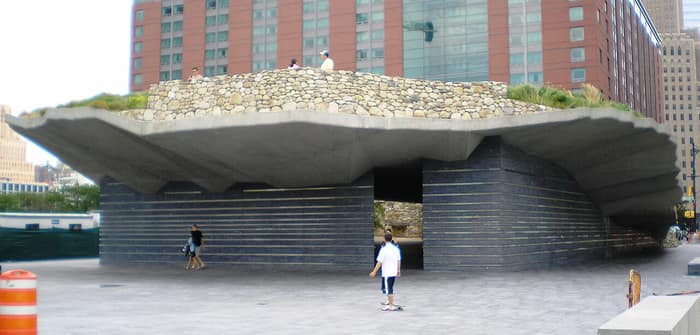
Irish Hunger Memorial
Irish Hunger Memorial · an Irish hillside with a real cottage
900 m away
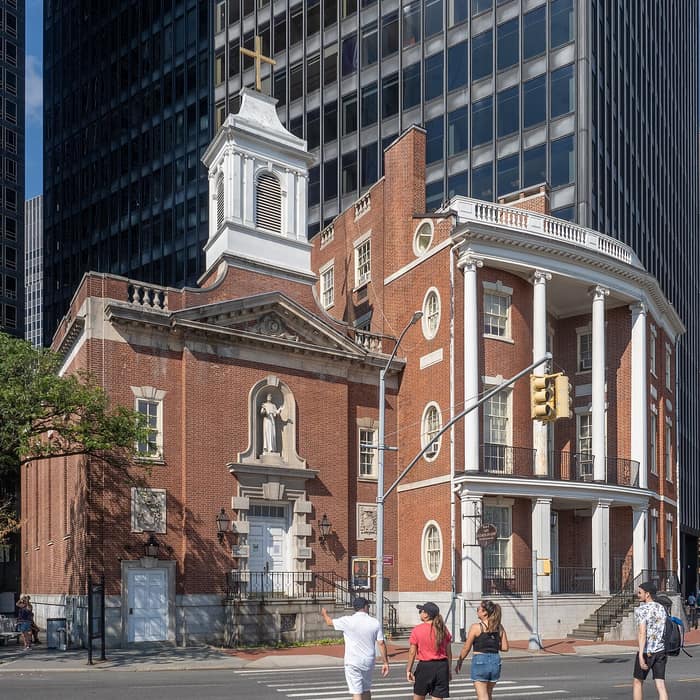
James Watson House
James Watson House · a 1793 mansion facing Battery Park
1 km away
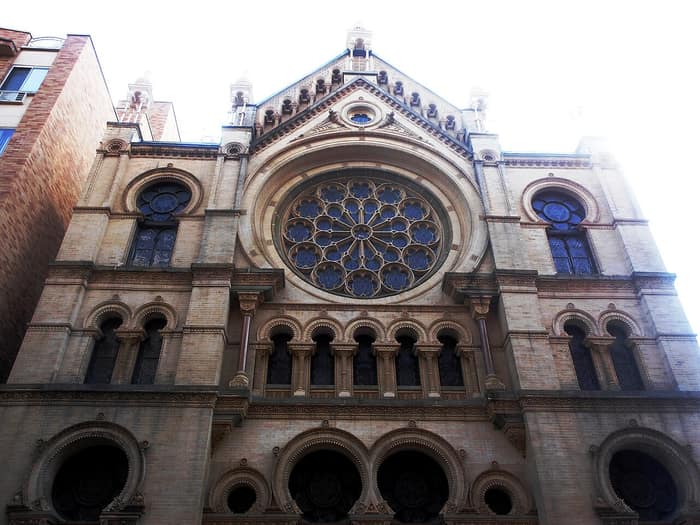
Eldridge Street Synagogue
Eldridge Street Synagogue · a sealed sanctuary reborn
1.5 km away