Ellis Island Hospital, the Hidden Side of America’s Gateway
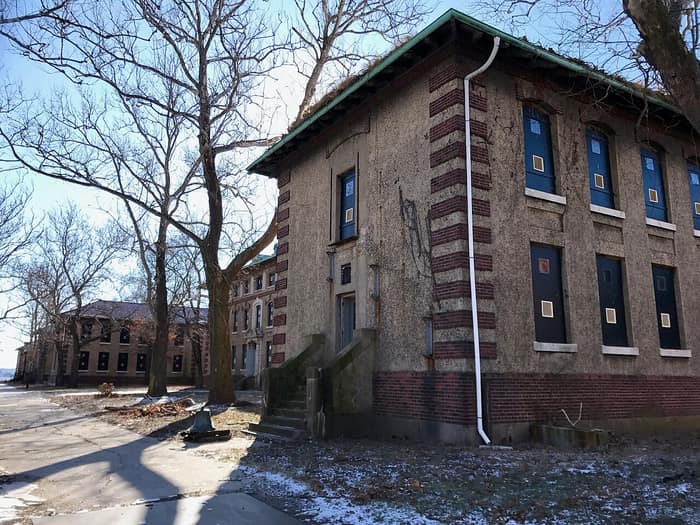
The Ellis Island Hospital, officially the Ellis Island Immigrant Hospital, is the abandoned medical complex on the south side of Ellis Island in New York Harbor. From 1902 to 1951 it treated immigrants who fell ill on arrival. It is closed to the general public, but limited guided hard hat visits have been offered since 2014.
Most visitors to Ellis Island see only the great hall, but behind it lies a ruined hospital city of 22 buildings, built on man-made islands to treat the sick arrivals who could not go ashore.
The history of the Ellis Island Hospital
Before it was an immigration station, Ellis Island held Fort Gibson, an old harbor fort later used by the Navy to store munitions. The first immigration station opened in 1892 and included a small wooden hospital. It burned down on June 15, 1897, and all 40 patients were evacuated safely. A competition was held to rebuild, and Edward Lippincott Tilton and William A. Boring won with a plan that included a new, artificial island for the hospital, built south of the original one.
The first general hospital building was raised between 1900 and 1901 and opened in 1902. Run by the United States Public Health Service, it treated a wide range of illnesses, including measles, tuberculosis, trachoma, scarlet fever and diphtheria. It was one of the first facilities in the country to employ a full-time woman physician, Rose A. Bebb. As arrivals soared, from about 493,000 in 1902 to more than a million in 1907, new buildings were added: a psychopathic ward in 1907, an administration building and a second hospital building by 1909.
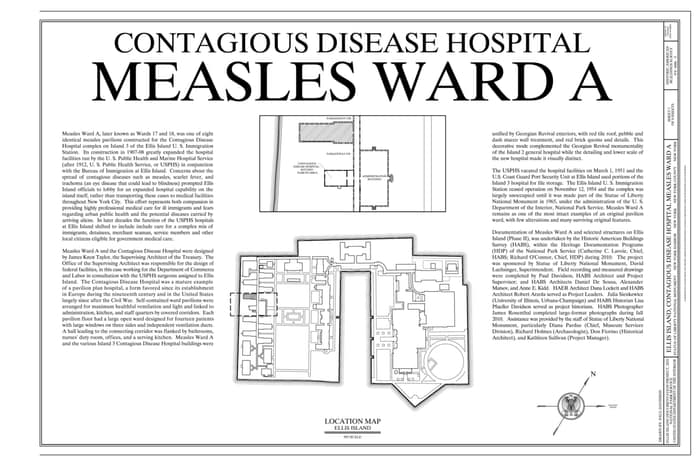
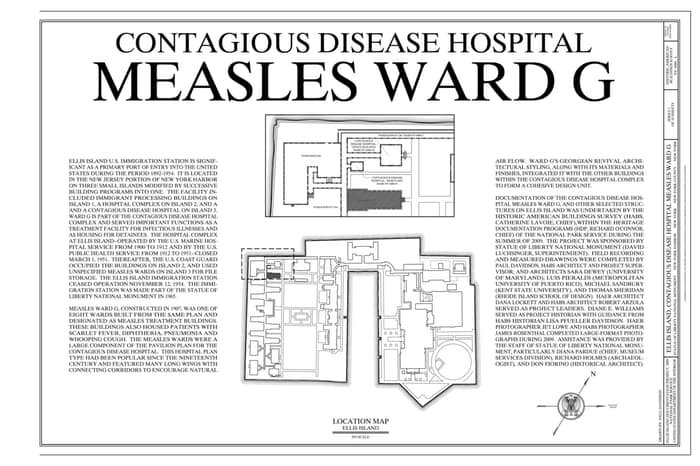
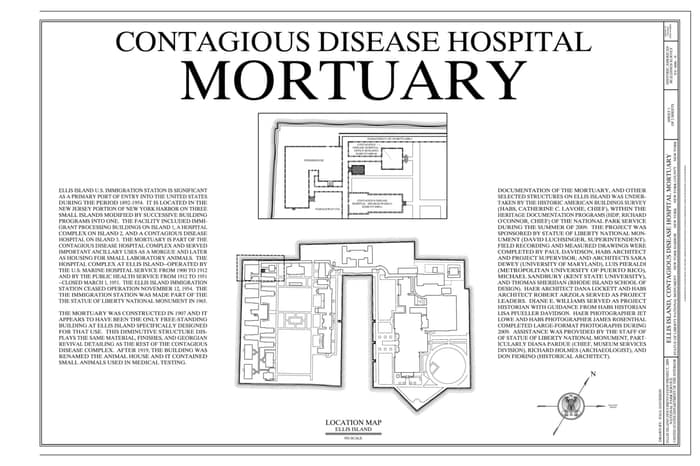
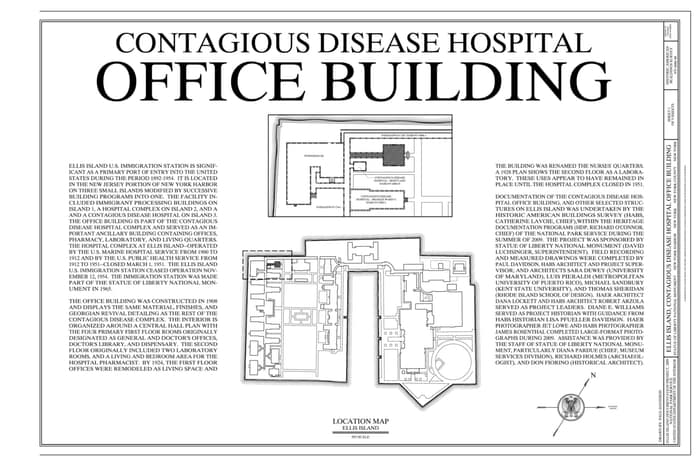
A separate hospital for contagious diseases was built on a third island, set apart by water so illness could not spread. Construction was delayed by a legal dispute between New York and New Jersey over the site, settled in 1904, and by a lack of funds for equipment. The buildings opened in 1911. They had small pavilions for measles, isolation wards for more serious infections, a morgue and an autopsy theater. Together the two hospitals held about 750 beds, and in 1914 they treated over 10,000 patients from 75 countries.
The complex had other chapters. During World War I the War Department took it over to treat wounded soldiers. In the 1920s new laws sharply reduced immigration and exams moved abroad, so the hospital increasingly treated sailors and other federal beneficiaries as well. In the 1930s New Deal programs renovated many buildings. The hospital ended its medical service in 1951 and the island was closed in 1954. Hotel and convention-center ideas for the south side never came to fruition, and in 1996 the World Monuments Fund listed the complex among the most endangered sites. Over its life it treated hundreds of thousands of patients; thousands died and several hundred babies were born here.
Little-known facts about the Ellis Island Hospital
- The land itself is man-made. Islands 2 and 3 were built with fill that included excavated material from the New York City subway, held in by wood piles and a concrete and granite sea wall.
- Tuberculosis wards had two sinks in each patient room, a higher one for spitting and a lower one for washing.
- The autopsy amphitheater, with a refrigerator for eight bodies, became a known teaching hall and drew medical observers from the United States and Europe.
- In 2014 the French street artist JR installed “Unframed – Ellis Island” murals, showing figures who might have occupied each hospital building.
- In 1923 the Daughters of the American Revolution began an occupational therapy program, later working with veterans in an entire pavilion.
- The documentary “Forgotten Ellis Island” by Lorie Conway explores these abandoned buildings and the people who passed through them.
Tours near Ellis Island Hospital
Experiences in the area that you can book online with Viator:


Visiting the Ellis Island Hospital: what you can and cannot do
- The south side of Ellis Island, including the hospital, is managed by the nonprofit Save Ellis Island Foundation and is closed to the general public. Do not try to enter on your own.
- Since 2014 the foundation has offered limited guided hard hat visits of the complex. Everyone stays with the group and wears a hard hat, and filming requires prior approval. Check the current schedule and rules before planning.
- The rest of Ellis Island, with the former immigration station, is run by the National Park Service as part of the Statue of Liberty National Monument and is reached by ferry.
- Nearby places on this site include Castle Williams and the James Watson House, a short boat or ferry hop away.
- This was a place of illness and death for some arrivals, so it is best seen with respect.
Opening hours, access and conditions can change. Check before you go.
Map: where Ellis Island Hospital is
Photos of Ellis Island Hospital

Questions
Can you visit the Ellis Island Hospital?
Only on limited guided hard hat visits, offered since 2014. The south side of the island is otherwise closed to the public, so check the current rules first.
When did the Ellis Island Hospital operate?
It operated from 1902 to 1951 under the United States Public Health Service, and the island was closed in 1954.
What diseases were treated there?
Measles, tuberculosis, trachoma, scarlet fever, favus and diphtheria, as well as tropical diseases brought from abroad.
How many buildings did the hospital have?
The complex had 22 buildings spread over two man-made islands, including a general hospital and a separate contagious disease hospital.
Why were some immigrants sent back?
The hospital treated people ill on arrival and also those whose conditions were barred by immigration law. These patients were stabilized and often sent back to their home countries.
Who is trying to save the buildings?
The nonprofit Save Ellis Island Foundation is working to restore the hospital buildings and manages the south side of the island.
Also nearby

Castle Williams
Castle Williams · round 1811 fort and former military prison
2 km away
James Watson House
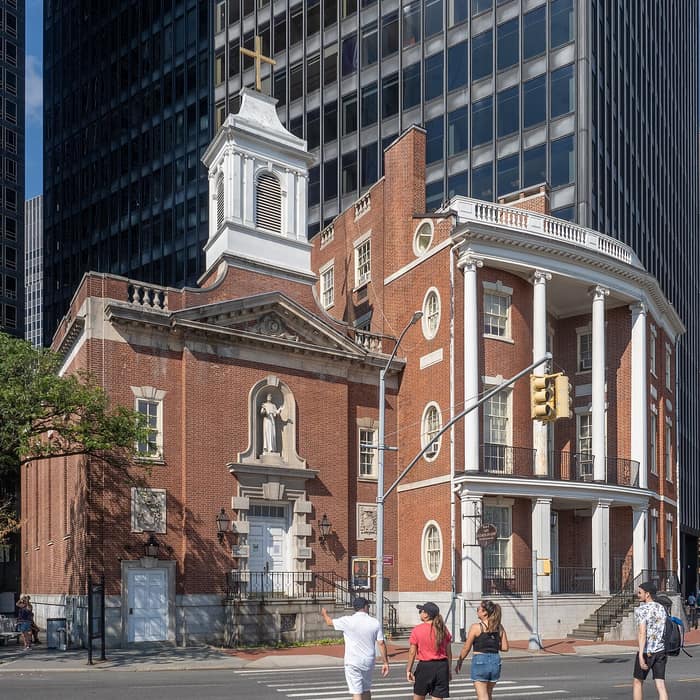
James Watson House · a 1793 mansion facing Battery Park
2.5 km away

Trinity Church Cemetery
Trinity Church Cemetery · Hamilton’s grave beside Wall Street
3 km away
Irish Hunger Memorial
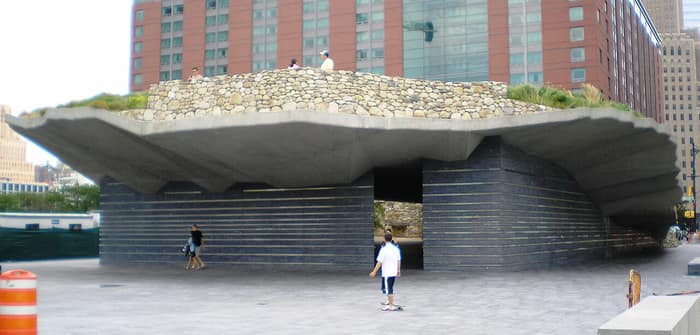
Irish Hunger Memorial · an Irish hillside with a real cottage
3 km away