Green-Wood Cemetery, Brooklyn’s Garden of Monuments and Memory
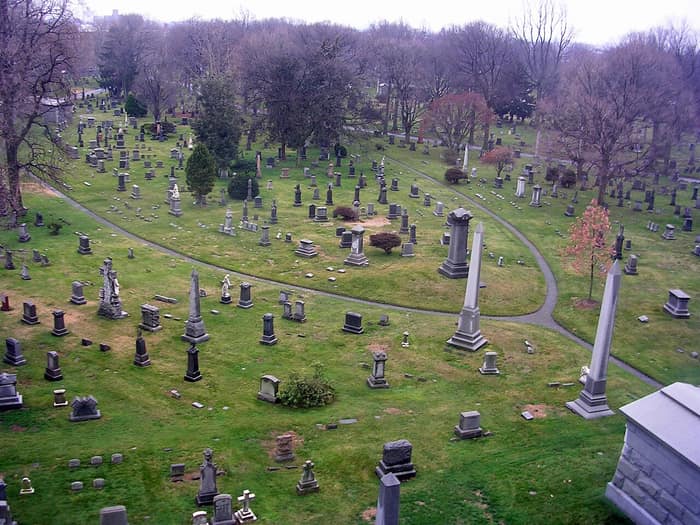
Green-Wood Cemetery is a 478-acre cemetery in western Brooklyn, founded in 1838 as a “rural cemetery,” a landscaped burial ground meant to be part park, part memorial. Rolling hills, ponds, Gothic Revival gates and thousands of monuments make it feel like another city inside Brooklyn. It is open to visitors, and its highest hill has views of the harbor and the Statue of Liberty.
In the 1860s Green-Wood drew more than 500,000 visitors a year, a crowd second in New York State only to Niagara Falls. Its hills, ponds and Gothic gates still make it one of Brooklyn’s great hidden landscapes.
The history of Green-Wood Cemetery in Brooklyn
In the early 1830s about ten thousand people a year were being buried in New York City and the then-separate city of Brooklyn, mostly in crowded churchyards that were blamed for disease. After visiting Mount Auburn Cemetery in Massachusetts, the Brooklyn civic leader Henry Evelyn Pierrepont set out to create something similar. With the engineer David Bates Douglass he chose a hilly tract of glacial moraine dotted with kettle ponds. The two considered calling it “Necropolis” before settling on a name that suggested shade and natural beauty. The cemetery was incorporated in 1838, and the first recorded burial, that of Sarah Hanna, took place on September 5, 1840.
Green-Wood soon became fashionable. The 1844 move of former governor DeWitt Clinton from Albany boosted its prestige, and churches, clubs and families bought plots. A ferry service started in 1846, and by the early 1860s the grounds drew more than 500,000 visitors a year, who picnicked and strolled among the monuments. Richard Upjohn designed the Gothic Revival main gate at 25th Street, which opened in 1862. From 1862 free burials were offered to families of New York soldiers who died in war, and the Civil War Soldiers’ Monument was dedicated in 1876, the year a memorial was raised for the unidentified victims of the Brooklyn Theatre fire. Green-Wood also helped inspire the creation of Central Park and Prospect Park.
By the early 20th century the Gilded Age elite increasingly chose Woodlawn Cemetery in the Bronx, and burials slowed. The chapel by Warren and Wetmore was finished in 1913. In the 1970s vandalism led the cemetery to restrict visitors, but by the 1990s, with space running short and many monuments deteriorating, it began to open up again, hosting its first concert in 1999, the year the Green-Wood Historic Fund was created to support preservation and programs. The chapel reopened in 2000 after decades of being closed.
Today Green-Wood is a nonprofit, still-active cemetery with about 570,000 interments as of 2024. It became a National Historic Landmark District in 2006, and its two main gates, its chapel and the Weir Greenhouse are individually designated New York City landmarks. Hurricane Sandy toppled or damaged hundreds of trees and gravestones in 2012, and in 2020 the cemetery extended its hours for people looking for open space during the pandemic. It also hosts hundreds of public events each year, including remembrance festivals from many cultures.
Little-known facts about Green-Wood Cemetery
- Battle Hill, at about 216 feet above sea level, is the highest natural point in Brooklyn and the site of a skirmish in the Battle of Long Island on August 27, 1776. A bronze Minerva placed there in 1920 looks toward the Statue of Liberty.
- A colony of monk parakeets, believed to have escaped from shipping containers in the harbor, nests in the spires of the main gate.
- Gravedigger candidates face a trial: they must be able to dig a grave of about 3 by 8 by 5 feet by hand within four hours.
- A monument to Charlotte Canda, who died in a carriage accident on her 17th birthday, is among the cemetery’s best-known Gothic memorials.
- Pet burials were banned in 1879, but a few animal graves remain; at the statue of Rex, visitors commonly leave sticks.
- Among the graves are Samuel Morse, Louis Comfort Tiffany, Leonard Bernstein, Jean-Michel Basquiat, Lola Montez and the printmakers Currier and Ives; “Boss” Tweed is buried here too.
Tours near Green-Wood Cemetery
Experiences in the area that you can book online with Viator:


Visiting Green-Wood Cemetery: what to see and the rules
- Green-Wood is open for public visitation and allows self-guided walks. It also offers guided tours, including trolley tours and tours of the catacombs.
- Highlights include the Gothic Revival main gate at 25th Street with its clock tower, the chapel near the gate, the gates at Fort Hamilton Parkway and 34th Street, and the views from Battle Hill.
- It is an active cemetery, so behave quietly. Pets and bicycles are generally banned, and active recreation and tree-climbing are prohibited.
- The cemetery is a certified birdwatching sanctuary, and the gate spires are known for their parakeets.
- A visitor center operates in the Weir Greenhouse across from the 25th Street gate. Opening hours change, so check the current schedule and rules before you go.
Opening hours, access and conditions can change. Check before you go.
Map: where Green-Wood Cemetery is
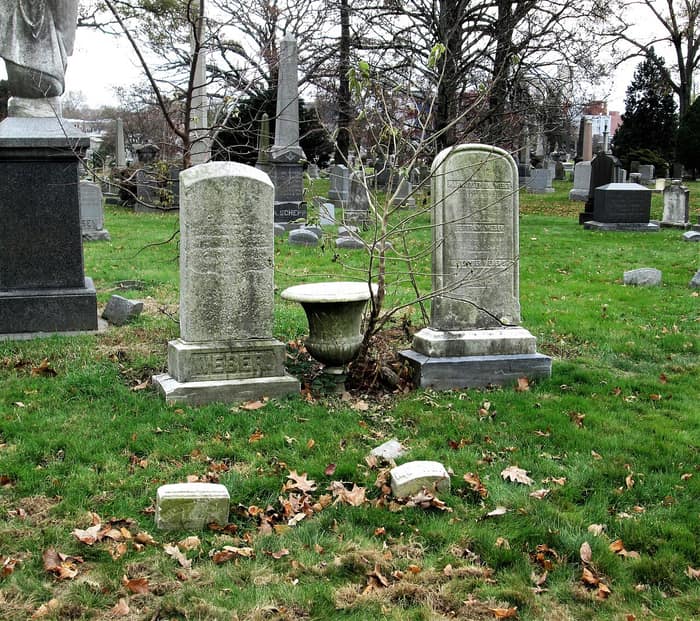
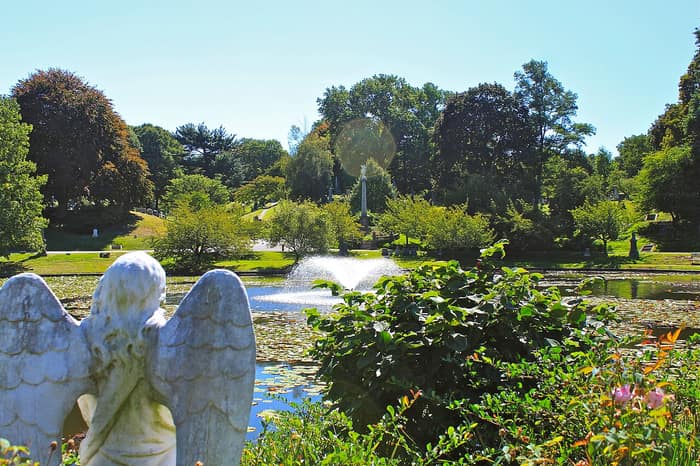
Photos of Green-Wood Cemetery

Questions
What is Green-Wood Cemetery?
Green-Wood Cemetery is a 478-acre nonprofit cemetery in western Brooklyn, founded in 1838. It holds about 570,000 graves and is a National Historic Landmark District.
Can you visit Green-Wood Cemetery?
Yes. It is open for public visitation, with self-guided walks and guided tours. Check the current opening hours and rules before you go; pets and bicycles are generally not allowed.
Who is buried at Green-Wood Cemetery?
Famous burials include Samuel Morse, Louis Comfort Tiffany, Leonard Bernstein, Jean-Michel Basquiat, Lola Montez, Henry Ward Beecher and the printmakers Currier and Ives. Over 5,000 Civil War soldiers are also buried here.
What is the highest point in Brooklyn?
Battle Hill, inside Green-Wood, at about 216 feet above sea level. It is named for a skirmish of the Battle of Long Island in 1776.
Why are there parrots at Green-Wood Cemetery?
A colony of monk parakeets nests in the spires of the main gate. They are believed to have escaped from containers in transit at the harbor.
How do you get to Green-Wood Cemetery?
It has four gates around its edges. One is next to Sunset Park and the 36th Street subway station, and the main gate is at 25th Street and Fifth Avenue.
Also nearby
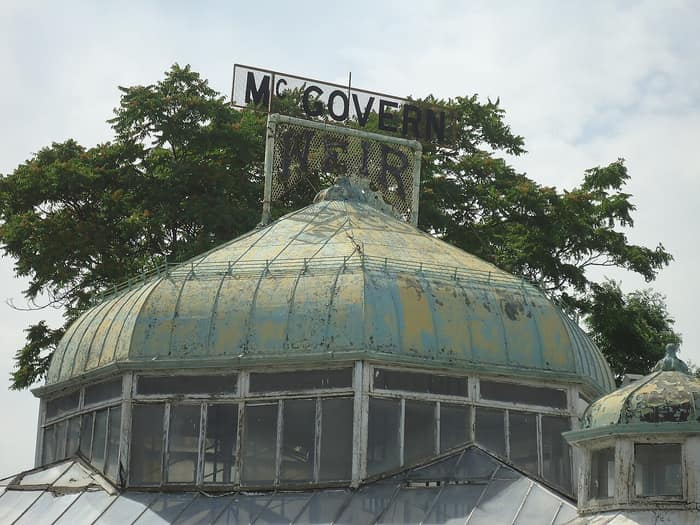
Weir Greenhouse
Weir Greenhouse · an 1895 glass-and-iron greenhouse by Green-Wood
900 m away
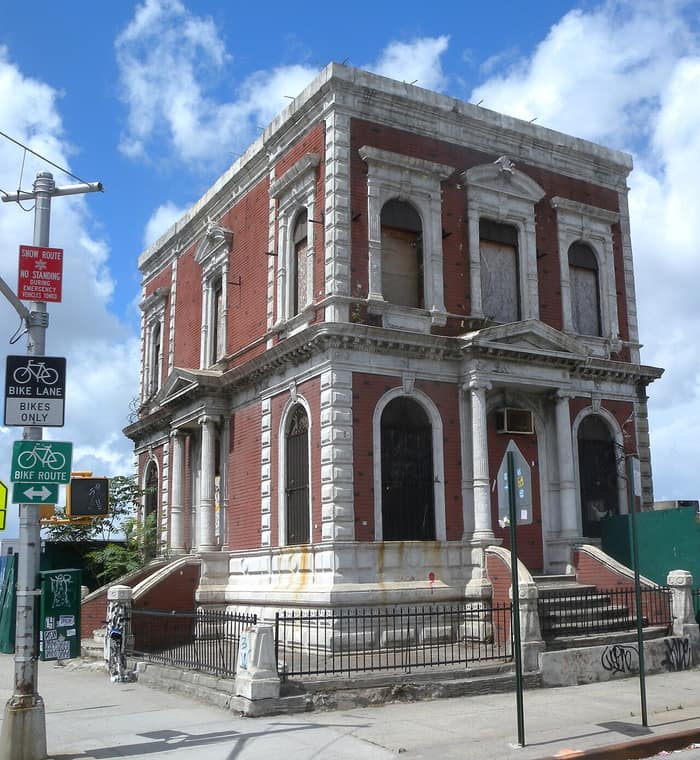
Coignet Stone Company Building
Coignet Building · New York City’s oldest concrete building
2.5 km away
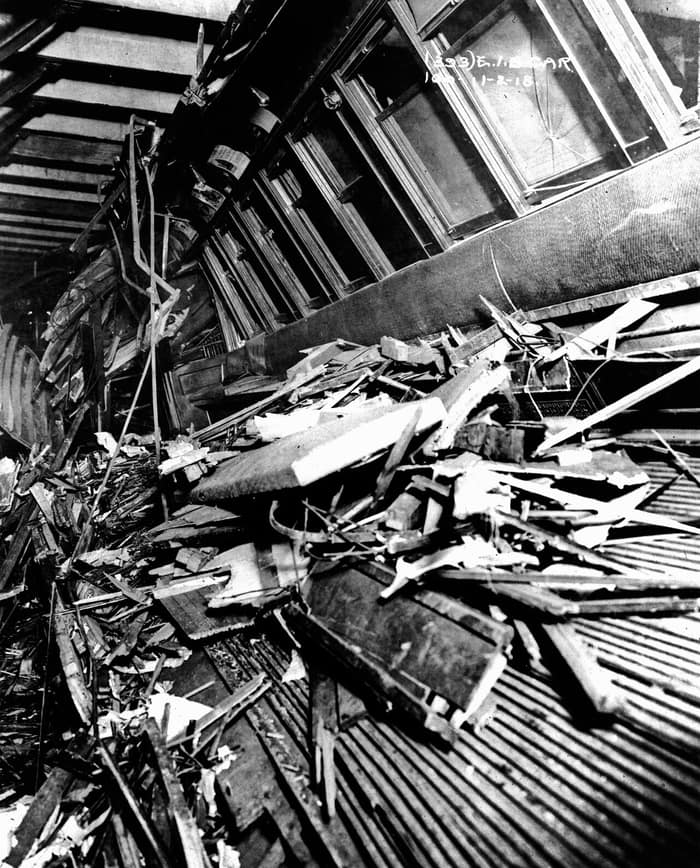
Malbone Street Wreck
Malbone Street Wreck · the deadliest crash in NYC subway history
2.5 km away
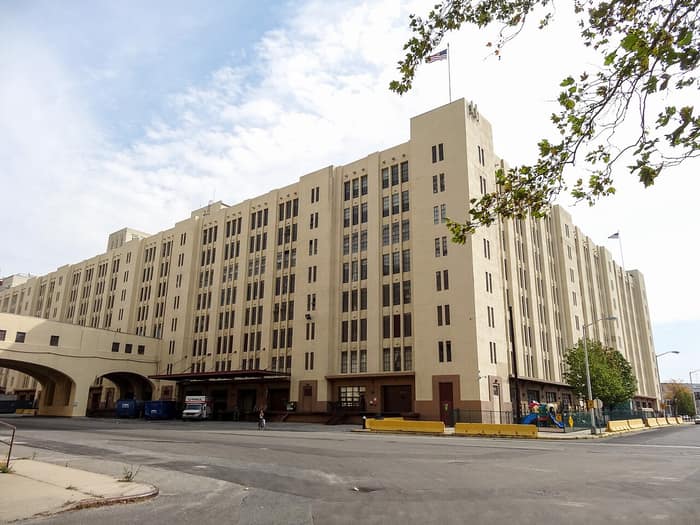
Brooklyn Army Terminal
Brooklyn Army Terminal · the Army’s giant concrete supply base
3.5 km away