The Malbone Street Wreck, Brooklyn’s Forgotten Subway Disaster
The Malbone Street wreck happened on November 1, 1918, in the tunnel beneath Willink Plaza at Prospect Park in Flatbush, Brooklyn. At least 93 people died, making it the deadliest crash in the history of the New York City Subway. Today nothing remains to see except a memorial plaque and the street corner, but the story is one of the most striking pieces of hidden transit history in the five boroughs.
A street was renamed to erase a disaster. In 1918 a train carrying about 650 people hurtled into a curved tunnel in Brooklyn at several times the safe speed, and Malbone Street soon vanished from the map.
The history of the Malbone Street wreck, November 1, 1918
On the evening of Friday, November 1, 1918, a five-car elevated train made mostly of wood approached the Prospect Park station on the Brighton Line of the Brooklyn Rapid Transit Company, known as the BRT. It carried about 650 passengers at the end-of-week rush hour. At 6:42 p.m. it entered a short single-track tunnel under Malbone Street, where a sharp S-shaped curve was meant to be taken at about 6 mph. Estimates put the train at between 30 and 40 mph.
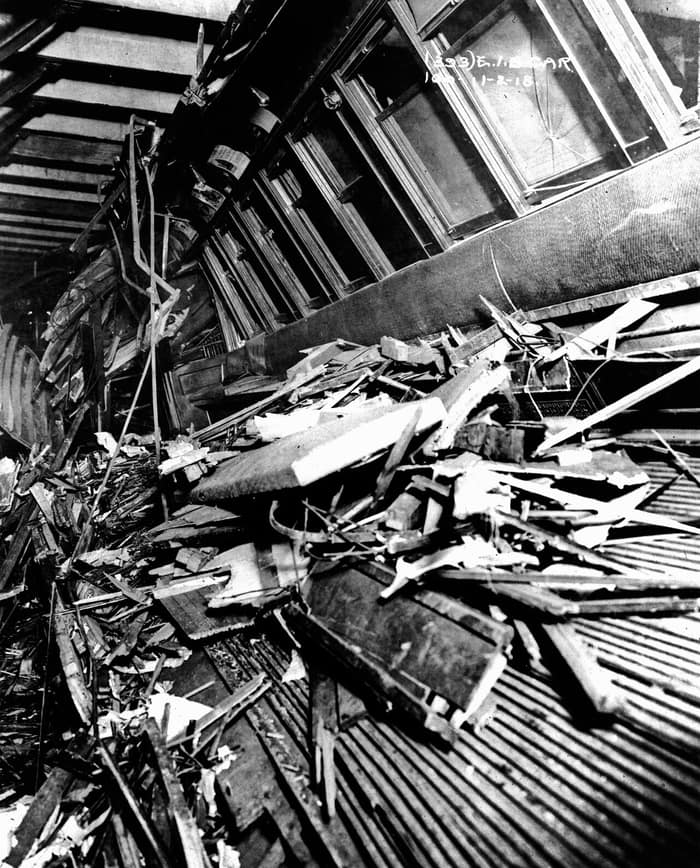
The back wheels of the first car left the rails and the next two cars came completely off the track, scraping against the tunnel walls and tearing away their left-hand sides and most of their roofs. Passengers were trapped in a dark tangle of splintered wood, glass and iron. Rescuers needed about 45 minutes to reach everyone. The nearest hospital was already full of patients from the Spanish flu epidemic, so a makeshift infirmary for the injured was set up at the nearby Ebbets Field baseball stadium.
Several circumstances combined that day. Some of the company’s motormen had gone on strike that morning, and the BRT kept trains running with other staff. The motorman, Antonio Edward Luciano, was a crew dispatcher who had never driven a passenger train on this line and had received less than three hours of classroom instruction, against a norm of no fewer than 90 hours. The tunnel with its serpentine curve had opened only weeks earlier. Two lighter trailer cars were coupled together between the heavier motor cars, against the usual practice. Investigators found the brakes were in working order and that no emergency braking had been attempted.
The reported death toll ranged from 93 to 102, with about 250 injured; a report more than three years later concluded that 91 people had died. The city blamed the company and charged Luciano and BRT officials with manslaughter. The trial was moved to Mineola, in Nassau County, to ensure a fair hearing, but by 1921 all of the defendants had been acquitted or had their indictments dropped. The BRT, weighed down by damage claims, went into receivership, and its successor, the Brooklyn–Manhattan Transit Corporation, took over paying them in 1923.
The disaster pushed the industry to retire wooden equipment and add safety devices such as speedometers, headlights, better dead-man’s controls and automatic trackside train stops. In December 1918 the city renamed most of Malbone Street as Empire Boulevard, a name it still bears; only a detached one-block stretch in Crown Heights keeps the old name. The tunnel stayed in daily passenger use for forty years. On November 1, 2019, a bronze plaque was installed at the north exit of the Prospect Park station and the corner was co-named “Malbone Centennial Way”.
Little-known facts about the Malbone Street wreck
- The accident is also known as the Brighton Beach Line accident, and it is the third-deadliest train crash in American history according to Wikipedia.
- After the crash, Luciano adopted the name Anthony Lewis, became a house builder in Queens and later retired to Arizona, where he died in 1985 at the age of 91.
- Two of the damaged cars, trailers 80 and 100, were scrapped, while the three motor cars were repaired and returned to service.
- Another accident happened at the same spot in 1974, when a slow train derailed because of a split switch; no one was hurt.
- The old name survives on a single detached block of Malbone Street in Crown Heights, a reminder of the street that was renamed after the disaster.
- A Brooklyn neighborhood newspaper serialized a fictional comic strip in 2018 about a ghost train inspired by the wreck; it is a work of fiction, not a documented legend.
Tours near Malbone Street Wreck
Experiences in the area that you can book online with Viator:


Visiting the Malbone Street wreck site
- The site is a normal street corner and can be seen freely from the sidewalk. The memorial plaque is at the north exit of the Prospect Park subway station, at the junction of Flatbush Avenue and Empire Boulevard.
- The tunnel where the crash happened is still part of the line used by the Franklin Avenue Shuttle, but it is not in regular passenger service and is not open to visitors. Do not try to enter any subway tunnel.
- Prospect Park is right next door, so the stop combines easily with a walk in the park. The other places on this site nearby include Green-Wood Cemetery, the Prison Ship Martyrs’ Monument and Weeksville Heritage Center.
- The wreck is a tragedy in which many people died. Visit with respect; the plaque is brief, so read about the history beforehand.
Opening hours, access and conditions can change. Check before you go.
Map: where Malbone Street Wreck is
Photos of Malbone Street Wreck

Questions
What was the Malbone Street wreck?
It was a subway and elevated train derailment on November 1, 1918, in a curved tunnel near Prospect Park in Flatbush, Brooklyn. At least 93 people died, making it the deadliest crash in NYC subway history.
Why did the Malbone Street wreck happen?
Several factors combined: an inexperienced motorman pressed into service during a strike, a train traveling many times faster than the speed allowed on the sharp curve, a newly opened tunnel and an unusual coupling of heavy and light cars.
Where did the Malbone Street wreck take place?
In the tunnel beneath Willink Plaza, where Flatbush Avenue, Ocean Avenue and Malbone Street, now Empire Boulevard, meet beside Prospect Park in Brooklyn.
Why is Malbone Street no longer on the map?
Weeks after the disaster the city renamed most of the street as Empire Boulevard. Only a detached one-block section in Crown Heights still carries the name Malbone Street.
Is there a memorial to the Malbone Street wreck?
Yes. A bronze plaque was installed on November 1, 2019, at the north exit of the Prospect Park station, and the nearby corner was co-named “Malbone Centennial Way”.
Can I visit the tunnel of the Malbone Street wreck?
No. The tunnel is an operating rail structure and is not open to the public. You can see the area from the street and read the plaque at the station exit.
Also nearby
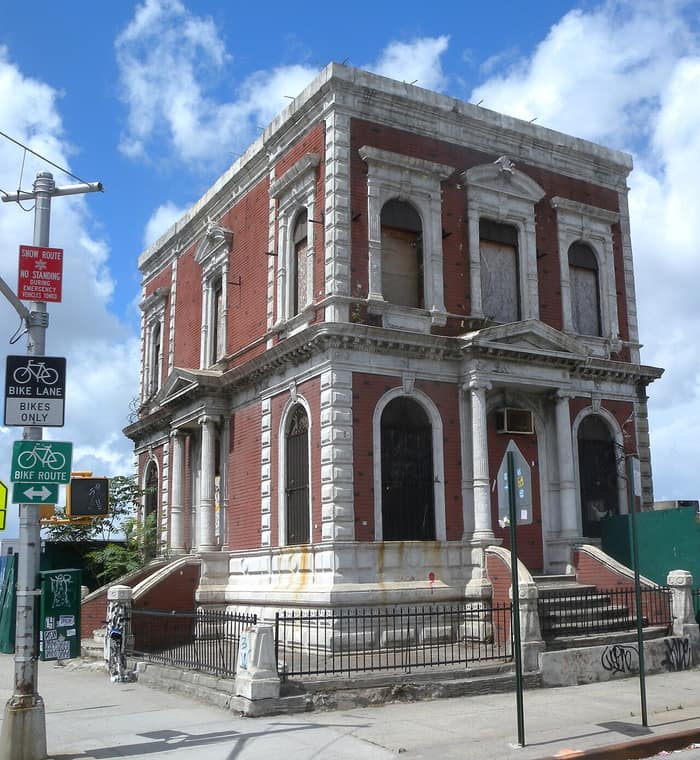
Coignet Stone Company Building
Coignet Building · New York City’s oldest concrete building
2.5 km away
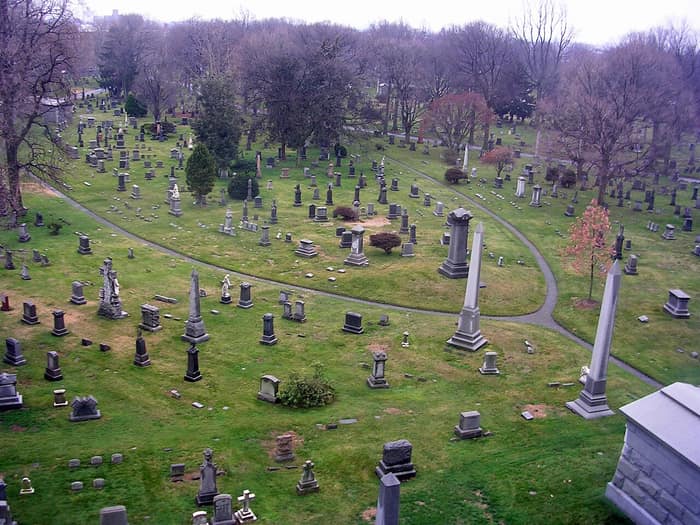
Green-Wood Cemetery
Green-Wood Cemetery · Brooklyn’s 478-acre Victorian garden cemetery
2.5 km away
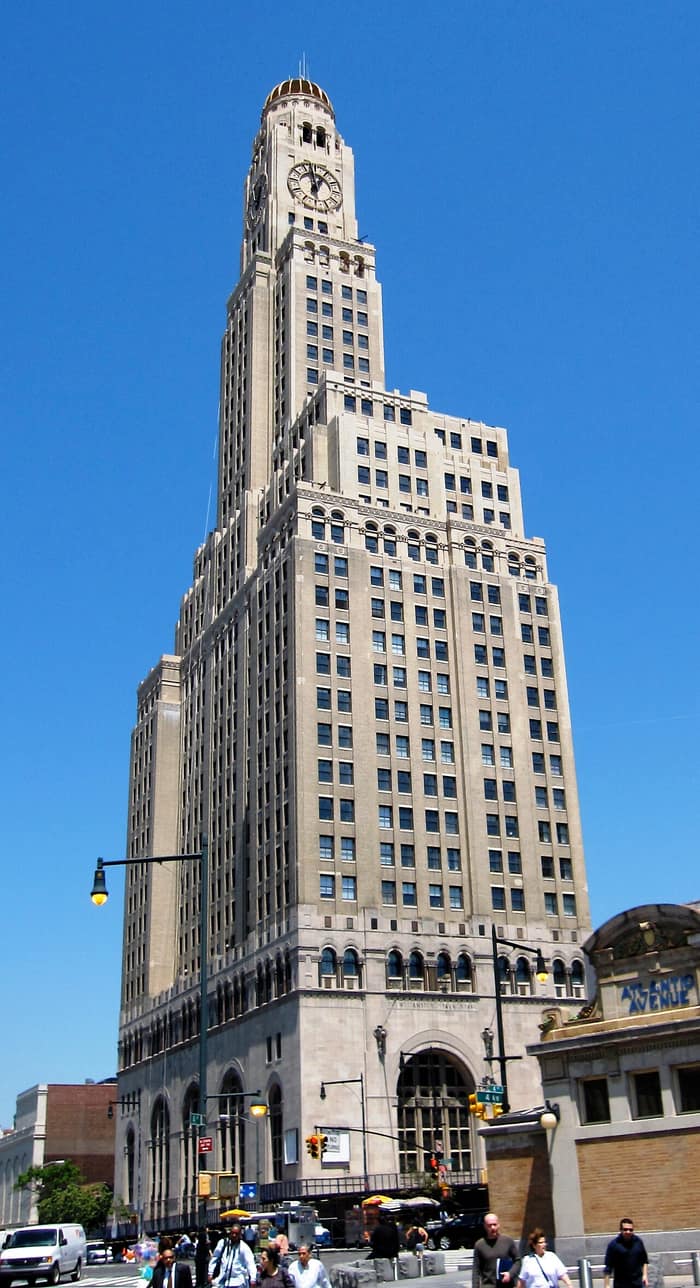
Williamsburgh Savings Bank Tower
Williamsburgh Savings Bank Tower · Brooklyn’s clock tower with a banking hall like a cathedral
3 km away
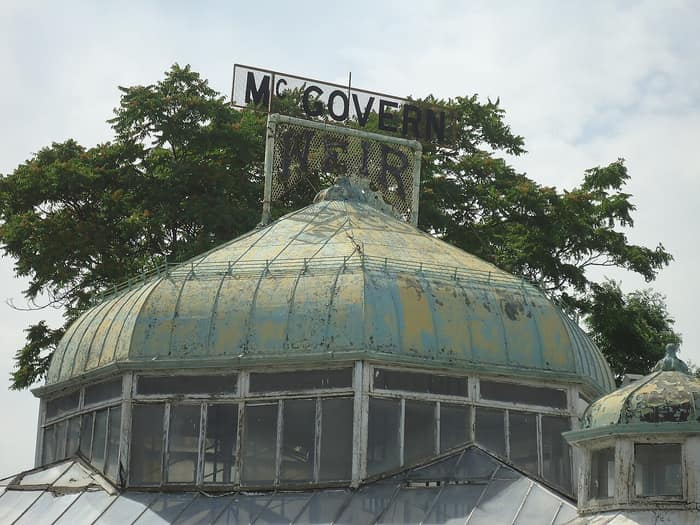
Weir Greenhouse
Weir Greenhouse · an 1895 glass-and-iron greenhouse by Green-Wood
3 km away