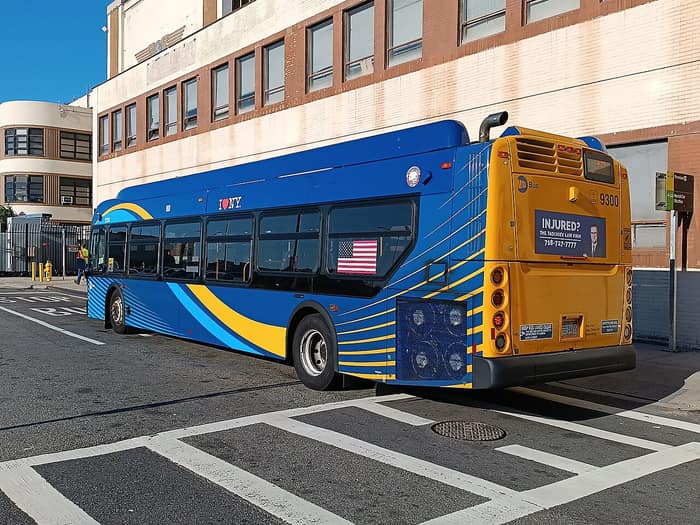
Marine Air Terminal, the Art Deco Flying-Boat Terminal at LaGuardia
The Marine Air Terminal, also called Terminal A, is the Art Deco gem at the western end of LaGuardia Airport in Queens. It opened in 1940 to serve transatlantic flying boats and is the only airport structure from that era still standing. Its round rotunda, flying-fish frieze and 237-foot mural make it a quiet detour for architecture and aviation fans.
In 1940 passengers boarded Pan Am’s Boeing 314 Clippers here for Lisbon. Twelve years later the airline had left, the huge mural in the rotunda had been painted over, and the building was almost forgotten.
The history of the Marine Air Terminal, from flying boats to shuttle flights
After Charles Lindbergh’s flight across the Atlantic in 1927, commercial flying grew fast in the United States. Mayor Fiorello H. La Guardia, angry that a flight whose ticket said “New York” had landed in Newark, New Jersey, pushed for an airport inside the city. The city leased the old North Beach Airport in Queens in 1934, and plans of 1937 added a terminal for seaplanes on Bowery Bay. The firm Delano & Aldrich designed it, and the federal Works Progress Administration (WPA) helped pay for it.
The expanded airport opened in October 1939, but construction in the bay delayed the seaplane terminal until March 1940. Pan American Airways planned to use it as the main U.S. base for its Boeing 314 Clippers, and foreign airlines such as Imperial Airways, Air France and KLM were also allowed to use it. On March 31, 1940, a Clipper left for Lisbon with ten crew members and nine passengers, landing 18 hours and 35 minutes later in a record time for an eastbound Clipper. During World War II soldiers flew from here to Europe and Africa, and figures such as Eleanor Roosevelt and Winston Churchill passed through.
The era of the flying boat was short. Seaplanes were more affected by weather and tides, and fast four-engine land planes soon outperformed them. Pan Am stopped using its 314s here in 1945, and in 1946 the terminal was reworked for land planes, renamed the International Air Terminal and made busy with customs queues and up to ten overseas flights at a time. Then Idlewild Airport, today’s John F. Kennedy International, opened in 1948. The last transatlantic flight left in April 1951, Bermuda flights ended in early 1952, and the Flight mural in the rotunda was painted over around that time.
For decades the building was mostly a quiet general aviation terminal for private planes, with a short spell in the 1950s as a base for Northeast Airlines. Preservation efforts began in the late 1970s, and the mural was restored and rededicated in 1980. That same year the exterior and part of the interior became a New York City landmark, and the terminal was added to the National Register of Historic Places in 1982. In 1986 the Pan Am Shuttle began flying from the terminal, followed by the Delta Shuttle from 1991 until 2017, and the building was restored again in the late 1990s and in 2004.
After 2017 the terminal hosted several carriers. The most recent reports say it became vacant in May 2026, when Spirit Airlines, its only tenant, shut down. In November 2025 the Port Authority had announced plans to replace the later passenger facilities while keeping the original rotunda unchanged. Because the situation is still changing, plan with care and check what is open before you go.
Little-known facts about the Marine Air Terminal
- Its frieze of yellow flying fish on blue waves is made of 2,200 individual terracotta tiles.
- The mural Flight by James Brooks measures about 12 by 237 feet and was the largest mural of the WPA, the Depression-era federal arts program.
- Nobody is sure why the mural was painted over in 1952; one theory points to anti-communist sentiment, while an airport official said the rotunda simply looked dingy. It was rediscovered in 1973.
- In 1960 The New York Times described the terminal as having “an air of decay and desolation”, with almost no passengers.
- The former seaplane hangar still exists as Hangar 7 and is used as a garage for the airport’s snow-removal vehicles; a bird sculpture called Spirit of Flight crowns its roof.
- Between 1987 and 2000 a ferry service linked the terminal with Manhattan, and in the 1960s there was a hydrofoil shuttle plan to East 25th Street and Wall Street.
Tours near Marine Air Terminal
Experiences in the area that you can book online with Viator:


Visiting the Marine Air Terminal: what to know
- The terminal is part of LaGuardia Airport, which means airport security and access rules apply. The building’s status changed in 2026 after its last airline left, so check whether the rotunda is open to the public before you plan a trip.
- The main sights are the rotunda with its marble floors and stainless-steel details, the Flight mural above the walls, and from outside the buff brick facade with its flying-fish frieze and curved steel canopy.
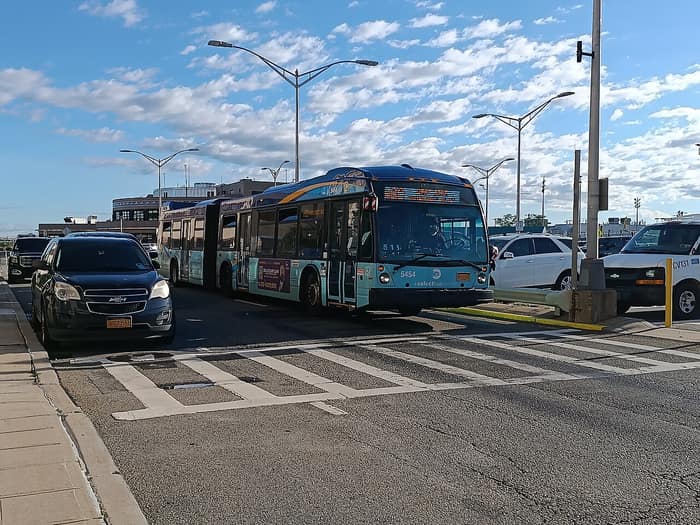
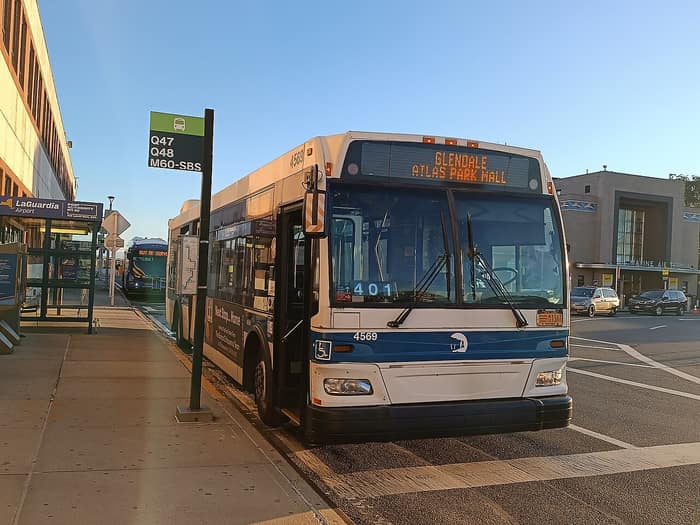
- The terminal sits on Bowery Bay, at the end of Marine Terminal Road. In the past it has been served by the Q33 and M60 SBS buses and by an airport shuttle bus; confirm the current routes before you go.
- There is no organized visit to the old seaplane hangar, which is a working garage. Do not try to enter airfield areas.
Opening hours, access and conditions can change. Check before you go.
Map: where Marine Air Terminal is
Photos of Marine Air Terminal
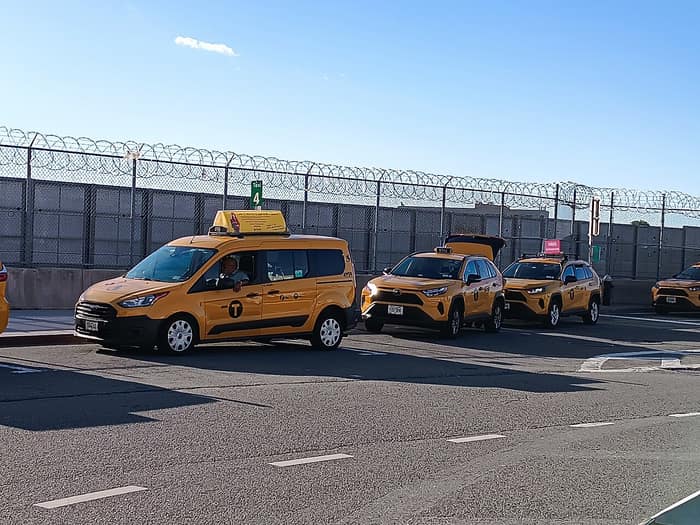
Questions
What is the Marine Air Terminal?
It is the Art Deco terminal at LaGuardia Airport in Queens that opened in 1940 for Pan Am’s transatlantic flying boats. It is also known as Terminal A and is a New York City landmark.
Why is the Marine Air Terminal famous?
It is the last structure of the airport’s original 1940s design, and it holds the Flight mural, the largest WPA mural, together with a flying-fish frieze and a rotunda with marble and stainless steel.
Where is the Marine Air Terminal?
At the western end of LaGuardia Airport, along the southern shore of Bowery Bay in Queens, New York City.
Can I visit the Marine Air Terminal without flying?
Access depends on the airport’s rules and on how the building is used, which changed in 2026 when its last airline left. Check the current situation with the airport authority before you go.
What happened to the mural in the Marine Air Terminal?
The Flight mural was painted over in 1952 for reasons that are unclear, rediscovered in 1973 and restored by 1980. It was restored again as part of the airport’s redevelopment.
Are there still seaplanes at the Marine Air Terminal?
No. Seaplane service ended in the 1940s and Clipper flights stopped using the terminal by 1952. The old seaplane hangar is now a garage for snow-removal vehicles.
Also nearby
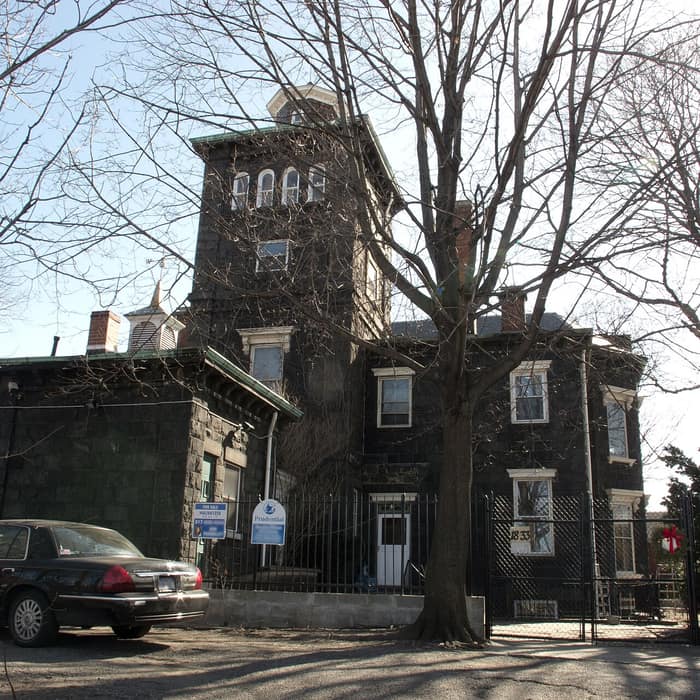
Steinway Mansion
Steinway Mansion · a 19th-century villa hidden in Astoria
1 km away
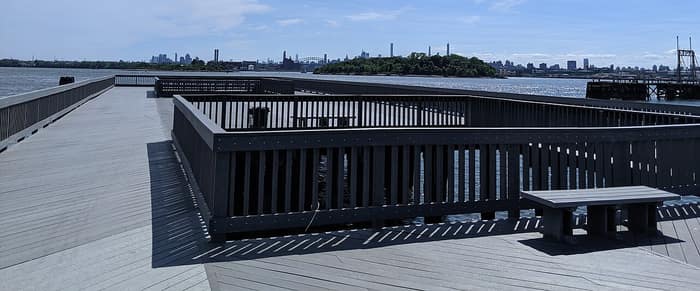
South Brother Island
South Brother Island · a closed East River island for herons
2.5 km away
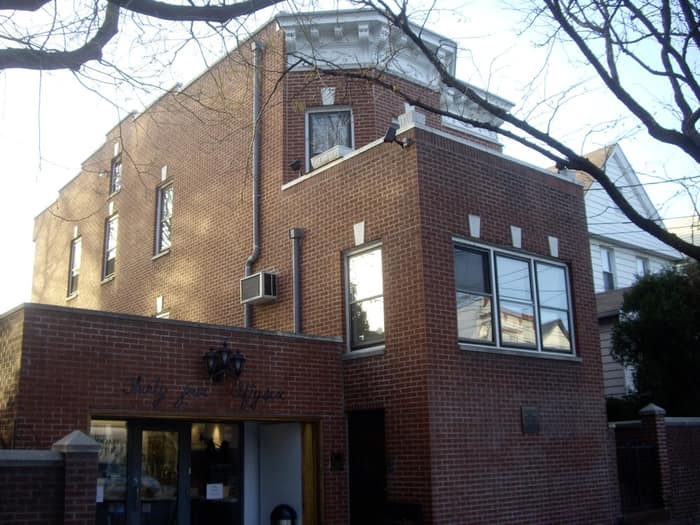
Louis Armstrong House
Louis Armstrong House · where the jazz giant lived in Corona
3 km away
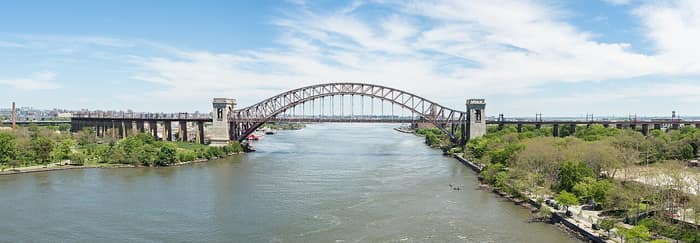
Hell Gate Bridge
Hell Gate Bridge · a 1917 steel rail arch over the East River
3 km away