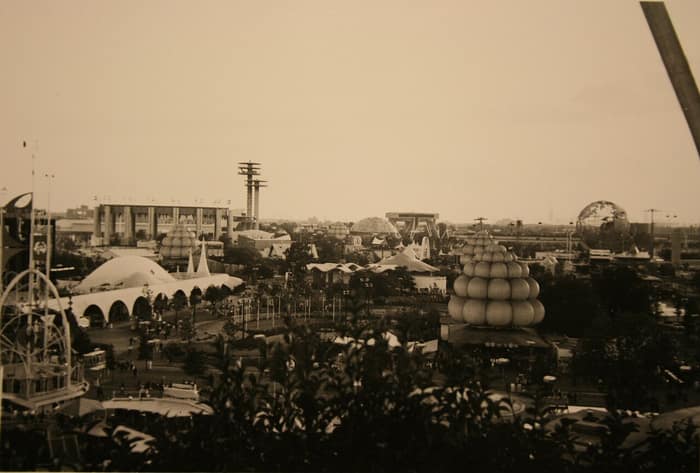
New York State Pavilion, the World’s Fair Relic in Queens
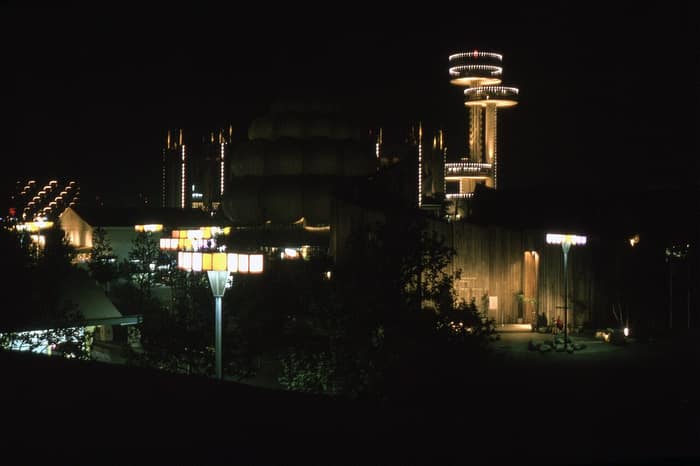
The New York State Pavilion is a trio of concrete-and-steel structures in Flushing Meadows–Corona Park, Queens, designed by Philip Johnson for the 1964 New York World’s Fair. Its elliptical Tent of Tomorrow and three observation towers are among the most recognizable relics of the fair, and one of the most unusual landmarks in the five boroughs. Most of it is closed to visitors, but it can be seen from the park.
Built for the 1964 World’s Fair as the tallest structure on the grounds, this Space Age pavilion served as a concert hall and roller rink, sat abandoned for decades, and even played a flying saucer in Men in Black.
The history of the New York State Pavilion
Robert Moses, the parks commissioner and president of the World’s Fair Corporation, proposed a pavilion for New York State as early as January 1960. In February 1962 the state agreed to sponsor an exhibit at the 1964 fair, and Philip Johnson was hired that summer, working with the architect Richard Foster and the structural engineer Lev Zetlin. Governor Nelson Rockefeller wanted it to be the tallest structure at the fair, which is why the three observation towers were added. The groundbreaking took place on October 8, 1962, and construction was marked by protests over the hiring of Black workers and by a rising final cost.
The pavilion opened on April 23, 1964, and was one of the most popular at the fair. The Tent of Tomorrow, with its colorful translucent roof and a giant terrazzo road map of New York State on the floor, hosted concerts, fashion shows and exhibits. The towers held an observation deck, a lounge and food stands, and the Theaterama showed short films about the state. By August 1964 nearly 1.4 million people had ridden the tower elevators. The fair closed after two seasons, on October 18, 1965.
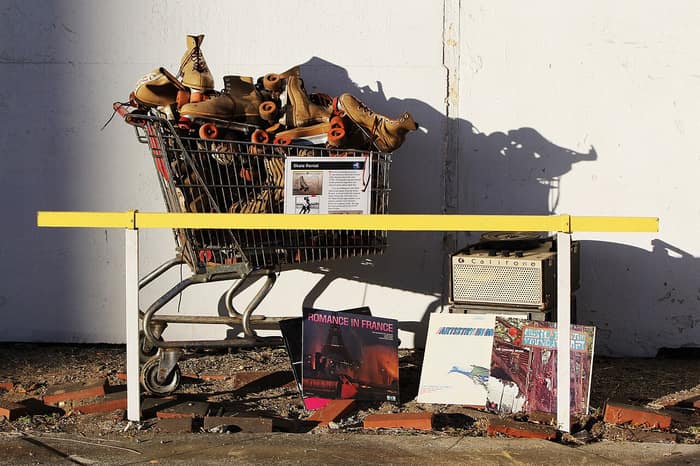
Almost every other fair building was demolished, but this one stayed. Moses wanted to keep it, and in December 1965 the city’s Board of Estimate voted to preserve it; Johnson later recalled that the high cost of demolition was a main reason. The parks department took over in 1967, and the Theaterama became a theater. In the early 1970s the Tent of Tomorrow hosted rock concerts by acts such as Led Zeppelin and the Grateful Dead, and from 1972 it was a roller rink. In 1974 severe roof damage forced the city to close it, and the roof panels were removed in the late 1970s. The observation towers never reopened.
After a brief reopening for children’s entertainment in the 1980s, the tent was closed over safety concerns and left to decay. The Queens Theatre began performing in the Theaterama in 1989. By the late 20th century the tent and towers were abandoned, one of the tower elevators was stuck in midair, and in 2008 the elevators were removed. The pavilion joined the World Monuments Watch list of endangered sites in 2008 and was added to the National Register of Historic Places in 2009.
Debate over demolition continued until 2013, when the city decided against knocking it down after strong public opposition. Volunteers and unions repainted the Tent of Tomorrow in the mid-2010s, and an international ideas contest in 2016 drew 250 entries. A major renovation of the tent and the three towers began in November 2019. The first phase was finished in April 2023, and since then the structures have been lit at night; later work on the towers was still under way, with the planned completion date pushed back more than once.
Little-known facts about the New York State Pavilion
- The Tent of Tomorrow floor held a huge Texaco road map of the state made of 567 terrazzo panels. Neglect and vandalism ruined it, and the original terrazzo was replaced in the 2019 renovation, although a small number of original tiles were kept.
- At the time of construction its cable suspension roof was described as the largest in the world, and the fair was exempt from New York City building code, which did not allow such roofs elsewhere in the city then.
- The tallest tower, 226 feet (69 m) high, was the highest structure at the 1964 fair; its height today is limited by the proximity of LaGuardia Airport.
- Skateboarders have used the pavilion’s ledges, steps and fountain grates since the early 1990s, and they have appeared in skateboarding videos.
- In the film Men in Black the towers were presented as disguised flying saucers, and a replica of them appears in the Men in Black: Alien Attack ride at Universal Studios Florida.
- Two World’s Fair time capsules are buried near the pavilion.
The New York State Pavilion on screen
The pavilion’s towers and concourse have served as a film and television set, according to Wikipedia.
- The Wiz (1978) – Director Sidney Lumet shot scenes at the pavilion for this film.
- Men in Black (1997) – The pavilion’s exterior is used as a setting, with the towers presented as disguised flying saucers.
- CSI: NY (2009) – A 2009 episode of the series was filmed at the pavilion.
- Iron Man 2 (2010) – The structure appears as an exhibit of Stark Industries.
Tours near New York State Pavilion
Experiences in the area that you can book online with Viator:

Visiting the New York State Pavilion
- The pavilion stands in the central part of Flushing Meadows–Corona Park, close to the Unisphere, the Queens Museum and Citi Field, so it fits easily into a day in the park.
- The Tent of Tomorrow and the observation towers are generally closed to the public, and their entrances are closed off; the Tent of Tomorrow has briefly reopened for special events, such as the fair’s 50th anniversary in 2014. Check the current access rules before you go.
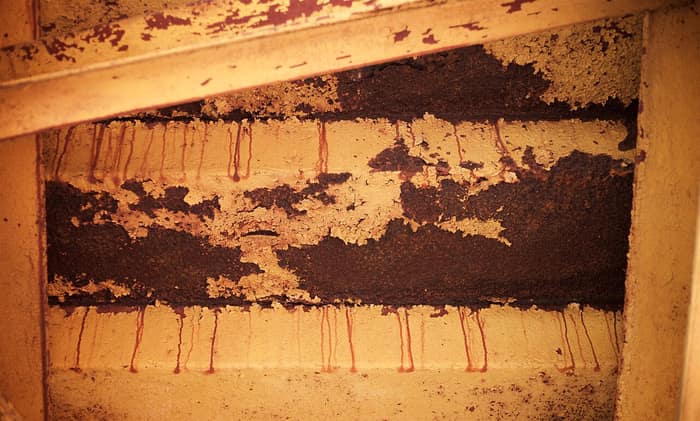
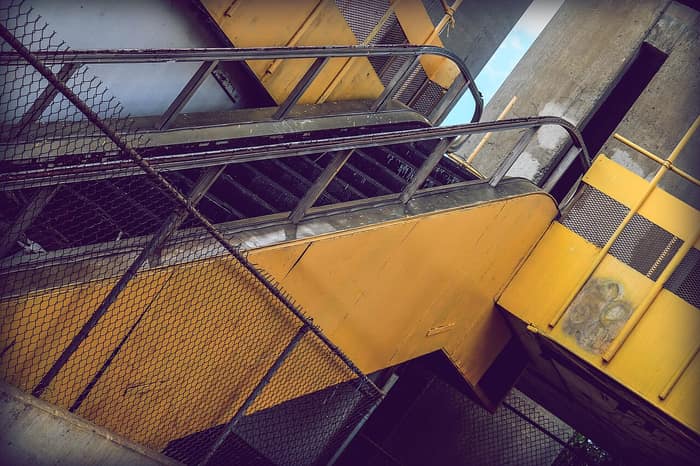
- From the surrounding paths you can see the tent, the three towers and the yellow-painted structure, which are lit at night. Do not climb fences or enter closed areas.
- The Theaterama, the round building on the site, has housed the Queens Theatre since 1989, so you may be able to go inside for a performance or program.
- Other fair relics survive in the same park, including the Unisphere, the Queens Museum and the New York Hall of Science.
Opening hours, access and conditions can change. Check before you go.
Map: where New York State Pavilion is
Photos of New York State Pavilion

Where to stay near New York State Pavilion
Hotels close by, with ratings and current availability.
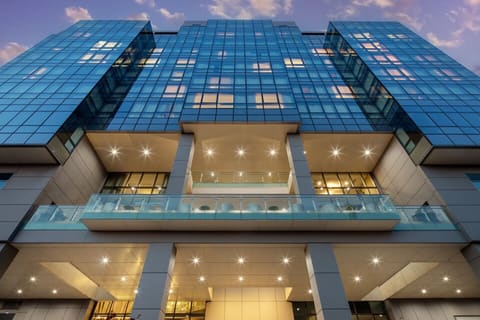
Hotel Indigo Flushing - LaGuardia by IHG
Check availability ›
Marco LaGuardia Hotel
Check availability ›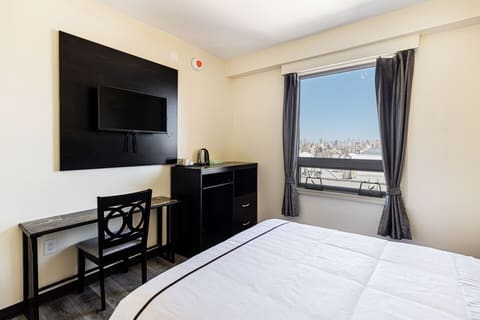
Astoria Inn LaGuardia hotel
Check availability ›Hotel photos: Expedia Group. Ratings are shown as published there. Availability and conditions change; check the booking page. Affiliate links: we may earn a commission at no extra cost to you. All hotels by borough
Questions
Can you visit the New York State Pavilion?
You can see it from the paths of Flushing Meadows–Corona Park. The Tent of Tomorrow and the towers are generally closed, but the Theaterama houses the Queens Theatre. Check current access rules.
Where is the New York State Pavilion?
It is in Flushing Meadows–Corona Park in Queens, near the Unisphere, the Queens Museum and Citi Field, on the grounds of the 1964 World’s Fair.
Who designed the New York State Pavilion?
Philip Johnson and Richard Foster designed it, with Lev Zetlin as the structural engineer who designed the Tent of Tomorrow’s roof.
What was the Tent of Tomorrow?
It is the elliptical main structure of the pavilion, with a cable suspension roof held by 16 concrete columns. It had exhibits and concerts, and a terrazzo road map of New York State covered its floor.
Why was the pavilion abandoned?
After the fair it was used as a concert venue and roller rink, but roof damage and safety concerns closed the tent in the 1970s and 1980s. The cost of restoring it long delayed any plan.
Was the pavilion used in any movies?
Yes. It appears in The Wiz (1978), Men in Black (1997) and Iron Man 2 (2010), and its interior was used in a 2009 episode of CSI: NY.
Also nearby
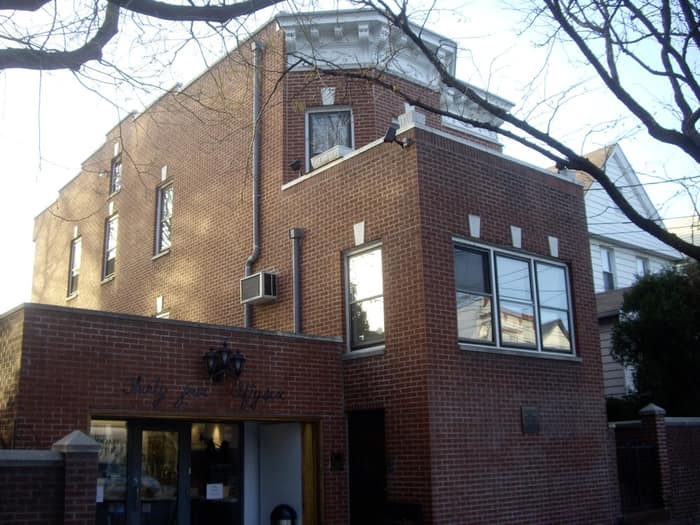
Louis Armstrong House
Louis Armstrong House · where the jazz giant lived in Corona
2 km away
Marine Air Terminal
Marine Air Terminal · LaGuardia’s landmark flying-boat terminal
5 km away
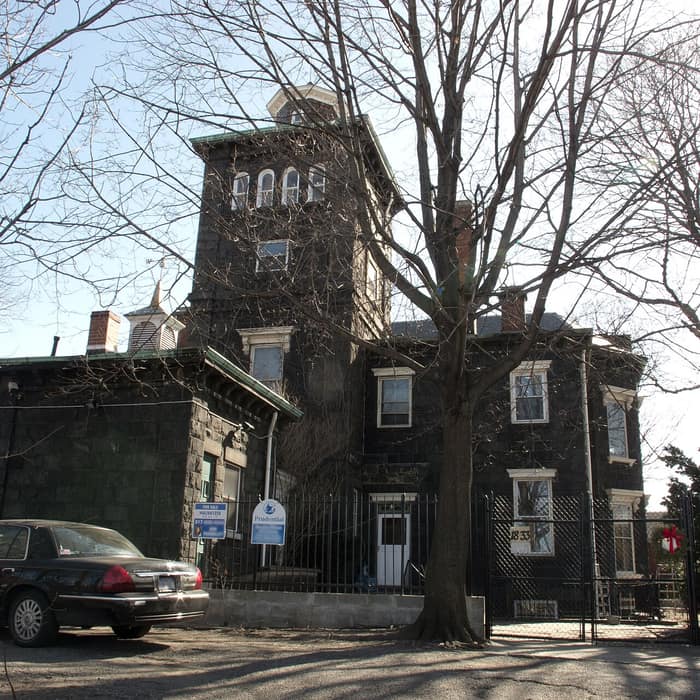
Steinway Mansion
Steinway Mansion · a 19th-century villa hidden in Astoria
6 km away
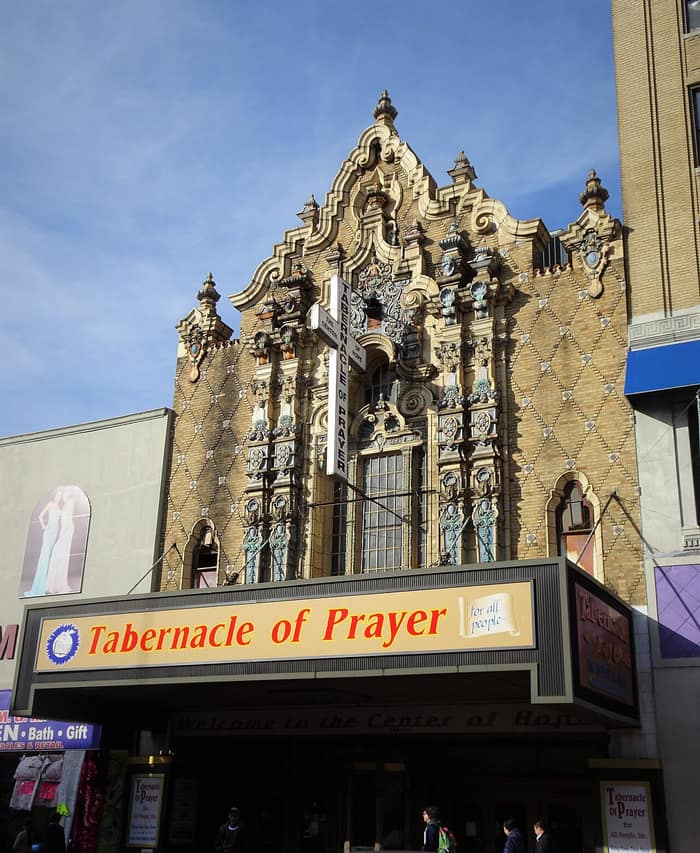
Loew’s Valencia Theatre
Loew’s Valencia Theatre · atmospheric movie palace turned church
6 km away