Paradise Theater, the Bronx’s Landmark Movie Palace
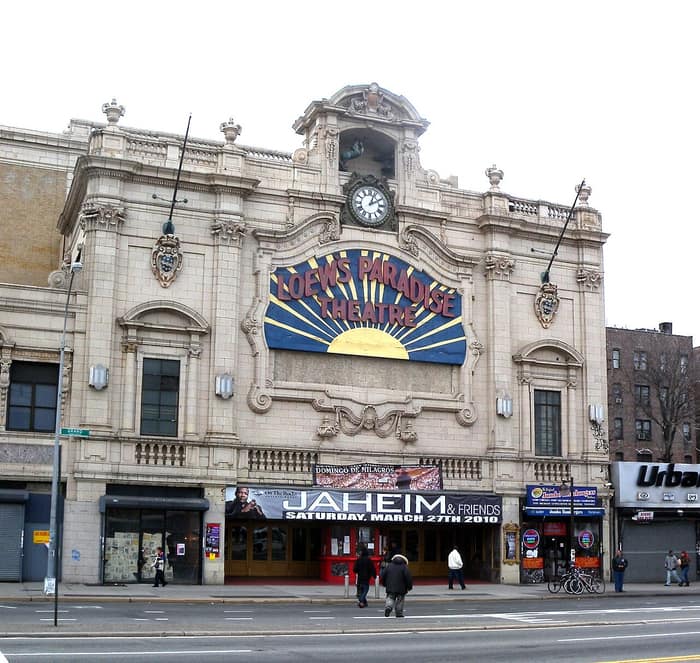
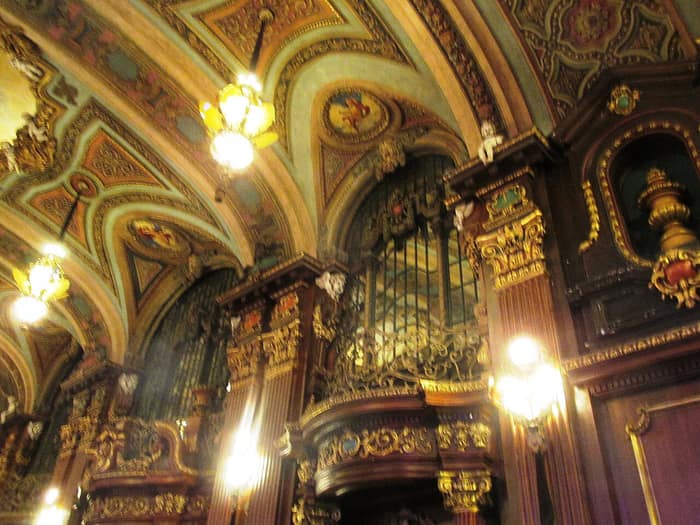
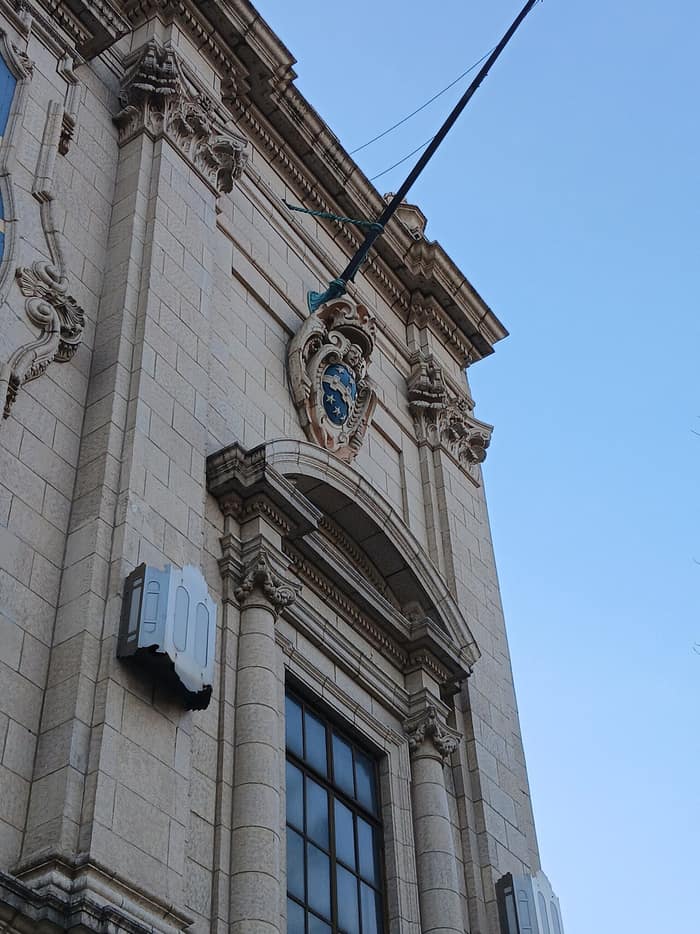
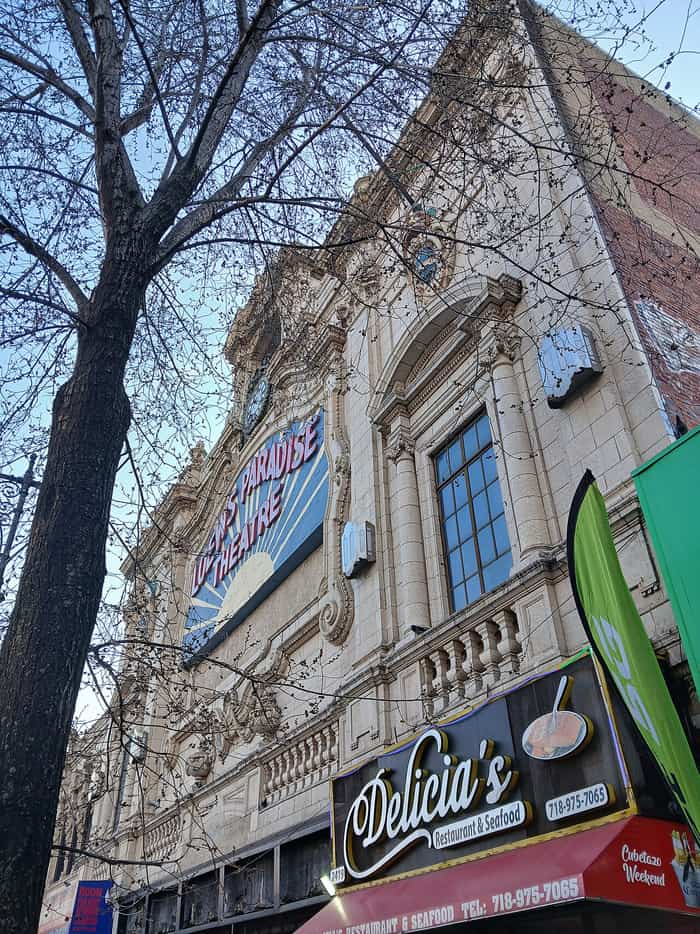
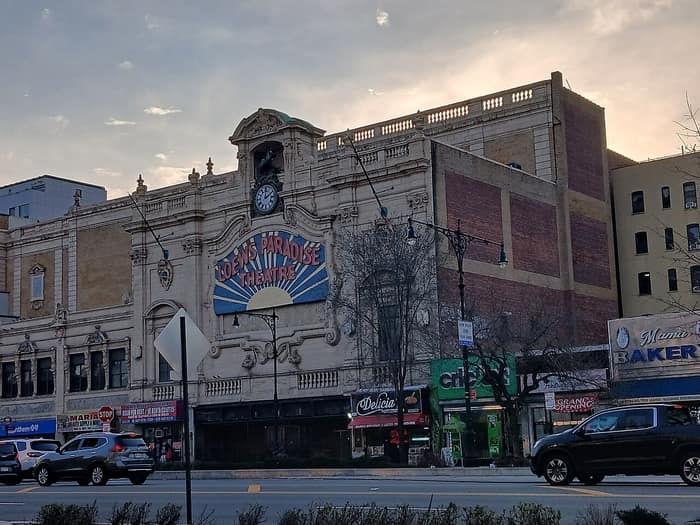
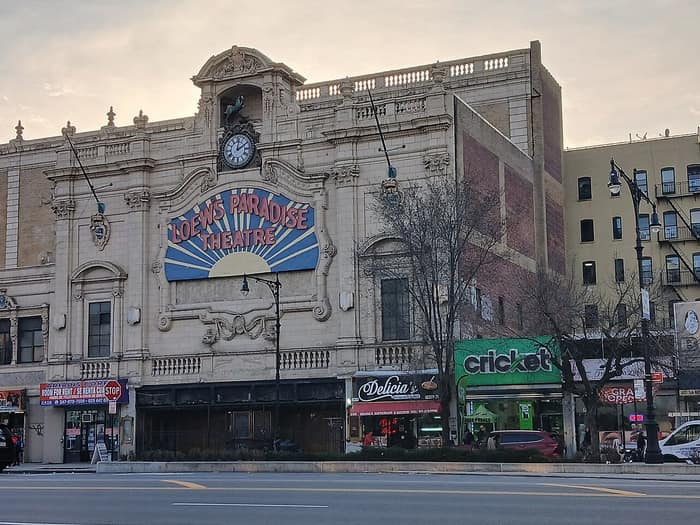
The Paradise Theater (originally Loew’s Paradise Theatre) stands at 2403 Grand Concourse in the Fordham neighborhood of the Bronx. Designed by John Eberson and opened in 1929, it is one of the most lavish movie palaces ever built outside Manhattan, with a Baroque terracotta facade and an interior meant to feel like an Italian courtyard under the night sky. It is a good stop for anyone looking for hidden gems in the Bronx.
Inside this Bronx movie palace, tiny lights once showed the stars as they looked on the day Marcus Loew was born, and a mechanical Saint George slew a dragon every hour on the facade.
The history of the Paradise Theater, from movie palace to landmark
Movie palaces became common in the 1920s, and until the late part of that decade most of New York’s had been concentrated in Midtown Manhattan. Loew’s Inc., then competing with Paramount-Publix, took over five sites in 1927 for what became its “Wonder Theatres”, in Jersey City, Manhattan, Queens, Brooklyn and the Bronx. A Paramount-Publix subsidiary had bought land on the Grand Concourse in late 1925, promising a piece of “Broadway to the Bronx”. The architect John Eberson reportedly spent a year planning the interior, and during planning the theater was to be called the Venetian.
Construction began in April 1928, and the Paradise opened on September 7, 1929, the same day as the Kings Theatre in Brooklyn. Opening day brought the national anthem, musical shows, short films, a live show and a screening of The Mysterious Dr. Fu Manchu. The Wall Street crash came only six weeks later. In its early years the theater paired first-run films with stage shows, and performers included Cab Calloway, Eddie Cantor, George Burns and Bob Hope. In September 1932 almost two dozen sticks of dynamite were found in the projection booth with some three thousand people inside; the device did not go off because of a defective fuse. Vaudeville ended in 1935 in favor of an all-film program.
After a 1948 Supreme Court ruling forced Loew’s to separate film production from exhibition, the Paradise kept showing first runs, and in 1953 it received a panoramic screen and stereophonic sound. In 1956 Variety called it perhaps the most successful neighborhood theater in the Loew’s circuit. Decline followed as families moved to the suburbs and television spread. By 1965 a New York Times writer found the place “dusty” and eerie, the Saint George figures had been stolen, and the organ console was removed during the decade. The auditorium was then divided into screening rooms in the 1970s and again in 1981, leaving four rooms and hiding much of the decoration, though most of it stayed in place.
The Landmarks Preservation Commission began considering the building in 1992, and the theater closed in January 1994. A fire damaged the stage in 1996, and trespassers began removing decorations. The facade became a New York City landmark in April 1997 and the interior in May 2006. A restoration led by Richard P. DeCesare, begun in 1998, stalled by 2001. Gerald Lieblich bought the building in 2003, removed the partitions, cleaned the decoration and installed new seats, and the theater reopened on October 29, 2005 as an event venue. From 2012 a church congregation leased it until 2020, and in 2026 plans were announced to turn it into a performing arts center.
Little-known facts about the Paradise Theater
- The dark-blue ceiling was dotted with tiny lights showing the constellations as they appeared when Loew’s founder, Marcus Loew, was born, and a cloud machine sent mists drifting across it.
- A mechanical sculpture of Saint George on horseback slashed the neck of a fire-breathing dragon every hour on the facade. The sculptures of the dragon and the saint were stolen, but the horse remains.
- The Paradise and the Valencia in Queens, together with the Lane Theater on Staten Island, are the only “atmospheric” theaters in New York City designed by John Eberson.
- The organ console, a Wonder Morton, had been meant for the Loew’s Jersey Theatre and was installed in the Paradise by mistake. In 1997 the organ moved to the Jersey Theatre, where it is still used.
- The decoration originally included trees, vines and even stuffed pigeons, and the main lobby had a goldfish pool that was removed in 2006.
- Zoning rules at the time kept Loew’s from adding a vertical sign, so the name is set in neon letters on a sunburst panel above the entrance.
Tours near Paradise Theater
Experiences in the area that you can book online with Viator:


Visiting the Paradise Theater: what you can see
- The most accessible part is the exterior: the cream, blue and salmon-pink terracotta frontispiece, the clock and the empty niche of Saint George can be admired from the sidewalk of the Grand Concourse.
- The interior is not open for regular visits. The theater has been vacant for years and is being prepared for a new use, so check the current access rules and any announced events before you go.
- A subway station on Fordham Road, served by the B and D trains, is close to the theater, and the neighborhood is a busy shopping area.
- The theater is a landmark, both outside and inside, so alterations are subject to review. Do not try to enter closed areas.
- Combine the visit with other quiet corners of the northwestern Bronx, such as the nearby Edgar Allan Poe Cottage.
Opening hours, access and conditions can change. Check before you go.
Map: where Paradise Theater is
Photos of Paradise Theater
Questions
Can you visit the Paradise Theater in the Bronx?
The facade can be seen freely from the street. The interior is not open for regular visits, although events have been held there in recent years, so check the current rules before you go.
Who designed the Paradise Theater?
John Eberson designed it as a movie palace for Loew’s. It opened on September 7, 1929, as one of five “Wonder Theatres” in the New York area.
What is an atmospheric theater?
It is a movie palace whose auditorium imitates an outdoor setting, here an Italian courtyard under a starry sky. The Paradise is one of the last atmospheric theaters built.
Is the Paradise Theater a New York City landmark?
Yes. The facade was designated in 1997 and the interior in 2006.
Where is the Paradise Theater?
At 2403 Grand Concourse, in the Fordham neighborhood of the Bronx, near the Fordham Road subway station.
What happened to the Paradise Theater?
It closed as a cinema in 1994, reopened in 2005 as an event venue, housed a church congregation until 2020, and in 2026 plans were announced to turn it into a performing arts center.
Also nearby

Edgar Allan Poe Cottage
Poe Cottage · where Poe wrote “Annabel Lee” in the Bronx
650 m away

Hall of Fame for Great Americans
Hall of Fame for Great Americans · a colonnade of bronze busts
1 km away
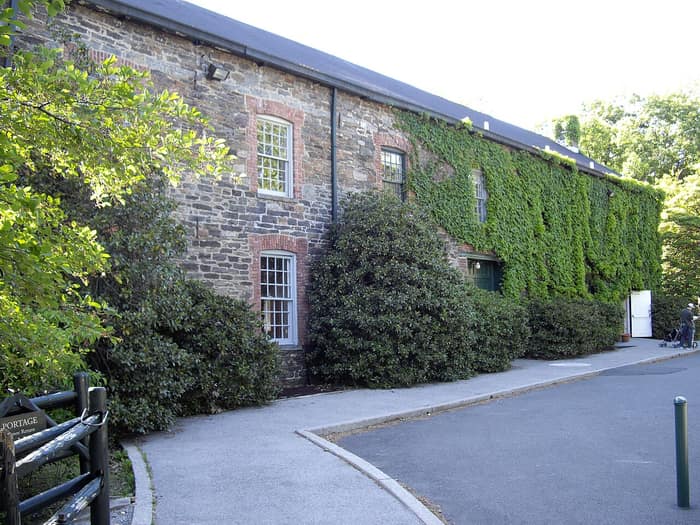
Lorillard Snuff Mill
Lorillard Snuff Mill · oldest tobacco factory building in the U.S.
2 km away
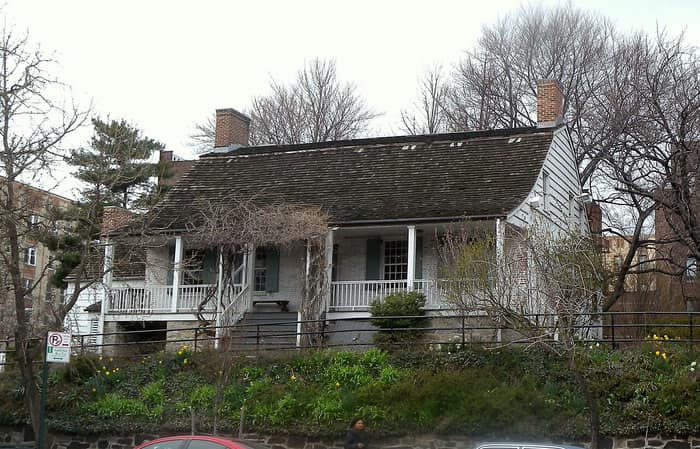
Dyckman House
Dyckman House · Manhattan’s oldest remaining farmhouse
2 km away