
Vander Ende–Onderdonk House, a Dutch Stone House in Ridgewood
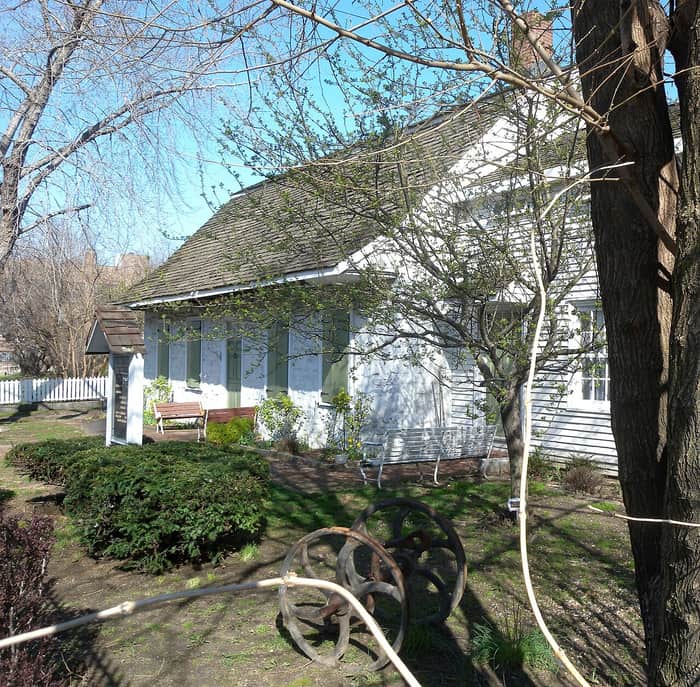
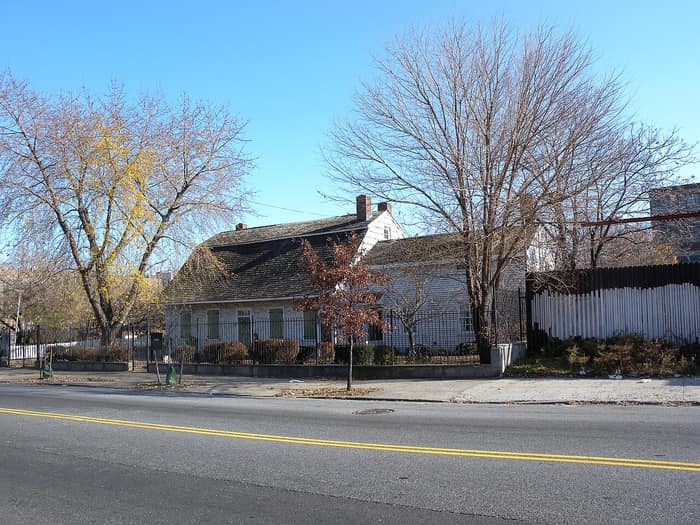
The Vander Ende–Onderdonk House, also known as the Van Nanda House, stands at 1820 Flushing Avenue in Ridgewood, Queens, right at the border with Brooklyn. It is described as the oldest Dutch Colonial stone house in New York City, and part of it now works as a museum. It is a good off-the-beaten-path stop for travelers curious about the Dutch era beyond Manhattan.
It sits on the county line between Brooklyn and Queens, and a rock hidden in its backyard was once used to settle property disputes. This stone farmhouse is described as the oldest of its kind in New York City.
The history of the Vander Ende–Onderdonk House
According to the available sources, the first house on this site was built in 1661 by Hendrick Barents Smidt, on land granted to him by Peter Stuyvesant, the Dutch director of New Netherland. Another part of the building, extending the original, was added in 1709 by Paulus Vander Ende. Other accounts of the neighborhood simply date the house to 1709, so the exact age of the oldest sections is not fully clear.
The house passed to Paulus’s son Frederik, who changed his surname to Van Nanda, which explains the second name by which the building is known. In 1769 it was inherited by Frederik’s daughter Jane and her husband Moses Beadel. A survey from that year, which set the boundary between Kings and Queens counties, mentions the house, and it may have been largely built around that time. The house stands very close to that line.
The Onderdonk family acquired the property in 1821. It once included about 100 acres of farmland, but land was gradually sold until the property shrank to under two acres. The old address was 1416 Flushing Avenue.
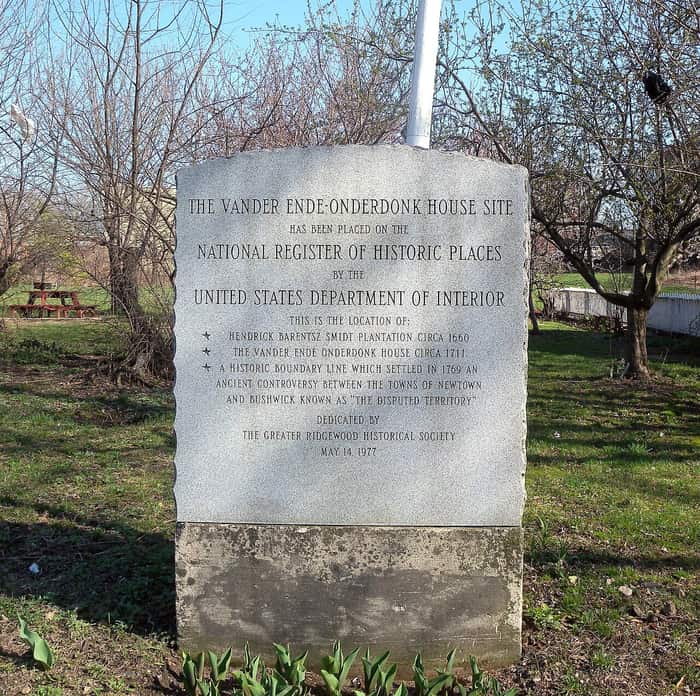
In 1975 a serious fire destroyed many of the wooden elements. The house was added to the National Register of Historic Places in 1977, and in the early 1980s it was repaired with the help of federal funds, rebuilt with the tools and styles of the colonial era. The New York City Landmarks Preservation Commission designated it a landmark in 1995. In 2001 a rock believed to be the Arbitration Rock, once used to mark property claims, was moved to the backyard. The roof was restored in 2014, and after a decade-long fundraising effort exterior restoration began in 2026.
Little-known facts about the Vander Ende–Onderdonk House
- Sources describe it as the oldest Dutch Colonial stone house in New York City.
- The house goes by two names: Vander Ende–Onderdonk, after its builders and later owners, and Van Nanda, after Paulus’s son Frederik, who changed his surname.
- In the backyard stands a stone called the Arbitration Rock, believed to be the one once used to measure property claims and deeds in the late 1700s and early 1800s.
- The house was already mentioned in a 1769 survey that set the boundary between Kings and Queens counties, and it stands very close to that line.
- Its address changed over time: the old address was 1416 Flushing Avenue, and today it is 1820.
- After the 1975 fire the building was rebuilt using the original tools and styles of the colonial era.
Tours near Vander Ende–Onderdonk House
Experiences in the area that you can book online with Viator:


Visiting the Vander Ende–Onderdonk House
- The house is owned by the Greater Ridgewood Historical Society, and much of it works as a museum of earlier eras of New York. Opening days and tour times are not given in the sources, so check the current opening hours and access rules before you go.
- Exterior restoration began in 2026, so scaffolding or restricted areas may affect what you can see; confirm before planning a visit.
- From the street you can see the stone house and the marker on Flushing Avenue.
- The Arbitration Rock is in the backyard, which may not be open to all visitors, so ask about access.
- Because the house is at the Brooklyn–Queens border, it can be combined with a walk through nearby Ridgewood and Bushwick.
Opening hours, access and conditions can change. Check before you go.
Map: where Vander Ende–Onderdonk House is
Photos of Vander Ende–Onderdonk House


Questions
What is the Vander Ende–Onderdonk House?
It is a historic house at 1820 Flushing Avenue in Ridgewood, Queens, described as the oldest Dutch Colonial stone house in New York City.
When was the Vander Ende–Onderdonk House built?
The first house is said to date from 1661, and a section was added in 1709. Dates differ between sources, and the house may have been largely built around 1769.
Why is it also called the Van Nanda House?
Frederik Vander Ende inherited the house from his father Paulus and changed his last name to Van Nanda.
What is the Arbitration Rock?
It is a rock believed to have been used to measure property claims and deeds in the late 1700s and early 1800s. It was moved to the backyard in 2001.
Can I visit the Vander Ende–Onderdonk House?
Much of it works as a museum run by the Greater Ridgewood Historical Society. Check the current opening hours and access rules before you go.
Where is the Vander Ende–Onderdonk House?
At 1820 Flushing Avenue in Ridgewood, Queens, very close to the border with Brooklyn.
Also nearby
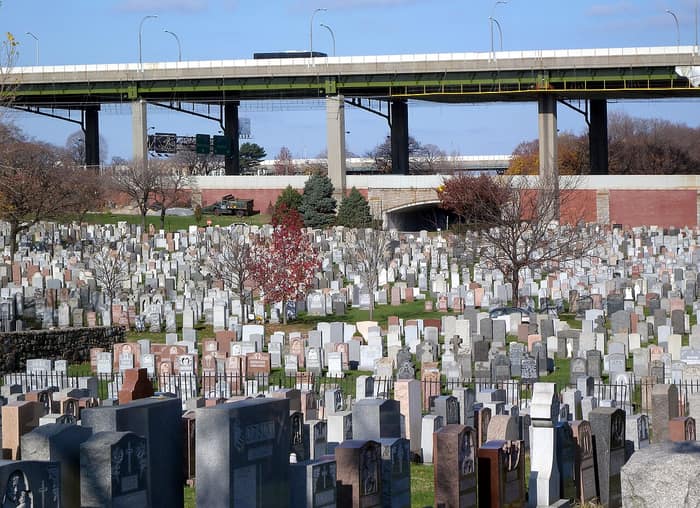
Calvary Cemetery
Calvary Cemetery · Queens’ giant Catholic cemetery since 1848
2.5 km away
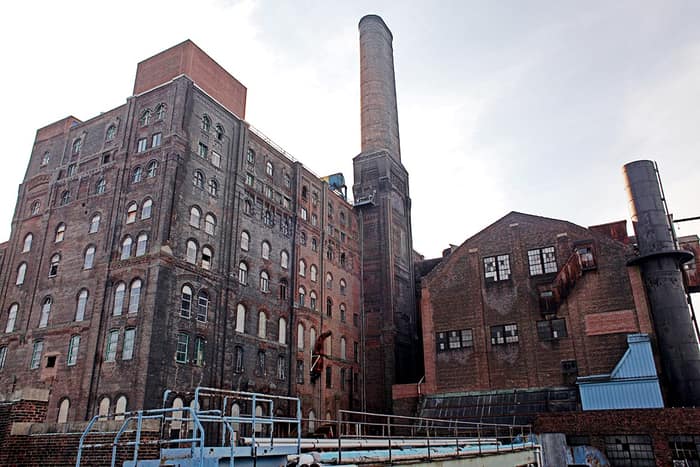
Domino Sugar Refinery
Domino Sugar Refinery · Brooklyn’s landmark sugar giant
4 km away
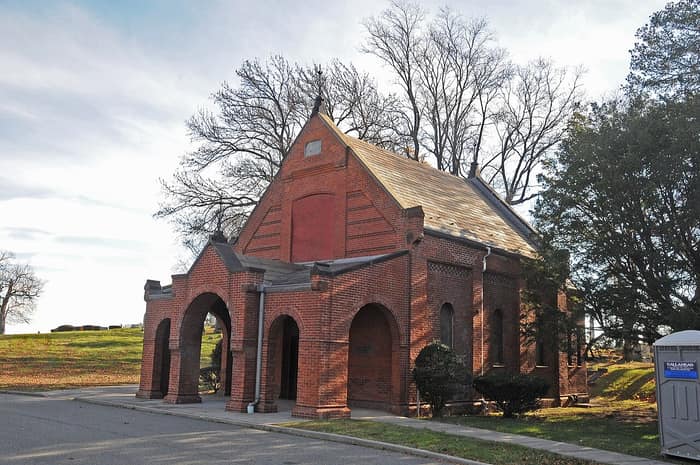
Beth Olam Cemetery
Beth Olam Cemetery · Jewish cemetery with a Calvert Vaux chapel
4 km away

Weeksville Heritage Center
Weeksville · a 19th-century free Black town hidden in Brooklyn
4 km away