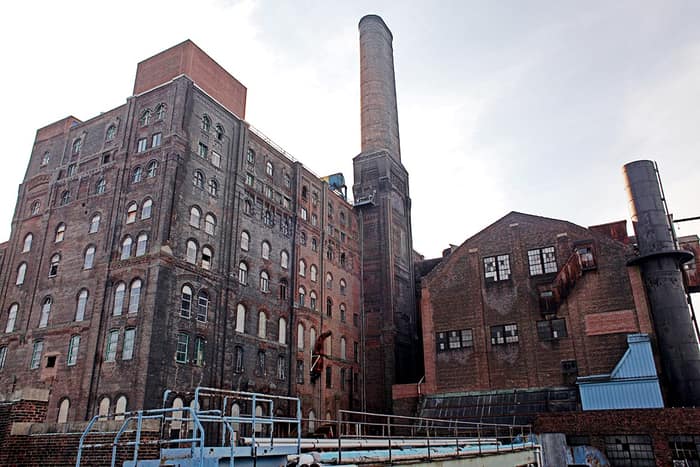
Domino Sugar Refinery, Williamsburg’s Landmark Sugar Factory
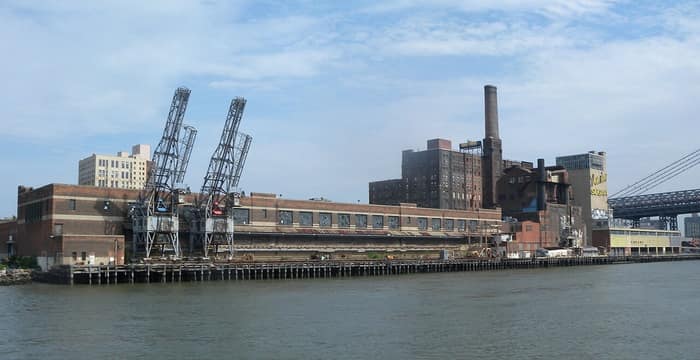
The Domino Sugar Refinery stands on the East River in Williamsburg, in the borough of Brooklyn. Rebuilt in 1882–1883 after a fire, it grew into a very large sugar refinery and ran until 2004. Its landmarked Pan, Filter, and Finishing House now anchors a redeveloped waterfront with towers and Domino Park, a good stop for anyone looking for an off-the-beaten-path industrial sight in Brooklyn.
By 1881 this Brooklyn refinery processed about three-fourths of all the refined sugar in the United States. Today its brick shell holds offices under a glass barrel-vaulted roof, beside a riverfront park.
The history of the Domino Sugar Refinery, from the Havemeyers to Domino Park
The Havemeyer family, German-born sugar refiners, founded a refinery on Vandam Street in Manhattan in 1807, and by the 1840s it filled a whole city block. By the mid-19th century it had outgrown the site, and at the end of 1856 a family member opened a refinery in Williamsburg, at what is now Kent Avenue and South 3rd Street. Other refineries followed, and Williamsburg became the world’s largest sugar-refining center of its time. By 1870 it produced most of the sugar used in the United States, and by 1881 the Havemeyer refinery processed about three-fourths of all refined sugar in the country. The depth of the East River let ships unload raw sugar directly at the plant.
On January 8, 1882, a fire destroyed the original refinery and finishing house between South 3rd and South 4th streets. It eliminated between 1,200 and 2,000 jobs and raised sugar prices nationwide. Theodore Havemeyer bought a refinery in Red Hook so that work could restart and supervised the construction of a new fireproof complex. It was reported complete in July 1883 and was described as the largest sugar refinery in the Americas.
The family created the Sugar Trust in 1887, reorganized in 1891 as the American Sugar Refining Company, and by 1894 the Brooklyn plant was called the largest of its kind in the world, with around 3,000 workers. In 1896 the company became one of the original twelve in the Dow Jones Industrial Average, and in the early 1900s it was renamed after its Domino brand. Conditions were hard: shifts of ten hours or more, with workers first mostly German, then from other parts of Europe and the West Indies. The peak came in 1919, with more than 4,500 employees. In 1917 an explosion, traced to sugar grains igniting in machinery, killed between six and twelve workers while some 15,000 people watched the fire.
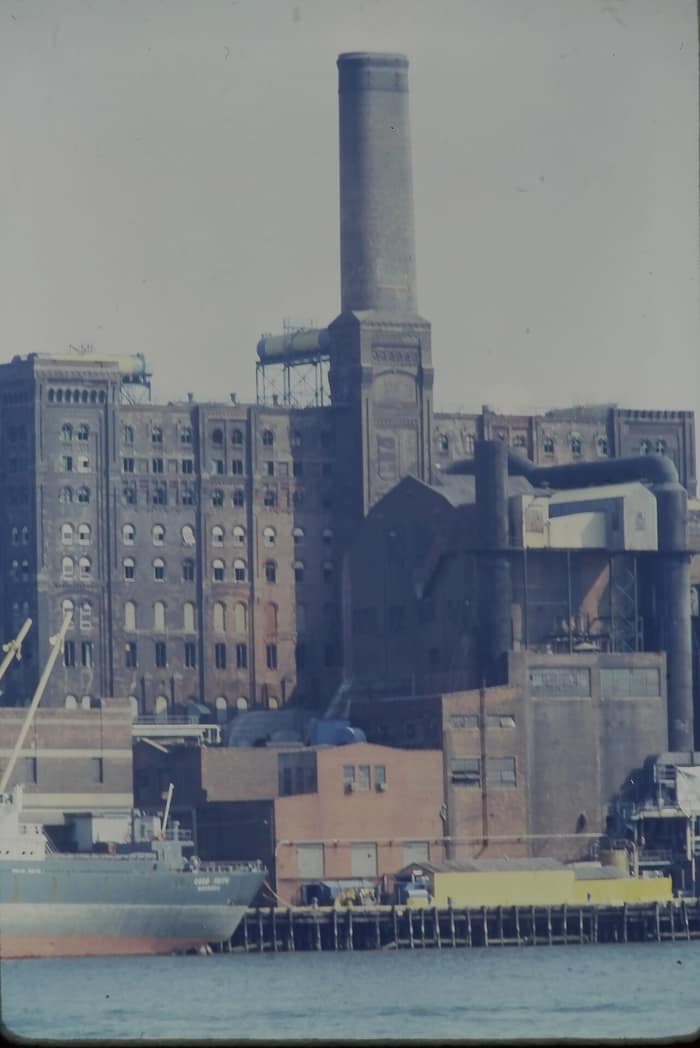
The decline began in the 1920s, as new plants such as one in Baltimore reduced work in Brooklyn. By 1959 there were 1,500 workers and by 1996 only 450. A strike by 284 workers began in 1999 and ended in February 2001, one of the longest in the city’s history. The refinery stopped operating in 2004, and its last packing operations closed that year.
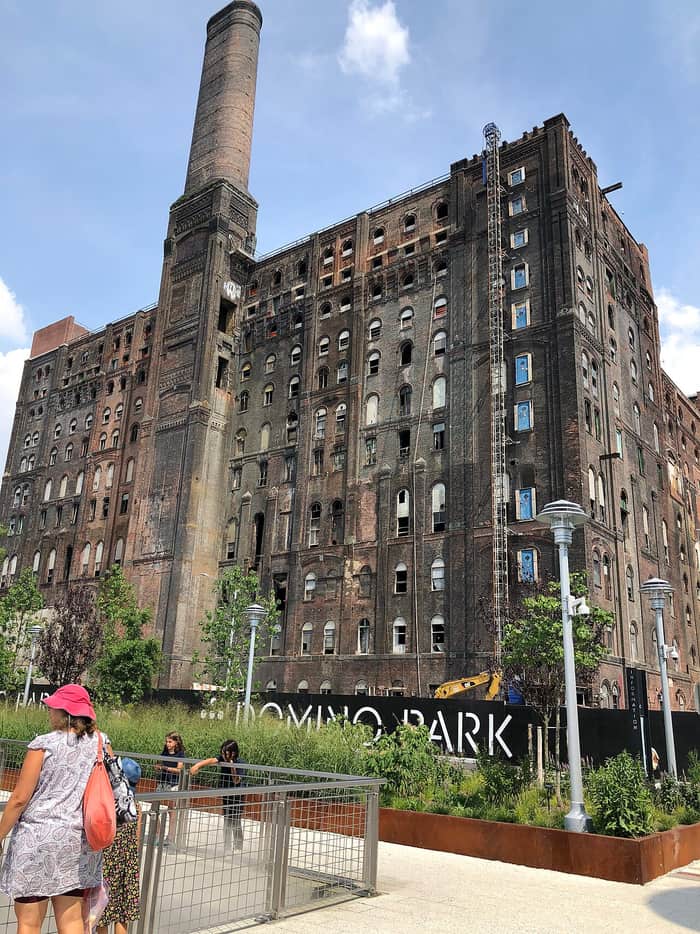
The site was sold to a developer in 2004, and the Pan, Filter, and Finishing House became a New York City landmark in 2007. After the first plan failed, Two Trees Management bought the site in 2012, and a design by SHoP Architects was approved in 2014. In 2014 the artist Kara Walker showed “A Subtlety” in the Syrup Shed, and demolition of the non-landmarked structures followed. Domino Park opened in June 2018, and the restored Refinery building, with a new glass barrel vault, reopened on September 27, 2023.
Little-known facts about the Domino Sugar Refinery
- A yellow “Domino Sugar” sign dating from the 1920s hung on the refinery facing the river; an LED replica was installed on the Refinery building in December 2022.
- In 1903 the refinery alone was estimated to use two percent of Brooklyn’s water supply, and it also drew huge amounts of saltwater from the East River for its condensers.
- The photographer David Allee explored the abandoned parts of the refinery in 2014 and described the smell as burnt-sugar custard mixed with mold.
- In 2014 Kara Walker showed her sculpture “A Subtlety” in the old Syrup Shed, just before the non-landmarked buildings were demolished.
- The concrete facade of the One South First tower was designed with a pattern based on the molecular structure of sugar crystals.
- The 155-foot chimney of the filter house was among the tallest in the region when it was built, and the building’s interior had 66 cast-iron columns.
Tours near Domino Sugar Refinery
Experiences in the area that you can book online with Viator:


Visiting the Domino Sugar Refinery and Domino Park
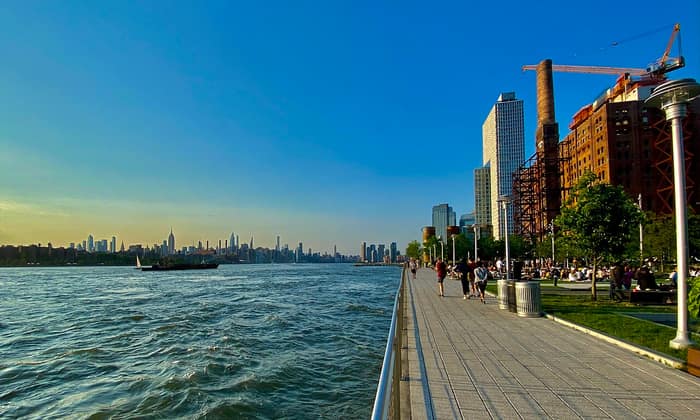
- Domino Park runs along the East River west of Kent Avenue, with gardens, a play area, an elevated walkway and pieces of machinery saved from the factory.
- The landmarked Refinery building at 292 Kent Avenue is now mostly offices, with retail and restrooms for park visitors on the ground floor. Check what is open to the public before you go.
- Just south of the building, Domino Square is a public plaza shaped like an oval bowl that can host events or a winter ice rink.
- The towers around it, such as 325 Kent Avenue and One Domino Square, are residential and not open to visitors.
- The Williamsburg Bridge is close by, and the park gives good views of the skyline across the river.
Opening hours, access and conditions can change. Check before you go.
Map: where Domino Sugar Refinery is
Photos of Domino Sugar Refinery

Where to stay near Domino Sugar Refinery
Hotels close by, with ratings and current availability.
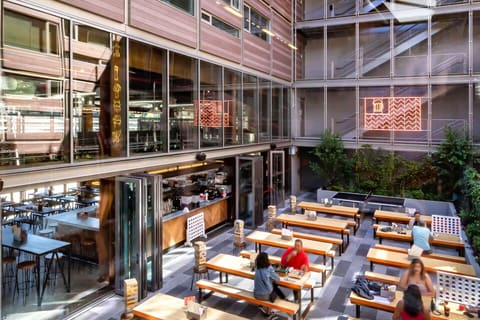
Pod Brooklyn
Check availability ›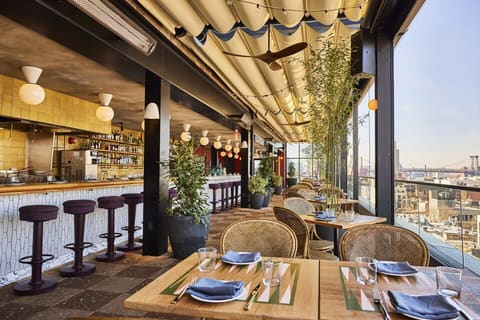
The Hoxton, Williamsburg
Check availability ›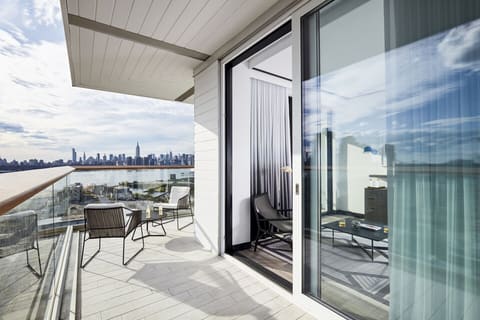
The William Vale
Check availability ›Hotel photos: Expedia Group. Ratings are shown as published there. Availability and conditions change; check the booking page. Affiliate links: we may earn a commission at no extra cost to you. All hotels by borough
Questions
What is the Domino Sugar Refinery?
It is a former sugar refinery on the East River in Williamsburg, Brooklyn. Its landmark brick building has been converted to offices, and the site now includes towers and Domino Park.
When did the Domino Sugar Refinery close?
The refinery stopped operating in 2004. More than 220 workers were laid off at the end of January that year, and the last packing operations closed by the end of 2004.
Can I visit the Domino Sugar Refinery?
You can see the exterior and walk through Domino Park along the river. The refinery building is now mostly offices, so check what is open to the public before you go.
What is Domino Park?
It is a public park along the East River on the former refinery grounds, opened in June 2018. It has gardens, a children’s play area, fields, an elevated walkway and pieces of refinery machinery.
Why is the Domino Sugar Refinery a landmark?
The New York City Landmarks Preservation Commission designated its Pan, Filter, and Finishing House in 2007 for its historical significance as one of the industrial concerns on Brooklyn’s waterfront.
Where is the Domino Sugar Refinery?
It is on Kent Avenue in Williamsburg, Brooklyn, along the East River just north of the Williamsburg Bridge.
Also nearby
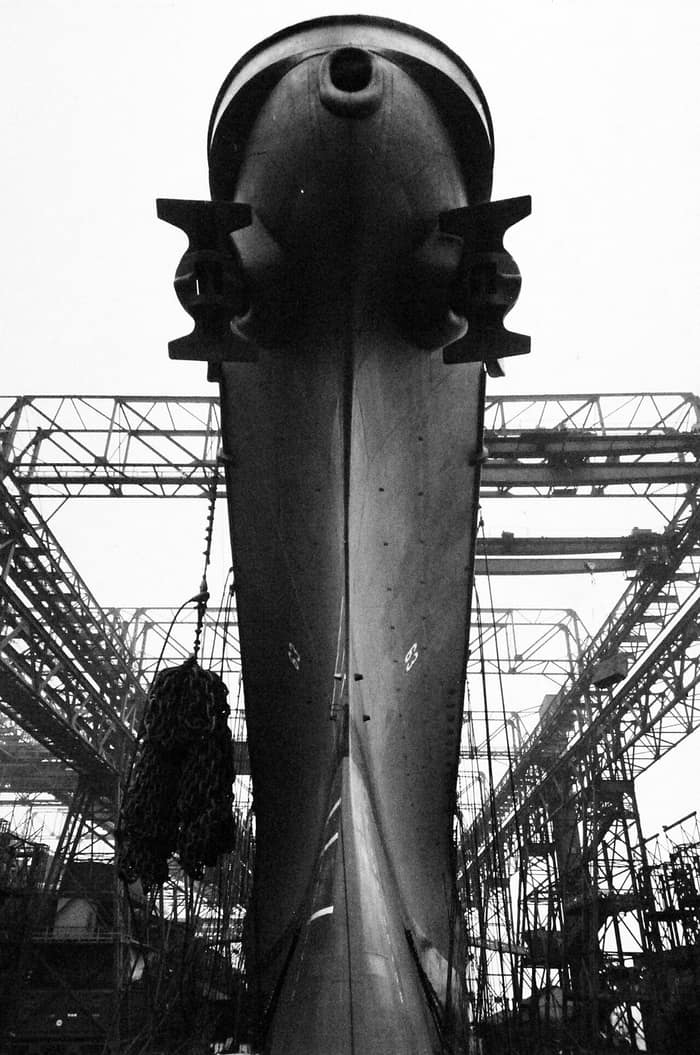
Brooklyn Navy Yard
Brooklyn Navy Yard · from battleships to a working industrial hub
1.5 km away
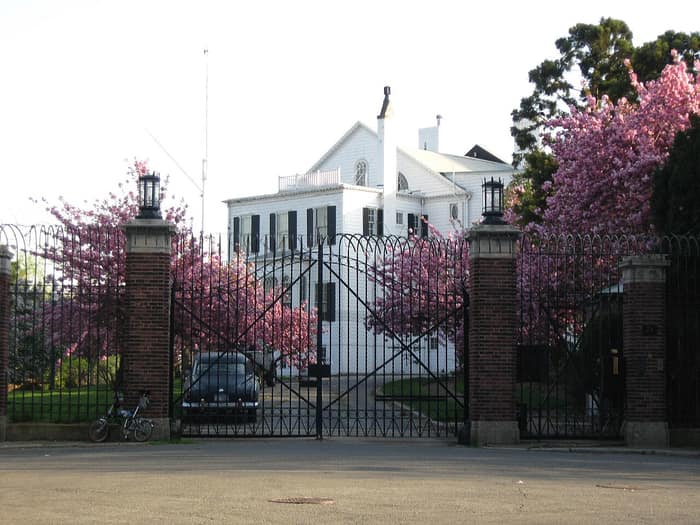
Quarters A, Brooklyn Navy Yard
Quarters A · Commodore Perry’s Federal-style Navy Yard home
1.5 km away
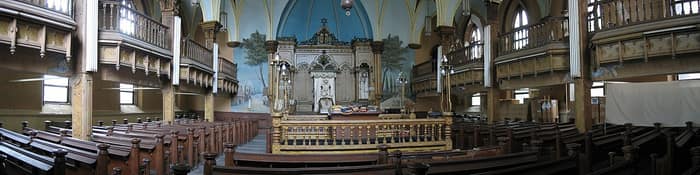
Beth Hamedrash Hagodol
Beth Hamedrash Hagodol · a lost Gothic synagogue on Norfolk Street
1.5 km away
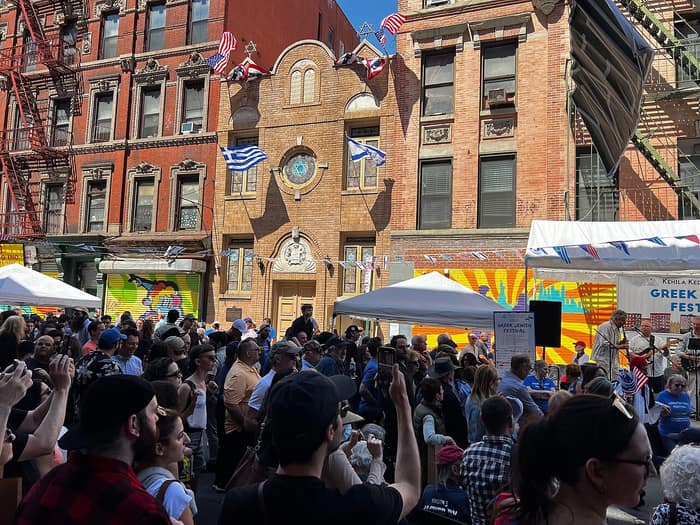
Kehila Kedosha Janina
Kehila Kedosha Janina · the only Romaniote synagogue in the Americas
2 km away