Beth Hamedrash Hagodol, the Lower East Side’s Lost Great Synagogue
Beth Hamedrash Hagodol, “Great Study House” in Hebrew, was an Orthodox congregation that for more than 120 years met at 60–64 Norfolk Street on the Lower East Side of Manhattan. It was the first Eastern European congregation founded in New York City, and its Gothic Revival building was one of the neighborhood’s largest synagogues. The historic building no longer stands, so this is a place to learn about rather than to visit.
A Baptist church became the home of New York’s first Eastern European Jewish congregation and held a funeral attended by up to 100,000 people. After decades of neglect, a fire in 2017 largely destroyed it.
The history of Beth Hamedrash Hagodol, from 1852 to the fire of 2017
The congregation was founded in 1852 by Rabbi Abraham Joseph Ash, a Polish-born rabbi who had arrived in New York the year before. He gathered a prayer quorum of Eastern European Jews who rejected the reforms of the city’s German Jewish synagogues, and named it Beth Hamedrash, “house of study”. For his first six years he earned a living as a peddler, because the congregation did not pay him. In 1856 it bought a former Welsh chapel on Allen Street, which served as a place of prayer, study and rabbinic court.
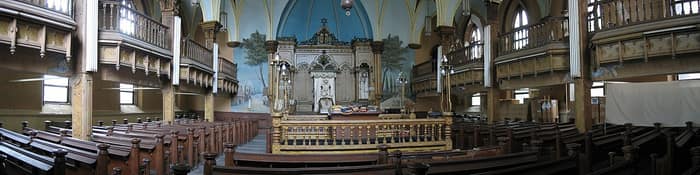
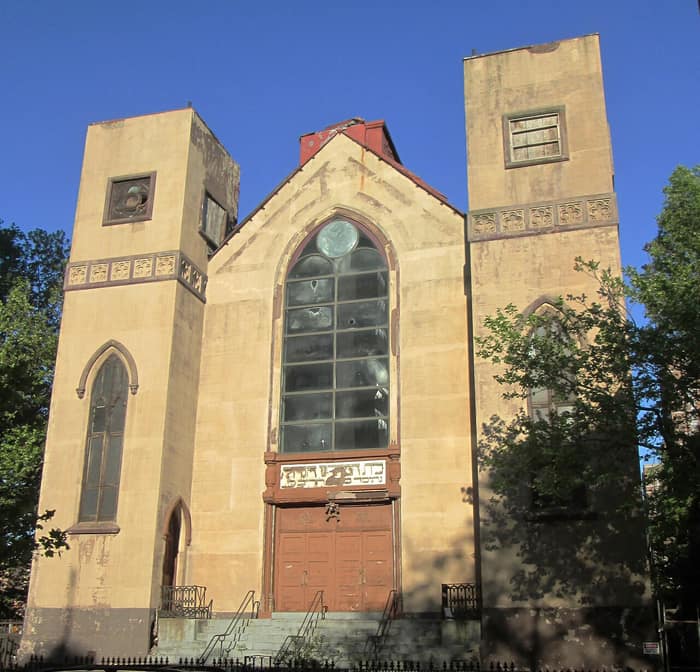
A dispute in 1859 over authority between Ash and the congregation’s president split the community. Most members left with Ash and added the word Hagodol, “Great”, to the name. The smaller group that stayed behind eventually merged with another congregation and built the Eldridge Street Synagogue. Beth Hamedrash Hagodol moved several times before it bought, in 1885, a Gothic Revival building on Norfolk Street. It had been completed in 1850 as the Norfolk Street Baptist Church and had later passed to a Methodist congregation. The new owners adapted it to synagogue use with an ark, a central reading platform and a women’s gallery, and painted the sanctuary ceiling blue with stars.
In 1888 the congregation welcomed Rabbi Jacob Joseph, the first and only Chief Rabbi of New York City, who tried to bring order to the kosher meat industry. His efforts met resistance, and he suffered poor health. When he died in 1902, up to 100,000 mourners are said to have attended his funeral. Under later rabbis the synagogue remained a center of Orthodox life; in 1952 Rabbi Ephraim Oshry, a Holocaust survivor and a respected legal scholar, took charge and led the congregation for more than fifty years. When the building was threatened with demolition in 1967, he succeeded in having it designated a New York City landmark, which saved it. It was listed on the National Register of Historic Places in 1999.
By then the congregation had shrunk and could not afford to maintain the building. A storm blew out the main window in 1997, and a fire in 2001 damaged the roof, ceiling and murals. The National Trust for Historic Preservation named it an endangered site in 2003, and the synagogue closed in 2007. A vacate order followed in 2011, and a request to demolish the building was filed and then withdrawn in 2013. On May 14, 2017, a three-alarm fire largely destroyed the empty building, and firefighters allowed the Torah scrolls to be rescued. The remains were demolished in stages, and a residential building, with a housing lottery launched in 2022, replaced the synagogue at 60 Norfolk Street.
Little-known facts about Beth Hamedrash Hagodol
- It was the first Eastern European congregation founded in New York City and the oldest Russian Jewish Orthodox congregation in the United States.
- The sanctuary ceilings were once painted bright blue and studded with stars, and in the 1930s or 1940s the walls were decorated with murals of Jerusalem and Holy Land landscapes.
- The rose window of the original Baptist church was removed in the early 1890s, possibly because of its Christian motifs, and replaced with a large arched window.
- In the 19th century the person who collected dues also ran a small refreshment stand in the vestibule, where mourners saying kaddish could buy sponge cake and a glass of brandy.
- Rabbi Ephraim Oshry’s Sunday afternoon lectures were so popular that the 1,200-seat sanctuary filled and listeners had to sit on the stairs.
- During the Holocaust Rabbi Oshry, then in the Kovno Ghetto, used books stored in a warehouse to write responsa, answers to questions of Jewish law under Nazi rule.
Tours near Beth Hamedrash Hagodol
Experiences in the area that you can book online with Viator:


Visiting the site of Beth Hamedrash Hagodol
- The historic synagogue no longer exists. After the 2017 fire the remains were demolished, and a residential building now stands at 60 Norfolk Street, so there is no interior and nothing open to visit.
- You can still walk along Norfolk Street, between Grand and Broome Streets, to see where the synagogue stood and to imagine the neighborhood of Jewish immigrants around it.
- The Lower East Side has other historic Jewish places in this guide within a short walk, such as the Eldridge Street Synagogue, which grew out of the 1859 split, and Kehila Kedosha Janina.
- Because the site was damaged by fire and a demolition accident in 2019, keep a respectful distance from any construction and follow local signs and rules.
- Photos of the interior and facade taken before the fire are the best way to see the building as it was.
Opening hours, access and conditions can change. Check before you go.
Map: where Beth Hamedrash Hagodol is
Photos of Beth Hamedrash Hagodol
Questions
What was Beth Hamedrash Hagodol?
It was an Orthodox Jewish congregation founded in 1852, the first Eastern European congregation in New York City. For more than 120 years it met in a Gothic Revival building on Norfolk Street on the Lower East Side.
Can you visit Beth Hamedrash Hagodol today?
No. A fire in 2017 largely destroyed the empty synagogue, the remains were demolished, and a residential building now stands on the site. You can only walk past it on Norfolk Street.
What does Beth Hamedrash Hagodol mean?
It is Hebrew for “Great Study House”. Beth Hamedrash, “house of study”, was also the everyday word used in Yiddish for a synagogue.
What happened to Beth Hamedrash Hagodol?
The congregation dwindled in the late 20th century and could not maintain the building. It closed in 2007 and was largely destroyed by a three-alarm fire on May 14, 2017, which was described as suspicious.
Where was Beth Hamedrash Hagodol?
At 60–64 Norfolk Street, between Grand and Broome Streets, on the Lower East Side of Manhattan.
Who was Rabbi Jacob Joseph?
He was the first and only Chief Rabbi of New York City, and led Beth Hamedrash Hagodol from 1888 until his death in 1902. Up to 100,000 mourners attended his funeral.
Also nearby
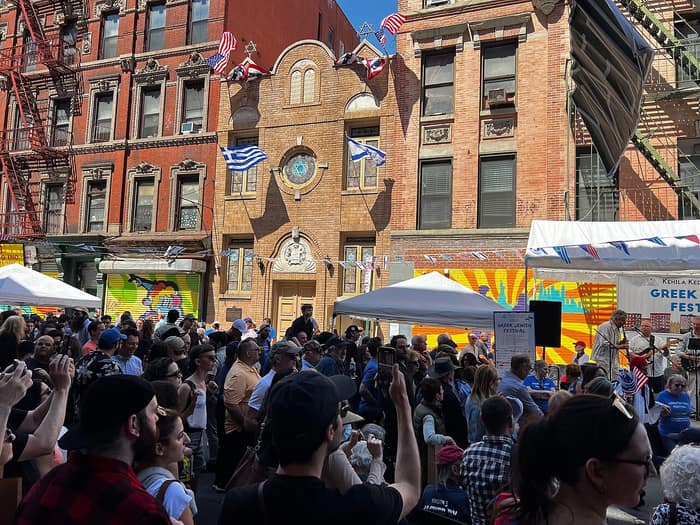
Kehila Kedosha Janina
Kehila Kedosha Janina · the only Romaniote synagogue in the Americas
350 m away
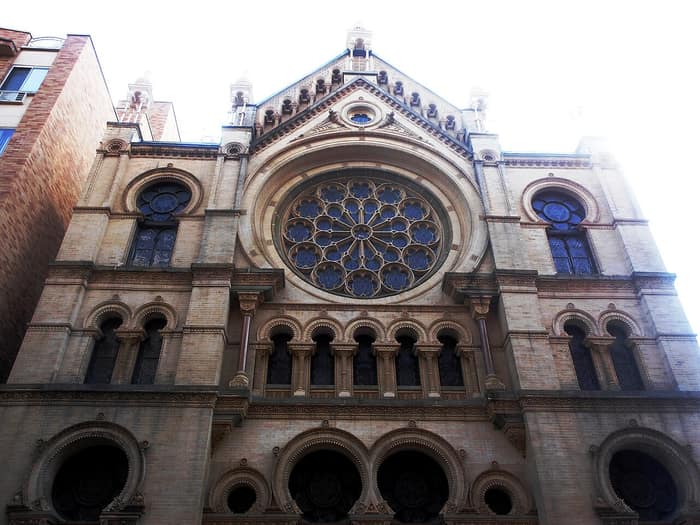
Eldridge Street Synagogue
Eldridge Street Synagogue · a sealed sanctuary reborn
550 m away
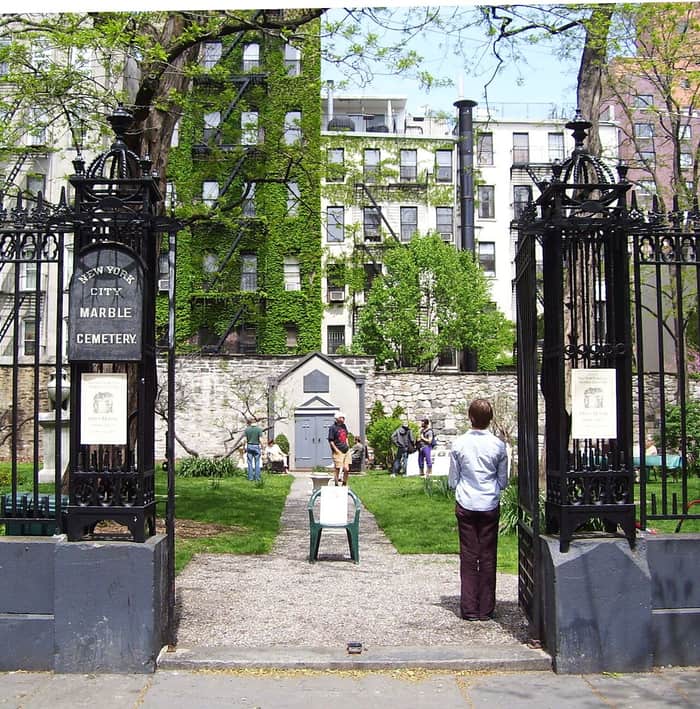
New York City Marble Cemetery
NYC Marble Cemetery · 258 marble vaults behind a wall
850 m away

New York Marble Cemetery
New York Marble Cemetery · a hidden 1830 graveyard of marble vaults
1000 m away