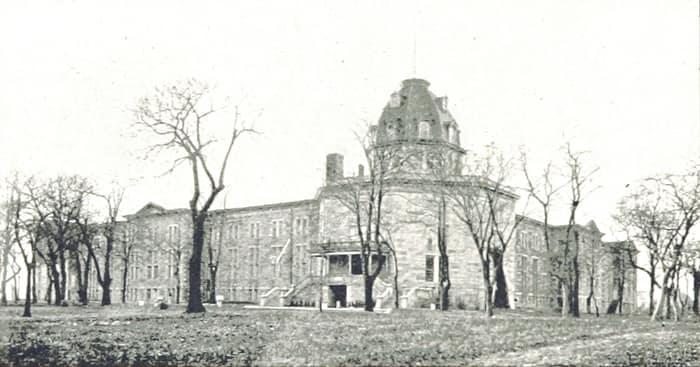
The Octagon, the Surviving Asylum Rotunda on Roosevelt Island
The Octagon is a historic octagonal building at 888 Main Street on Roosevelt Island, the East River island that belongs to the borough of Manhattan. It was the main entrance of the New York City Lunatic Asylum and is the last remnant of that hospital. Today it is part of a residential complex, so visitors will mostly admire it from outside.
The Octagon was the grand entrance of a city asylum whose conditions shocked readers of Nellie Bly. After decades of decay and two fires it was restored, and today it is the lobby of an apartment complex.
The history of The Octagon, from asylum entrance to apartment lobby
Roosevelt Island has had many names. The Dutch called it Hog Island, and later it became Blackwell’s Island. During much of the 19th and 20th centuries it was used for hospitals and prisons, with very limited access. In 1921 it was renamed Welfare Island, and in 1973 it took the name of President Franklin D. Roosevelt. Before that, it held one of the city’s best-known institutions: the New York City Lunatic Asylum, also known as the New York City Mental Health Hospital.
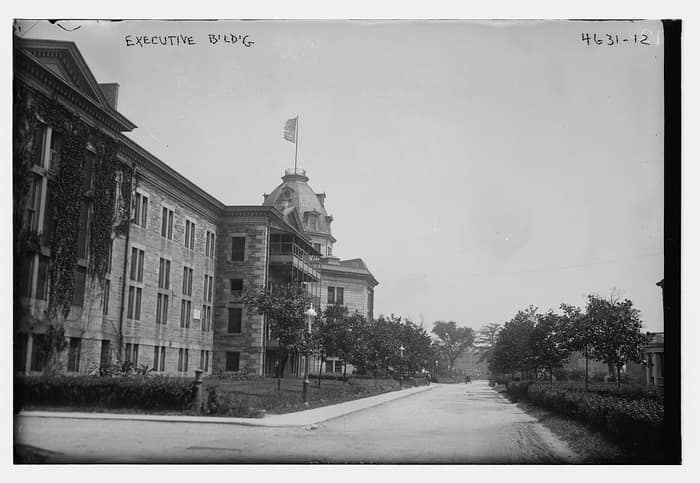
The Octagon dates to the 1830s and served as the main entrance of the asylum, which opened in 1841. Alexander Jackson Davis designed the five-story rotunda, built of blue-gray stone quarried on the island itself. It was the architectural centerpiece of the hospital.
The asylum became notorious in the late 19th century. The journalist Nellie Bly went undercover as a patient and described the mistreatment she saw there in her 1887 book Ten Days in a Mad-House. Her exposé is still the best-known story about the place.
In 1894 the building was incorporated into Metropolitan Hospital, which had moved to the island and occupied the former asylum. The hospital later moved to East Harlem, and the Octagon, as a Metropolitan Hospital building, closed in 1955 and was left abandoned. It was added to the National Register of Historic Places on March 16, 1972, despite its condition. After many years of decay and two fires, it was close to ruin; it was the last remnant of the hospital.
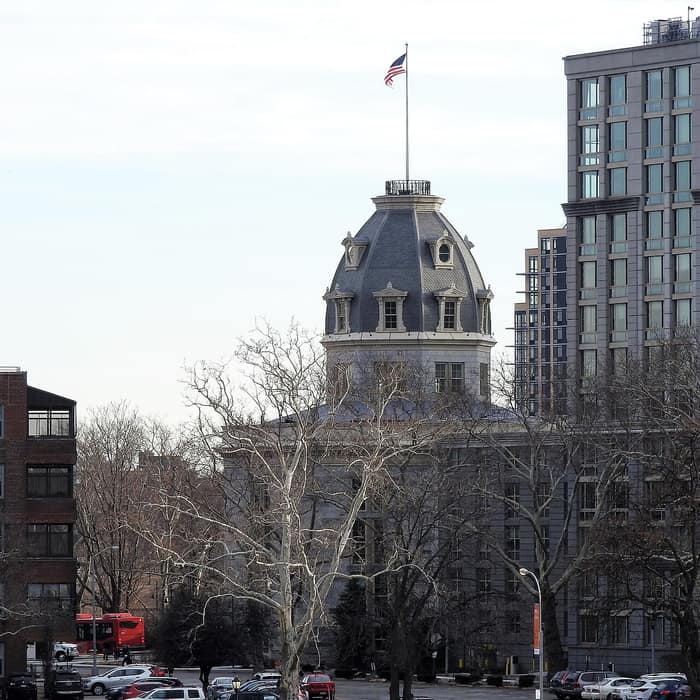
In April 2006, after restoration, the Octagon reopened as the lobby entrance to a pair of adjacent apartment buildings with about 500 units in total. A new residential building was built on the site, modeled on the original structure. The complex uses solar panels and fuel cells to generate more than half of its power, received New York State Green Building Tax Credits and a Green Apple Award, and earned LEED Silver status in 2008.
Little-known facts about The Octagon
- The rotunda was built of blue-gray stone quarried on Roosevelt Island itself, the same island on which it stands.
- It is the last remnant of the New York City Lunatic Asylum, which opened in 1841 and later became part of Metropolitan Hospital.
- Nellie Bly’s exposé of the asylum, Ten Days in a Mad-House, appeared in 1887.
- The building was added to the National Register of Historic Places in 1972, even though it was abandoned and badly damaged at the time.
- Its restoration gave it a second life: solar panels and a fuel cell now supply more than half of the complex’s power, according to the sources.
- The island’s name changed from Blackwell’s Island to Welfare Island in 1921 and to Roosevelt Island in 1973.
Seeing The Octagon: what you can and cannot do
- The Octagon is now the lobby of residential buildings. It is not a museum or public attraction, so do not expect guided tours or open galleries; check the current access rules before you go.
- The best way to see the building is from the street on Roosevelt Island, where a plaque on the tower explains its history. The tower can also be seen across the East River from the Manhattan side, for example from East 83rd Street.
- Roosevelt Island itself is easy to reach. It is connected to the rest of the city by bridge, aerial tram, subway and ferry, and a promenade runs around its perimeter.
- The island has other historic sights, including the Blackwell Island Light, which makes a good combination with a visit to the Octagon.
Opening hours, access and conditions can change. Check before you go.
Map: where The Octagon is
Photos of The Octagon


Questions
What is The Octagon on Roosevelt Island?
A historic octagonal building from the 1830s that was the main entrance of the New York City Lunatic Asylum. It is the last remnant of that hospital and is now the lobby of an apartment complex.
Can you go inside The Octagon?
It is part of a residential complex, so interior access is limited. The exterior and the plaque can be seen from the street; check the current rules before you go.
Who designed The Octagon?
The architect Alexander Jackson Davis designed the five-story rotunda, which was built of blue-gray stone quarried on the island.
How does Nellie Bly connect to The Octagon?
She went undercover as a patient at the asylum and wrote about the mistreatment she saw in her 1887 book Ten Days in a Mad-House.
Where is The Octagon?
At 888 Main Street on Roosevelt Island, in the East River, within the borough of Manhattan.
How do you get to Roosevelt Island?
By bridge, aerial tram, subway or ferry. Check the current service before you go.
Also nearby
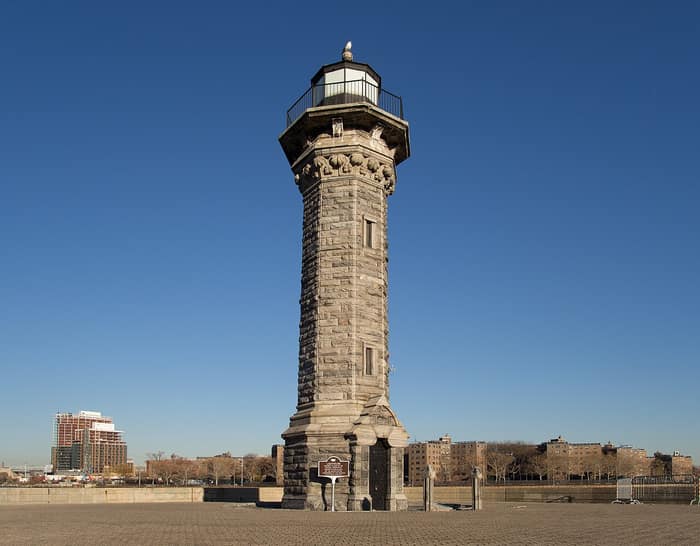
Blackwell Island Light
Blackwell Island Light · a Gothic stone beacon in the East River
550 m away
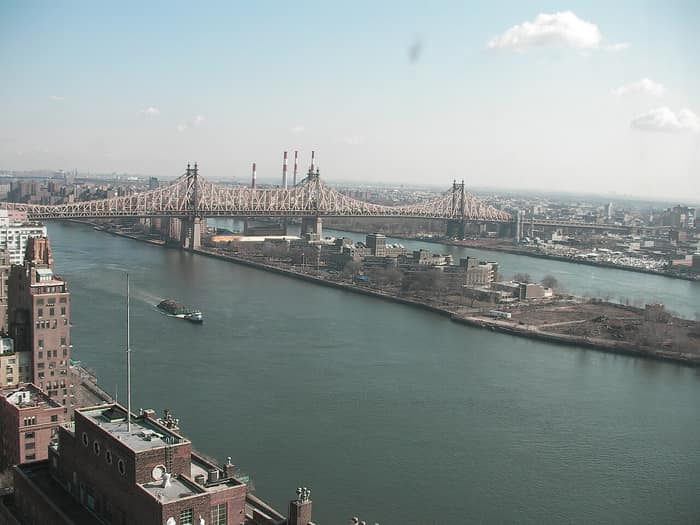
Roosevelt Island
Roosevelt Island · from prison island to a car-light city neighborhood
850 m away
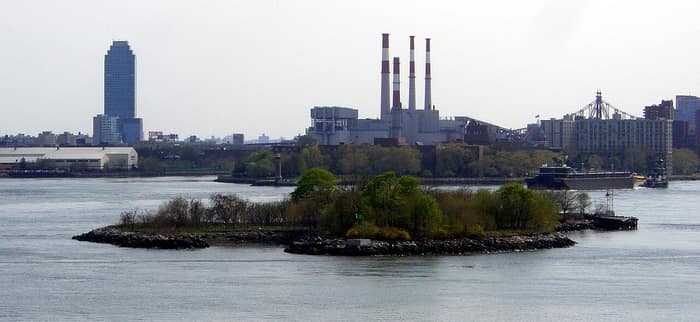
Mill Rock
Mill Rock · a tiny island joined by a huge blast
1.5 km away
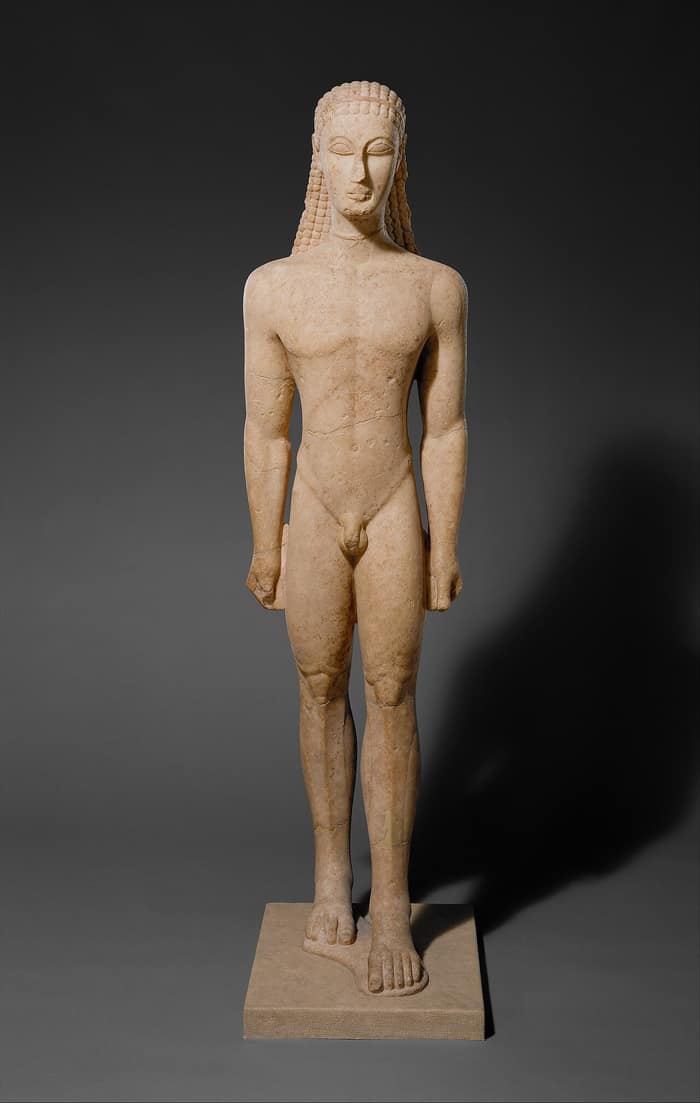
New York Kouros
New York Kouros · an Athenian grave statue at the Met
2 km away