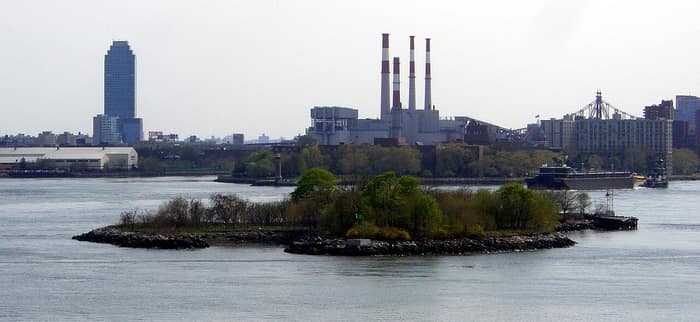
Mill Rock, the Little East River Island Born at Hell Gate
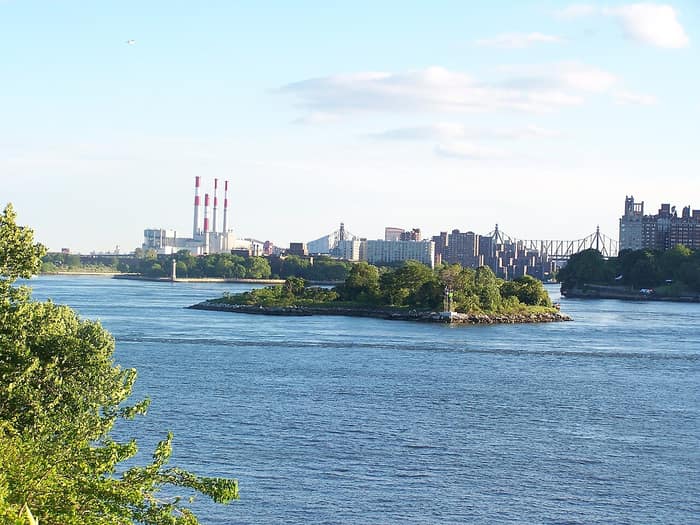
Mill Rock is a small uninhabited island in the East River, about 1,000 feet off Manhattan’s East 96th Street, where the East River and Harlem River meet at Hell Gate. Once a pair of islets with a mill, a blockhouse and a farm, it is now city parkland left to nesting birds. It is a hidden corner of the harbor you can only admire from afar.
Two small islets became one island in 1890 when rubble from the biggest planned explosion of its day was used to fill the gap between them. Now herons and egrets nest where a squatter once farmed.
The history of Mill Rock, from two islets to one island
Mill Rock began as two smaller islands. According to the sources, William Hallet bought them from the local tribes in 1664. In 1701 John Marsh built a mill on one of them, and the pair came to be known as Great Mill Rock and Little Mill Rock, which gave the island its name.
During the War of 1812 the War Department built a blockhouse with two cannons on Great Mill Rock as part of Fort Stevens. It belonged to a chain of blockhouses meant to defend New York Harbor and guard the passage into Long Island Sound against the British Navy. Later, from 1840 to 1898, the island was squatted by Sandy Gibson, who ran a farm there.
The waters around the island, known as Hell Gate, were notoriously dangerous for ships. In the late 19th century the United States Army Corps of Engineers began clearing rocks from the channel. In 1885 it detonated 300,000 pounds of explosives on neighboring Flood Rock, the worst obstacle to East River shipping. It was probably the most forceful explosion in the city’s history up to that time and was felt as far away as Princeton, New Jersey. It has been described as the largest planned explosion before the testing of the atomic bomb, although the blast at the Battle of Messines in 1917 was larger.
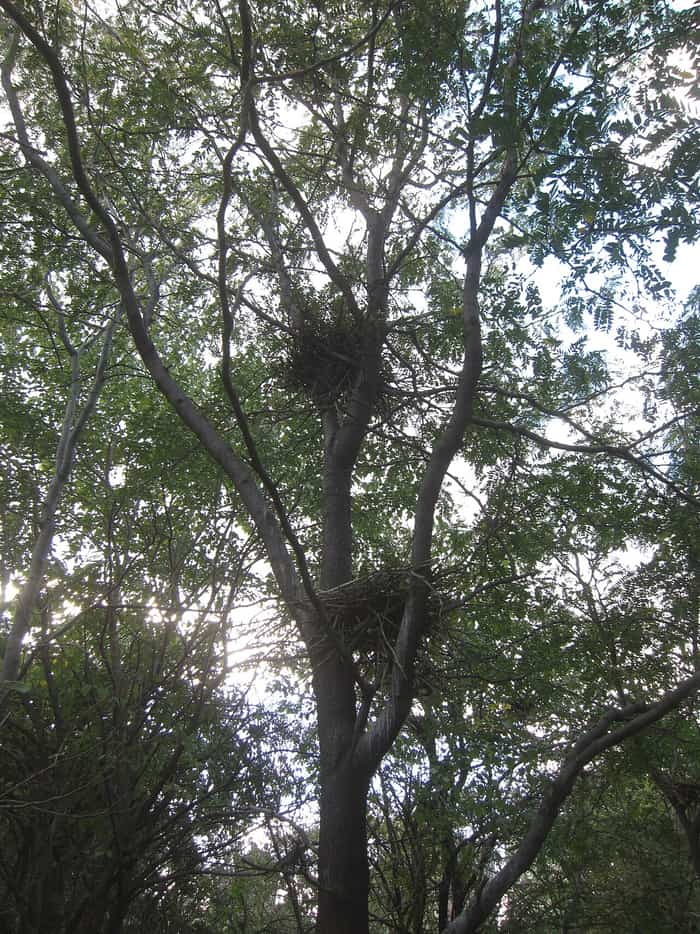
In 1890 the remains of Flood Island were used to fill the space between Great and Little Mill Rock, creating the single island seen today. The island is owned by the City of New York and maintained by the Department of Parks and Recreation as Mill Rock Park. The dock on its southern shore has not been open to the public since the 1960s, when public events were held, and the shore has since returned to shrubbery. Since about 2008 the island has been home to a nesting colony of black-crowned night herons, great egrets, snowy egrets, great black-backed gulls, fish crows and double-crested cormorants, birds thought to have moved from nearby North Brother Island.
Little-known facts about Mill Rock
- Mill Rock is the product of a merger: the island was two islets until fill from the remains of Flood Rock joined them in 1890.
- The 1885 blast at Flood Rock used 300,000 pounds of explosives and was felt as far away as Princeton, New Jersey.
- The 1885 detonation has been described as the largest planned explosion before atomic bomb tests began, though the 1917 blast at the Battle of Messines was larger.
- A squatter named Sandy Gibson farmed the island from 1840 to 1898 without owning it.
- The herons and egrets that nest here are thought to have come from North Brother Island, another hidden island of the East River.
Tours near Mill Rock
Experiences in the area that you can book online with Viator:


Seeing Mill Rock: what you can and cannot do
- Mill Rock is a small uninhabited island that belongs to the city’s parks system, but it is not a regular open park. Its dock has not been open to the public since the 1960s.
- Do not try to land on the island with a private boat. It is a nesting site for wading birds and other species, and sources do not describe any public access.
- The island lies about 1,000 feet off East 96th Street, so it can be seen across the water from the Manhattan shoreline in that area, or from a boat on the East River. Check the current rules and conditions before planning a visit.
- Nearby places on this site include Blackwell Island Light, Hell Gate Bridge, The Octagon and the New York Kouros.
Opening hours, access and conditions can change. Check before you go.
Map: where Mill Rock is
Photos of Mill Rock
Questions
What is Mill Rock?
Mill Rock is a small uninhabited island in the East River between Manhattan and Queens, near Hell Gate. It belongs to the borough of Manhattan and is managed as Mill Rock Park.
Can you visit Mill Rock?
Not in a regular way. Its dock has not been open to the public since the 1960s, and the island is now a nesting place for birds. It can be seen from a distance.
Why is it called Mill Rock?
In 1701 John Marsh built a mill on one of the two original islets, which became known as Great Mill Rock and Little Mill Rock.
How was Mill Rock formed?
It was originally two small islands. In 1890 remnants of Flood Island, left after an 1885 blast to clear Hell Gate, were used to fill the space between them.
What birds nest on Mill Rock?
Since about 2008 the island has hosted black-crowned night herons, great egrets, snowy egrets, great black-backed gulls, fish crows and double-crested cormorants.
Where is Mill Rock?
In the East River, about 1,000 feet off East 96th Street in Manhattan, south of Randalls and Wards Islands, at Hell Gate.
Also nearby
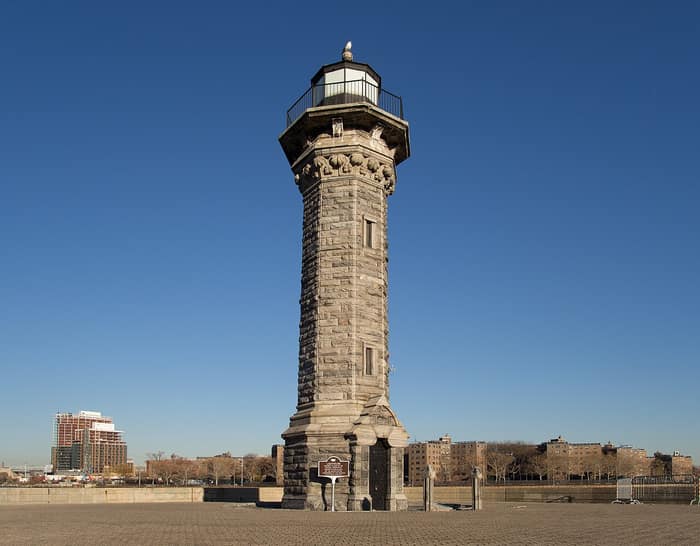
Blackwell Island Light
Blackwell Island Light · a Gothic stone beacon in the East River
900 m away
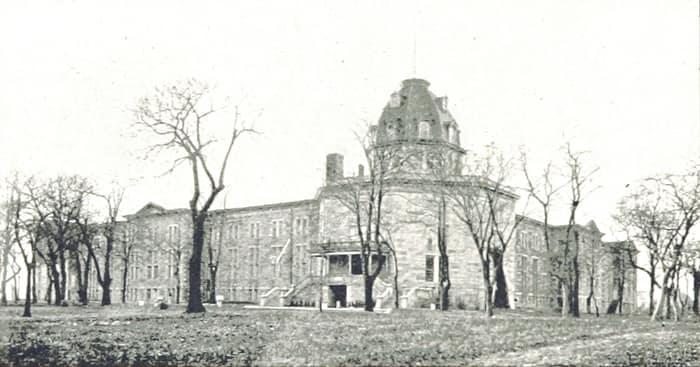
The Octagon
The Octagon · last remnant of a historic asylum, on Roosevelt Island
1.5 km away
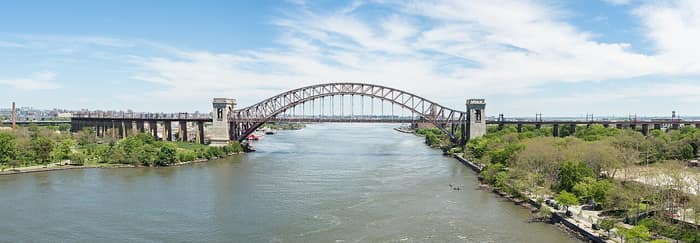
Hell Gate Bridge
Hell Gate Bridge · a 1917 steel rail arch over the East River
1.5 km away
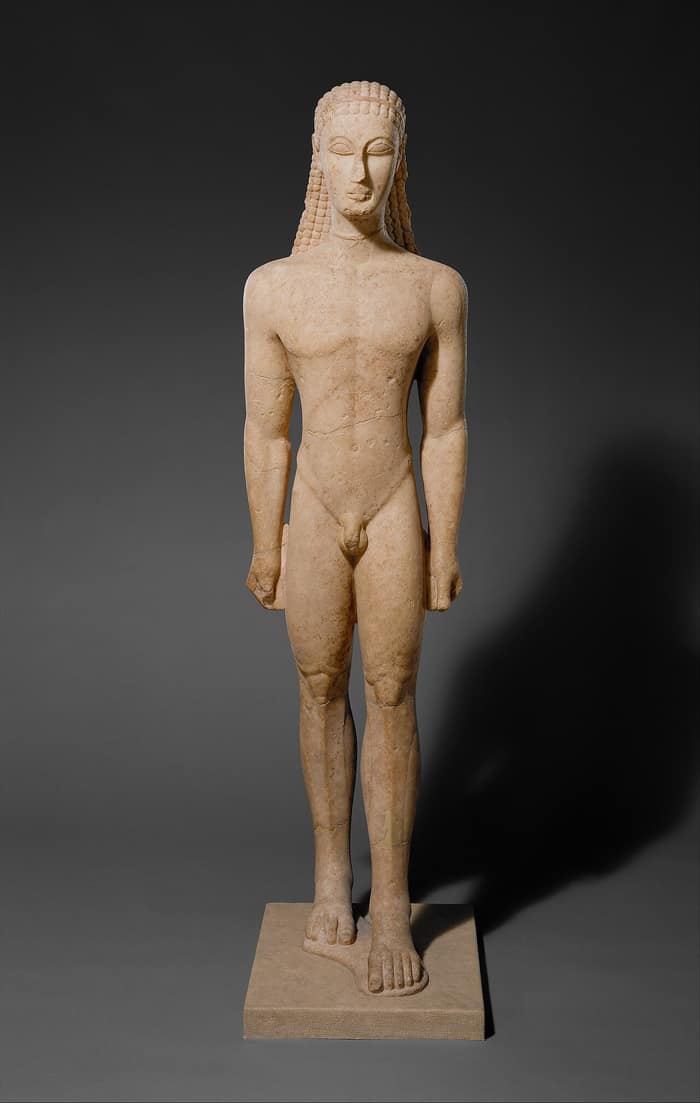
New York Kouros
New York Kouros · an Athenian grave statue at the Met
2 km away