
Woodlawn Cemetery, the Bronx’s Landmark Cemetery of Famous Names
Woodlawn Cemetery is one of the largest cemeteries in New York City and a National Historic Landmark, opened in the Bronx in 1863. Its tree-lined roads and more than 400 acres of hills lead to memorials designed by famous architects and to the graves of more than 300,000 people, many of them well known. It is a quiet, open-air history lesson far from Manhattan’s crowds.
Herman Melville, Duke Ellington, Miles Davis and Celia Cruz rest among the rolling hills of this Bronx cemetery, where the Continental Army once built a redoubt and a former subway yard stands where old Dyckman graves lay.
The history of Woodlawn Cemetery
Woodlawn Cemetery opened during the Civil War, in 1863, on what was then an undeveloped part of Yonkers, in Westchester County. The area was annexed to New York City in 1874. It was laid out in the style of a rural cemetery: rolling hills, winding tree-lined roads and memorials set in a park-like landscape. A stone-mounted plaque near Gun Hill Road, on a high point in the southeastern section, marks the site of a redoubt built by the Continental Army in 1776 to protect its retreat from Manhattan to Westchester.
As the city grew denser, Woodlawn became the destination for remains moved from older burial grounds. Graves from the Rutgers Street church were reburied here in 1866, and most of those from the West Farms Dutch Reformed Church in 1867. Bensonia Cemetery, also called Morrisania Cemetery and originally a Native American burial ground, was moved in 1871; a public school stands on its site today. Graves from the Harlem Church Yard followed that year. In 1926 the remains from Nagle Cemetery were reburied, and the identities of those interred are apparently unknown. The Dyckman-Nagle Burying Ground in Manhattan, established in 1677, was cleared in 1905, and the Dyckman graves reached Woodlawn by 1927. Its site is now the 207th Street Yard of the subway.
Today the cemetery covers more than 400 acres (160 hectares) and holds more than 300,000 people. Its memorials were designed by some of the best-known architects and designers of their time, including McKim, Mead & White, John Russell Pope, James Gamble Rogers, Cass Gilbert, Carrère and Hastings, Sir Edwin Lutyens, Beatrix Jones Farrand and John La Farge. It also holds seven Commonwealth war graves, of six British and Canadian servicemen of World War I and an airman of World War II. In 2011 it was designated a National Historic Landmark because it shows the shift from the rural cemetery of the 19th century to the more orderly cemetery style of the 20th century. In 2012 the gravesite of Admiral David Glasgow Farragut was itself designated a landmark, a rare case of one landmark inside another.
The Woodlawn Conservancy, a nonprofit linked to the cemetery, began in 1999 as the Friends of Woodlawn. In 2021 it joined other groups in conserving more than 40 stones, launched to coincide with the new federal Juneteenth holiday. The grounds are also known for their trees: five were chosen as Great Trees of New York City in 1985, and three more in 2024.
Little-known facts about Woodlawn Cemetery
- The Dutch colonial-era Dyckman-Nagle Burying Ground, founded in 1677, was moved to Woodlawn, and its former site is now a New York City subway yard.
- Many local brewers rest on “Brewer’s Row”, along with a dozen other brewing families, including the Haffens of the Haffen Brewing Company.
- Madam C. J. Walker, described as America’s first self-made millionaire woman, is buried here, along with Nellie Bly, Herman Melville and Duke Ellington.
- Woodlawn holds seven Commonwealth war graves: six British and Canadian servicemen of World War I and a Royal Canadian Air Force airman of World War II.
- Admiral Farragut’s gravesite became a National Historic Landmark in 2012 inside the landmark cemetery, one of the few landmarks that is part of another.
- According to the Spanish Wikipedia, the ashes of Dorothy Parker were buried here in 2020.
Woodlawn Cemetery on screen
According to Wikipedia, Woodlawn doubled for another cemetery in a classic film.
- Once Upon a Time in America – The film’s fictional cemetery of the Synagogue in Brooklyn is actually located at Woodlawn, renamed “Riverdale Cemetery”.
Tours near Woodlawn Cemetery
Experiences in the area that you can book online with Viator:

Visiting Woodlawn Cemetery
- Woodlawn is an active cemetery, so visit quietly and respectfully, and follow the rules posted at the entrances. Check the current opening rules and access conditions before you go.
- Its large grounds have rolling hills and tree-lined roads; allow time to walk or ask the cemetery whether maps or guided visits are available.
- Highlights include the mausoleums and memorials by well-known architects, the stone-mounted plaque that marks the 1776 redoubt near Gun Hill Road and “Brewer’s Row”.
- Many notable people are buried here, including Herman Melville, Duke Ellington, Miles Davis and Celia Cruz. Ask the cemetery how to locate specific graves.
Opening hours, access and conditions can change. Check before you go.
Map: where Woodlawn Cemetery is
Photos of Woodlawn Cemetery
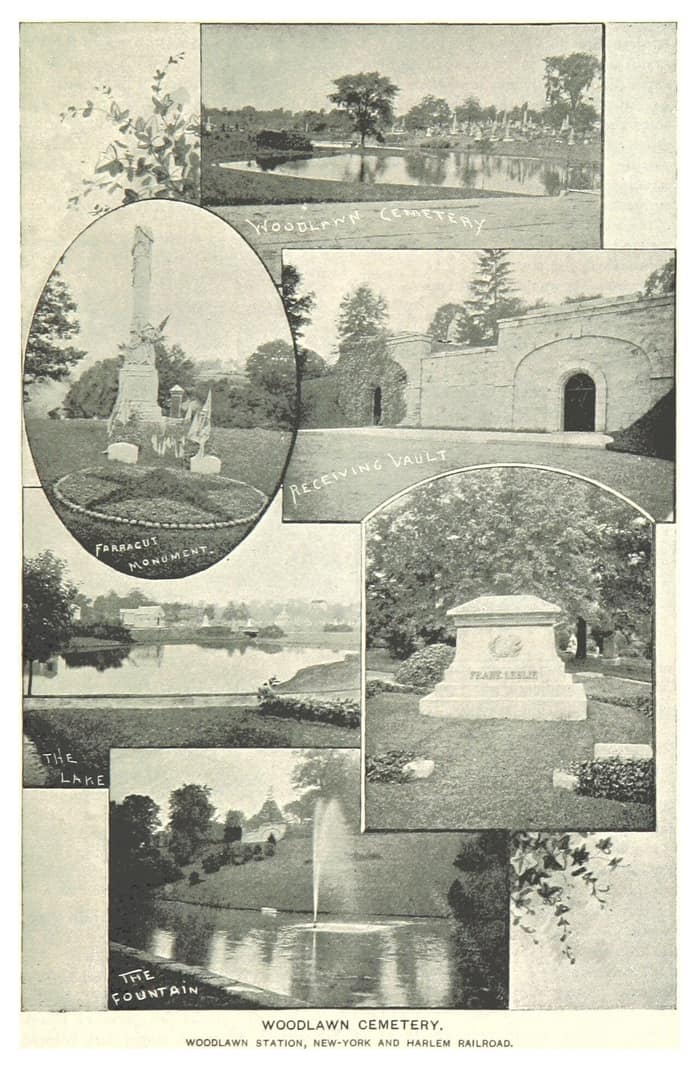
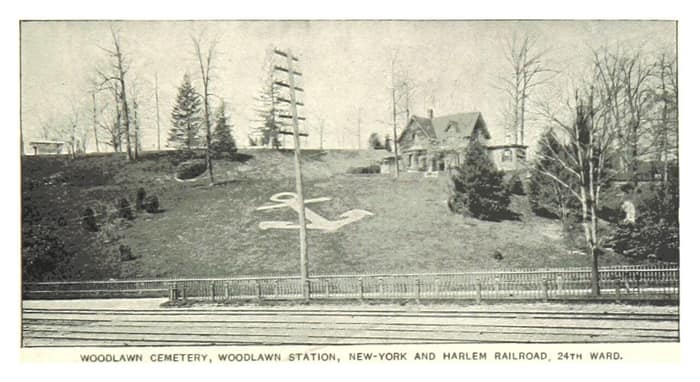
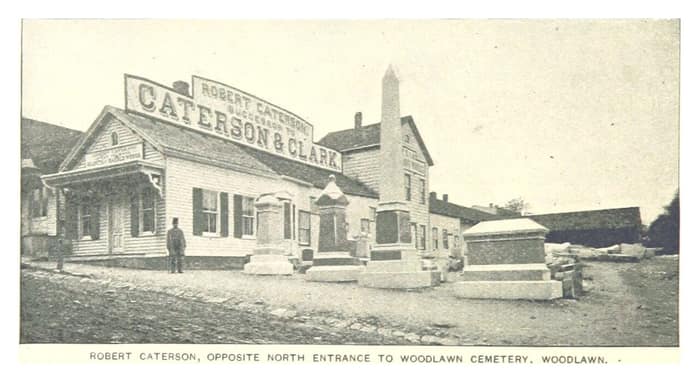
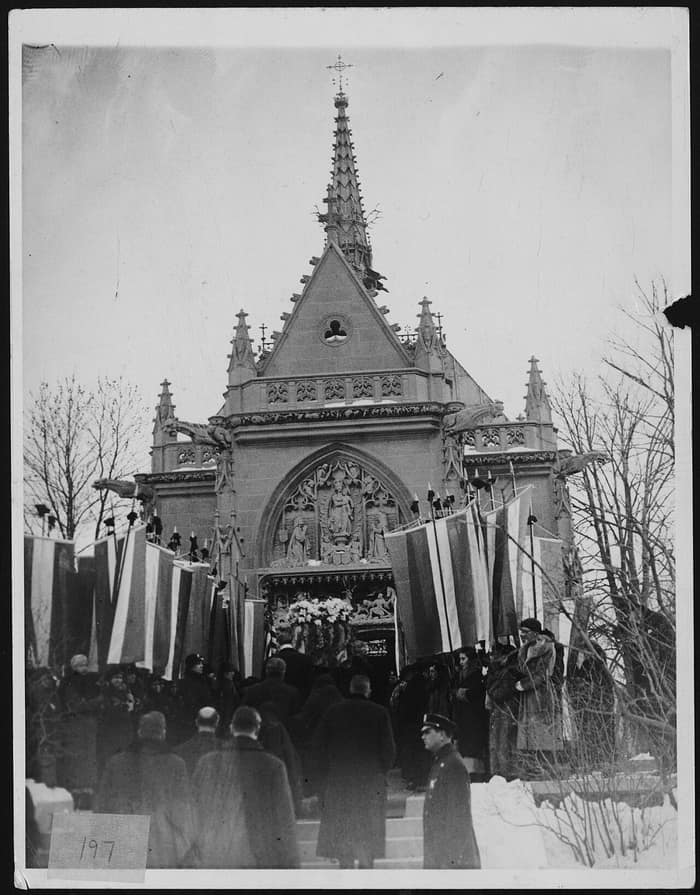
Questions
Can you visit Woodlawn Cemetery?
It is an active cemetery in the Bronx. Check the current entrances, visiting rules and any maps or tours available before you go, and behave respectfully.
Who is buried at Woodlawn Cemetery?
More than 300,000 people, including Herman Melville, Duke Ellington, Miles Davis, Celia Cruz, Irving Berlin, Nellie Bly, Robert Moses and Madam C. J. Walker.
How big is Woodlawn Cemetery?
It covers more than 400 acres (160 hectares) of rolling hills in the Bronx.
When did Woodlawn Cemetery open?
It opened in 1863, during the Civil War, in what was then Yonkers. The area was annexed to New York City in 1874.
Is Woodlawn Cemetery a landmark?
Yes. It was designated a National Historic Landmark in 2011, and Admiral Farragut’s gravesite was designated one in 2012.
Was Woodlawn Cemetery used in a film?
Yes. According to Wikipedia, the cemetery of the Synagogue in Brooklyn in the film Once Upon a Time in America is actually Woodlawn, renamed “Riverdale Cemetery”.
Also nearby
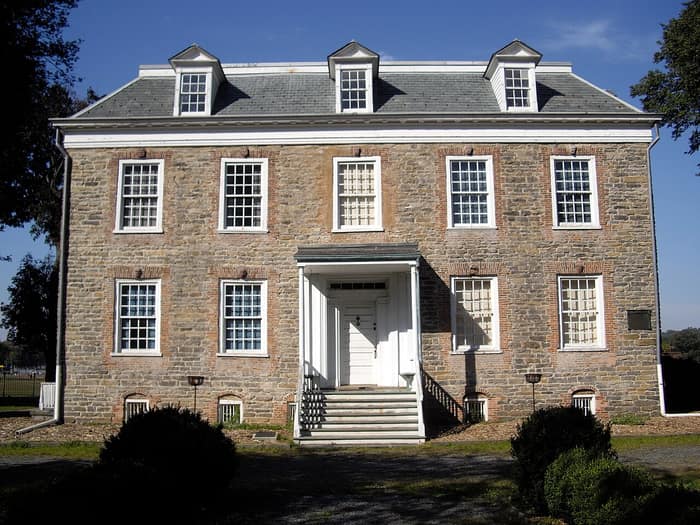
Van Cortlandt House Museum
Van Cortlandt House Museum · 1749 Georgian house in a Bronx park
2 km away

Edgar Allan Poe Cottage
Poe Cottage · where Poe wrote “Annabel Lee” in the Bronx
3 km away
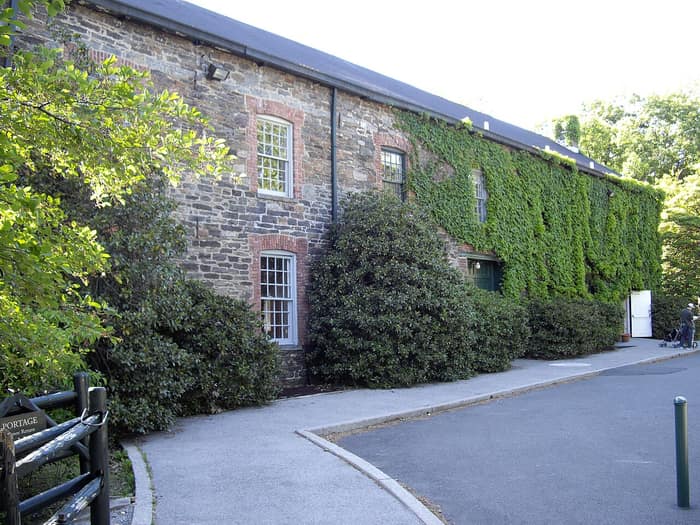
Lorillard Snuff Mill
Lorillard Snuff Mill · oldest tobacco factory building in the U.S.
3.5 km away
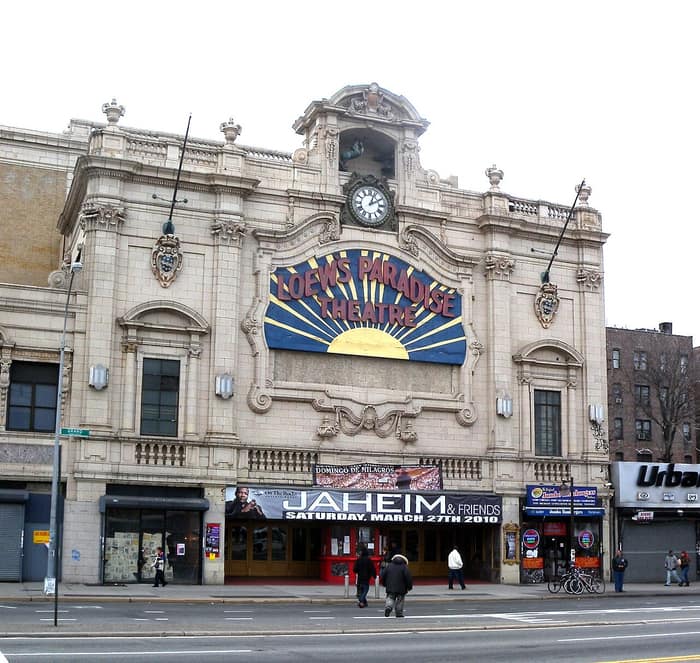
Paradise Theater
Paradise Theater · a Baroque 1929 movie palace in the Bronx
4 km away