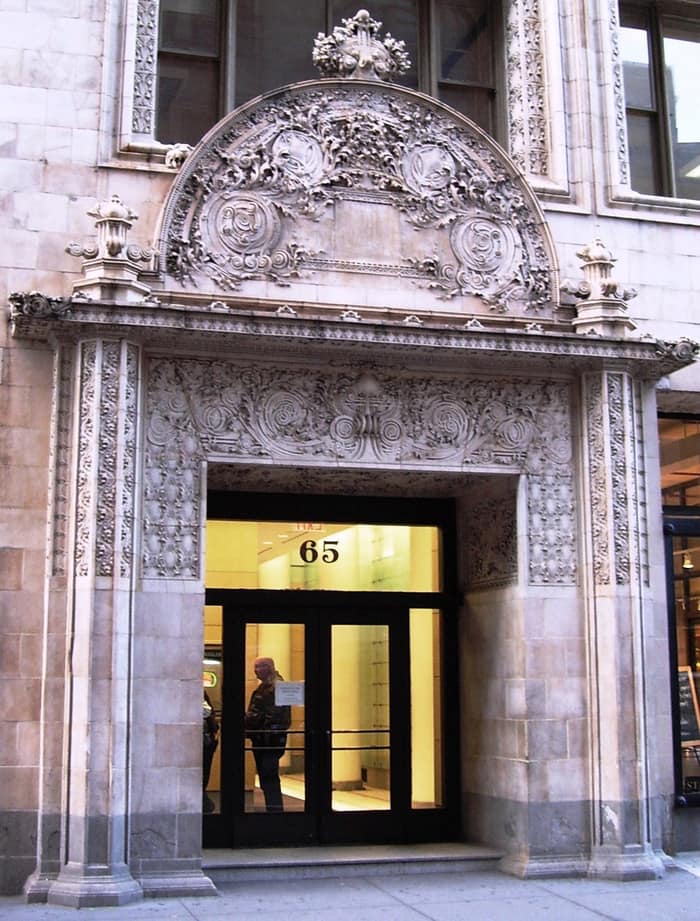
Bayard-Condict Building, Louis Sullivan’s Only Building in New York
The Bayard-Condict Building at 65 Bleecker Street, in NoHo, Manhattan, is a Chicago School skyscraper with a white terracotta facade, built between 1897 and 1899. It is the only building in New York City designed by the architect Louis Sullivan. Easy to miss between Broadway and Lafayette Street, it is a great hidden gem in New York for architecture fans.
Louis Sullivan, the father of the American skyscraper, designed just one building in New York, and it is tucked on a side street in NoHo. Six terracotta angels look down from its top, and a story says a client demanded them.
The history of the Bayard-Condict Building, from foreclosure to landmark
The site on Bleecker Street was once occupied by the Bank for Savings in the City of New York, whose building burned down in 1895. In September 1897 the United Loan and Investment Company bought the lot and announced a 12-story Bayard Building, named after the Bayard family, an early settler family of New Netherland. For the design they hired the Chicago architect Louis Sullivan, working with the New York architect Lyndon P. Smith. Sullivan was licensed to practice only in Illinois, so he often teamed up with a local partner on out-of-state commissions. It was his first completed design after his partnership with Dankmar Adler ended in 1896.
Plans were filed in September 1897, but the city’s Department of Buildings raised numerous objections, mainly about the skeleton frame the skyscraper used, and construction began in December 1897. Money troubles followed. The bank started foreclosure proceedings in December 1898 and, in April 1899, one of the building’s material contractors, Charles W. Rice, bought it at auction. Emmeline G. H. Condict acquired it in June 1899, and the building was completed that December. A fire damaged the tenth floor in March 1900, and the Condict family sold the building that May. Sources disagree on whether it was first known as the Bayard Building or the Condict Building; the name Bayard-Condict stuck.
For decades it was a commercial loft building. By the 1940s the Shulsky family owned it, and in 1964 the original storefronts, with their ornate columns and capitals, were replaced by generic aluminum ones. By then ornate facades had fallen out of fashion, though the Municipal Art Society had already listed the building as worth preserving. The city’s Landmarks Preservation Commission held several hearings starting in 1966 and finally designated it a city landmark on November 25, 1975, largely because it was Sullivan’s only New York building. The owners objected, even suing the commission, but a preservationist, Carolyn Pitts, quietly prepared a report, and in 1976 the building became a National Historic Landmark.
A restoration of the facade in 1996 repaired about 1,200 of its 7,000 glazed terracotta pieces, fully replaced 30 and added replicas of the original ground-floor capitals, modeled on a surviving original. The building became part of the NoHo Historic District in 1999, and the restorers received a preservation award in 2003. Today it holds shops and offices; tenants over the years have included fashion, music and arts organizations.
Little-known facts about the Bayard-Condict Building
- It is the only building in New York City designed by Louis Sullivan, the Chicago architect often called the father of the skyscraper.
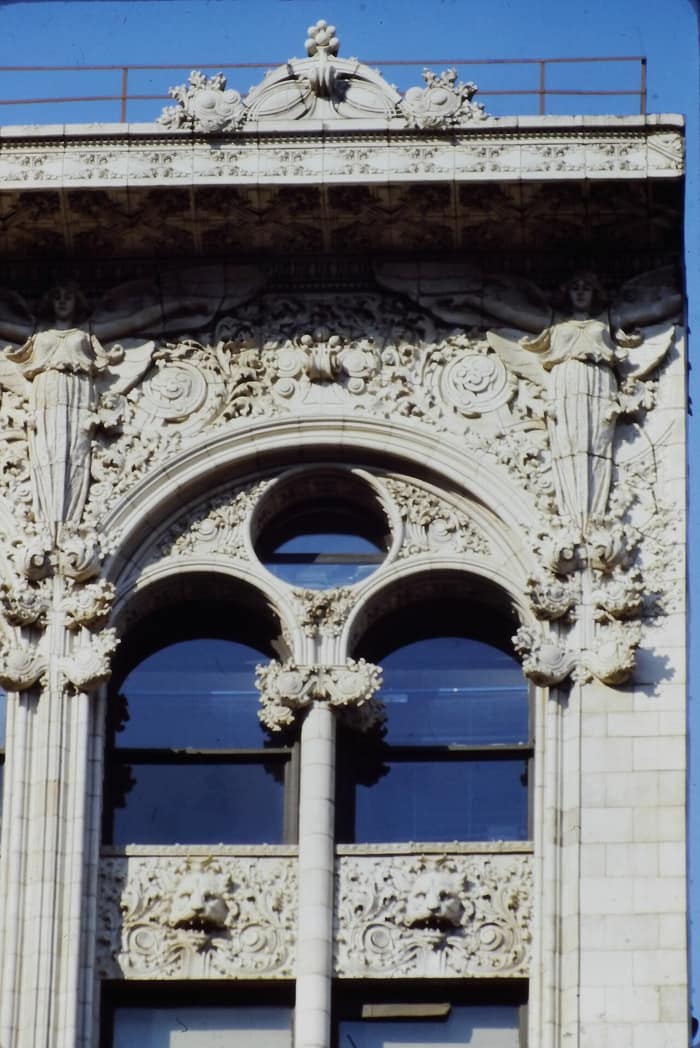
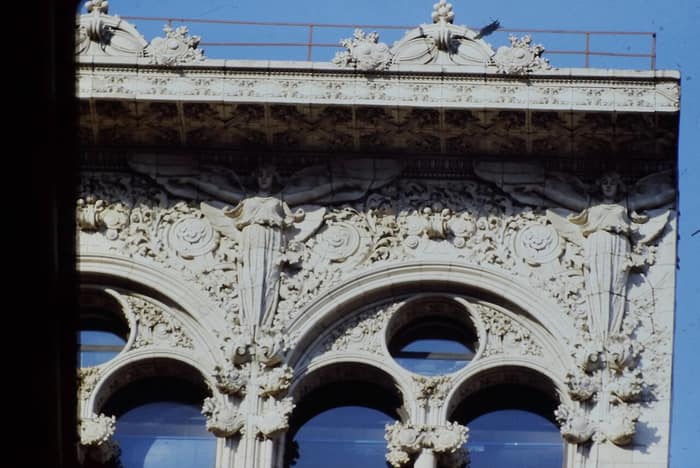
- Six winged angels sit just below the cornice. A popular story says the client, Silas Alden Condict, wanted them as the six working days of the week, and that Sullivan asked whether he wanted a commercial building or a church. Historians dispute Condict’s role, since Sullivan had used similar angels earlier and the sculptures appeared in a magazine before the Condict family bought the building.
- Frank Lloyd Wright, who trained under Sullivan, said it was his teacher’s favorite design.
- Paul Goldberger wrote in 1976 that its cornice is perhaps the finest in all of New York.
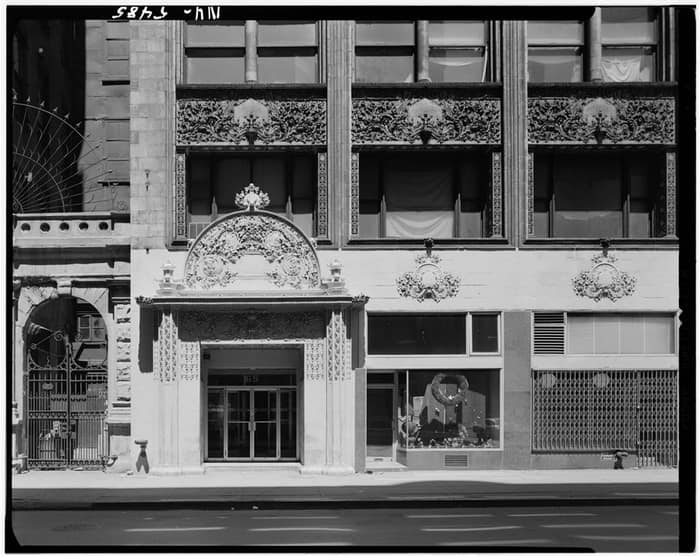
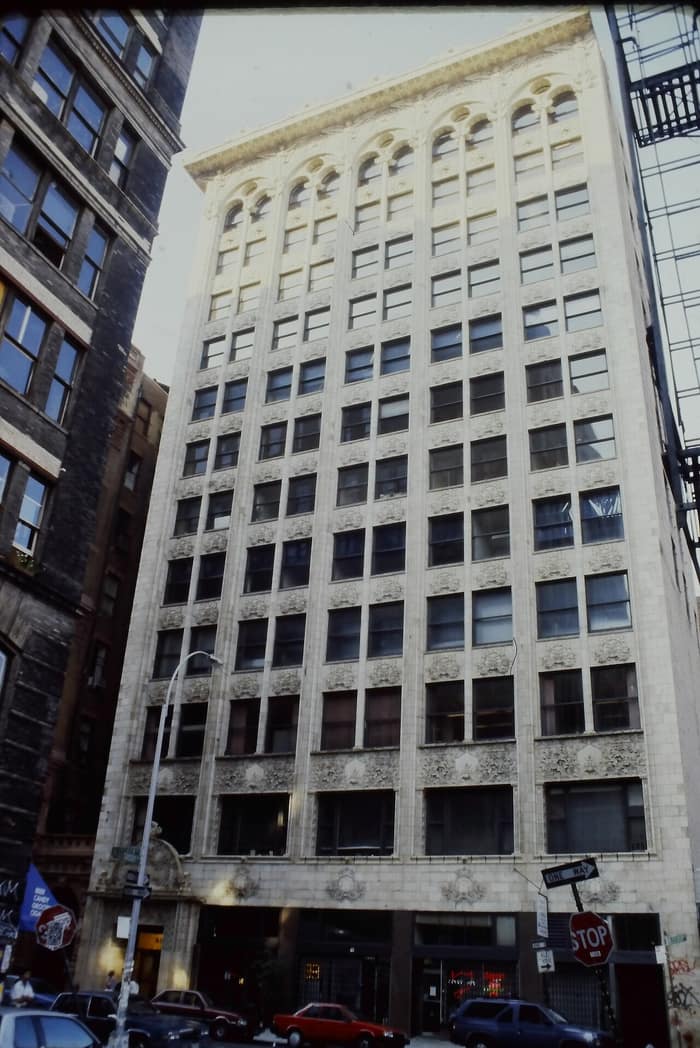
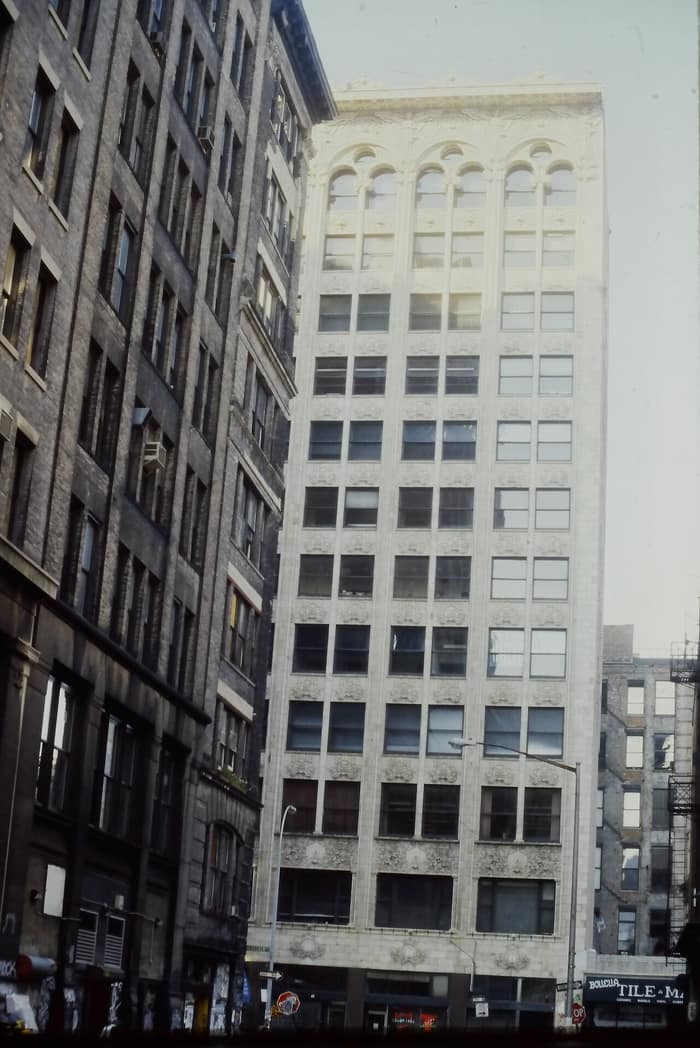
- The facade is made of white glazed terracotta in thin layers, and the vertical piers divide it into five bays, with a decorated base, plain shaft and ornate crown.
- When the original ground-floor columns were removed in 1964, one capital went to the Brooklyn Museum and another to a private art collection; a surviving capital later served as the model for the replicas installed in the 1990s.
Tours near Bayard-Condict Building
Experiences in the area that you can book online with Viator:


Seeing the Bayard-Condict Building in NoHo
- The building stands on the north side of Bleecker Street between Broadway and Lafayette Street, at the northern end of Crosby Street. The facade is best enjoyed from the sidewalk across the street, looking up at the terracotta ornament and the angels below the cornice.
- It is used for offices and ground-floor shops, so it is not a museum and has no visitor program that the sources mention. Do not expect to enter the upper floors.
- An entrance to the Bleecker Street subway station is right beside the building, so it is easy to reach.
- It makes a natural stop alongside other hidden corners of NoHo and the East Village, such as the Merchant’s House Museum and the New York Marble Cemetery.
Opening hours, access and conditions can change. Check before you go.
Map: where Bayard-Condict Building is
Photos of Bayard-Condict Building
Where to stay near Bayard-Condict Building
Hotels close by, with ratings and current availability.
The Marlton Hotel
Check availability ›
Washington Square Hotel by Library Hotel Collection
Check availability ›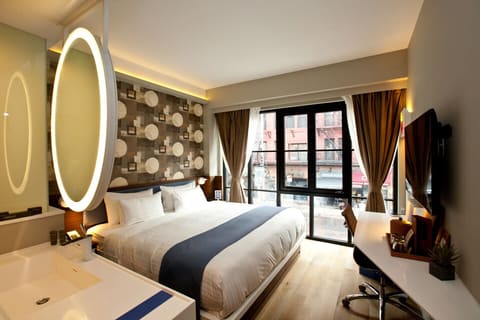
NobleDEN Hotel
Check availability ›Hotel photos: Expedia Group. Ratings are shown as published there. Availability and conditions change; check the booking page. Affiliate links: we may earn a commission at no extra cost to you. All hotels by borough
Questions
What is the Bayard-Condict Building?
It is a 12-story commercial building at 65 Bleecker Street in NoHo, Manhattan, built in 1897 to 1899 in the Chicago School style. It is a city landmark and a National Historic Landmark.
Who designed the Bayard-Condict Building?
Louis Sullivan, working with the New York architect Lyndon P. Smith. It is the only building by Sullivan in New York City.
What are the angels on the Bayard-Condict Building?
Six winged terracotta figures just below the cornice. A popular story says the client wanted them for the six working days, but historians dispute that, since Sullivan had used similar angels in earlier designs.
Can you go inside the Bayard-Condict Building?
It is used for offices and shops, and the sources mention no visitor access to the interior. The facade can be admired from the sidewalk at any time.
Where is the Bayard-Condict Building?
At 65 Bleecker Street, in NoHo, on the north side of the street between Broadway and Lafayette Street. A Bleecker Street subway entrance is right next to it.
Why is the Bayard-Condict Building important?
It was one of the first skeleton-frame skyscrapers in New York and a radical design for its time, with a facade that shows the structure beneath it. The Landmarks Preservation Commission called it the most significant commercial building of its kind in the city.
Also nearby
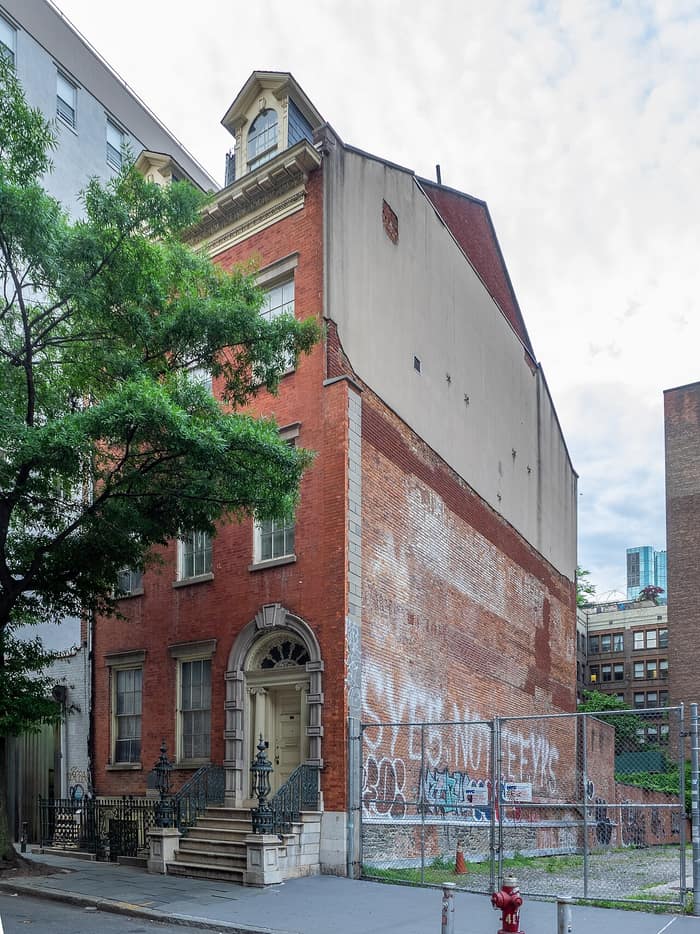
Merchant’s House Museum
Merchant’s House Museum · NoHo home with its original interior
250 m away

New York Marble Cemetery
New York Marble Cemetery · a hidden 1830 graveyard of marble vaults
350 m away
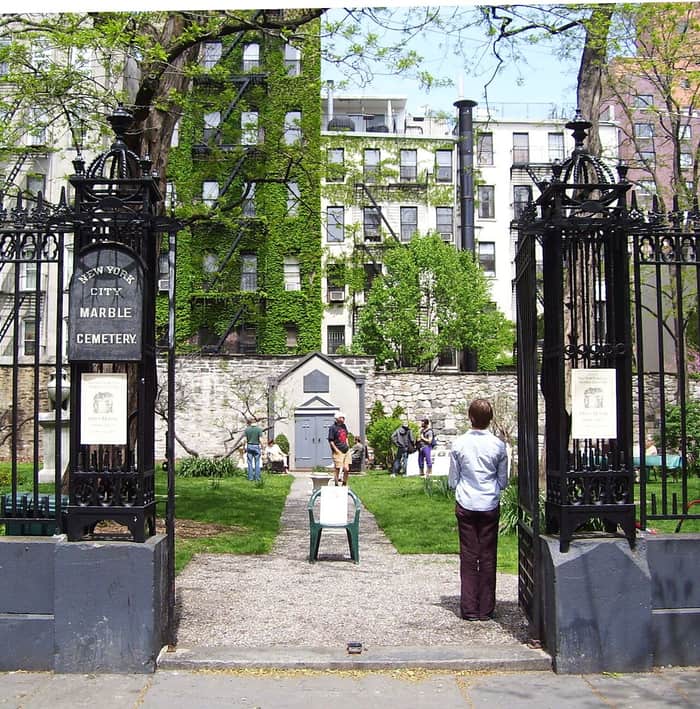
New York City Marble Cemetery
NYC Marble Cemetery · 258 marble vaults behind a wall
550 m away

St. Mark’s Church in-the-Bowery
St. Mark’s Church · Peter Stuyvesant’s vault and poets’ stage
750 m away