
St. Mark’s Church in-the-Bowery, a Dutch Farm Chapel Turned Arts Hub
St. Mark’s Church in-the-Bowery is an Episcopal parish at 131 East 10th Street in Manhattan’s East Village. Its site has hosted worship since the mid-17th century, making it the city’s oldest site of continuous religious practice, and its fieldstone building is the second-oldest church building in Manhattan. It is also a cultural landmark where poets, dancers and playwrights have performed for generations.
Peter Stuyvesant, the last Dutch governor of New Amsterdam, was buried in a vault here in 1672, and the site has seen worship ever since. A 1971 poetry reading in the same church launched a rock career.
The history of St. Mark’s Church in-the-Bowery, from Dutch farm to arts hub
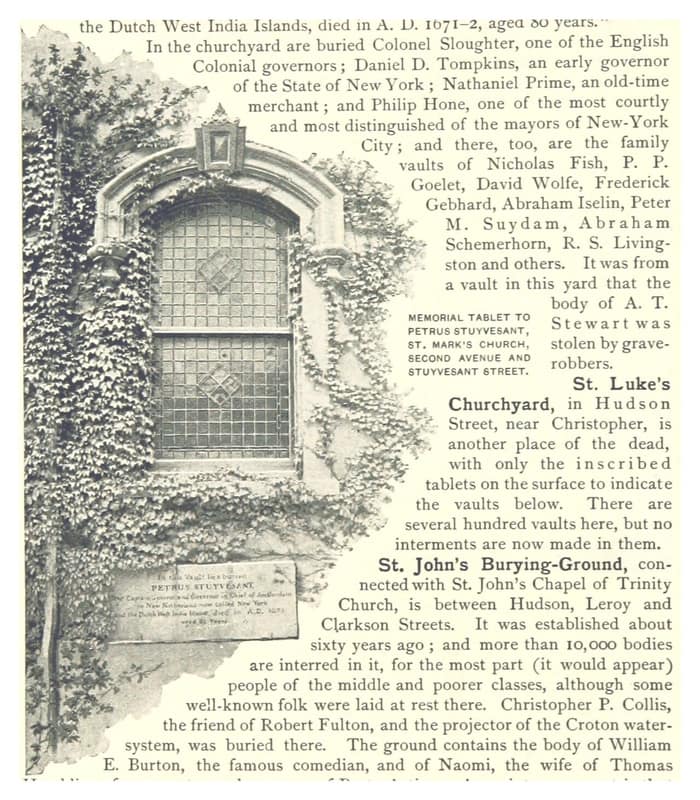
In 1651 Petrus Stuyvesant, Director General of New Netherland, bought land from the Dutch West India Company for a bowery, the Dutch word for a farm. By 1660 he had built a family chapel at the spot where the church now stands. When he died in 1672, he was interred in a vault under that chapel.
His great-grandson, also called Petrus or Peter Stuyvesant, sold the chapel property to the Episcopal Church in 1793 for a nominal sum, asking that a new chapel be built for Bowery Village, the community that had grown around the family chapel. The cornerstone of the present church was laid in 1795, and the fieldstone Georgian building by the architect and mason John McComb Jr. was completed and consecrated on May 9, 1799. Alexander Hamilton gave legal help in incorporating St. Mark’s as the first Episcopal parish in New York City independent of Trinity Church.
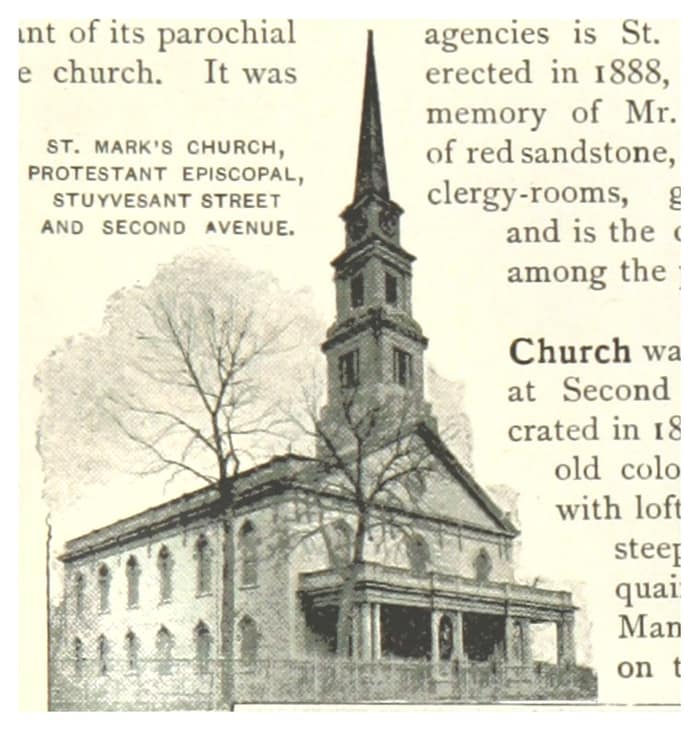
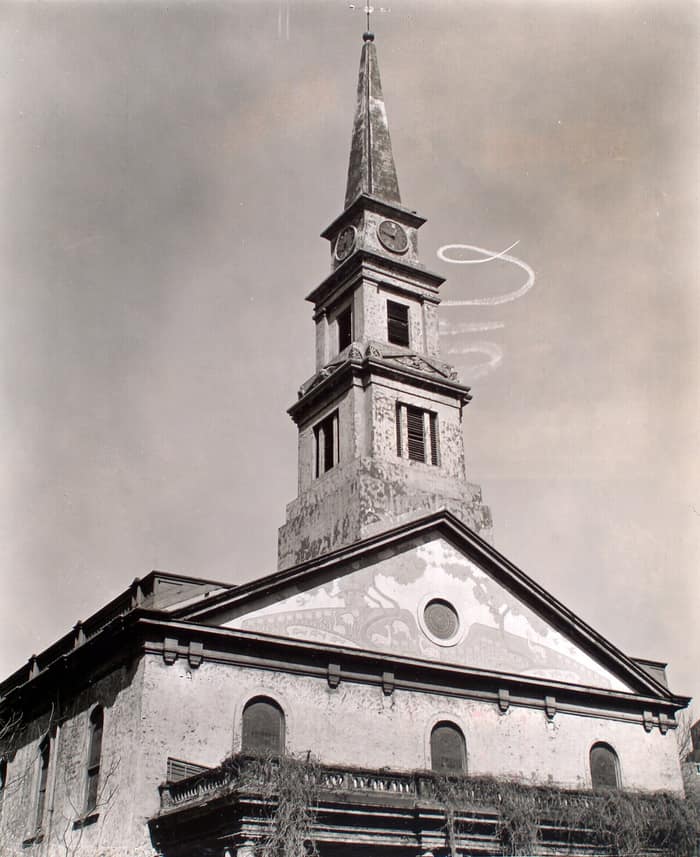
The building kept changing in the 19th century. The Greek Revival steeple went up in 1828, with a design attributed to Martin Euclid Thompson and Ithiel Town. A stone parish hall followed in 1835, and in 1836 the church was renovated and its square pillars replaced by thinner Egyptian Revival ones. The cast and wrought iron fence dates from 1838, and a school for poor children was established in the same period. A cast iron portico, attributed to James Bogardus, an early pioneer of cast iron construction, was added around 1858, and in 1861 the architect James Renwick Jr. designed a brick addition to the parish hall. Early in the 20th century Ernest Flagg designed the rectory.
The 20th century made St. Mark’s a stage for the arts. The poet Kahlil Gibran joined its Arts Committee in 1919, and in 1920 the statues “Aspiration” and “Inspiration” by Solon Borglum were unveiled beside the entrance. Isadora Duncan danced here in 1922 and Martha Graham in 1930. In the 1960s Theatre Genesis was founded, Sam Shepard staged his first two plays here, and in 1966 the Poetry Project and the Film Project, which later became the Millennium Film Workshop, were founded. The Danspace Project followed in 1975.
On July 27, 1978, a fire nearly destroyed the church. A group called Citizens to Save St Mark’s raised funds, and the Preservation Youth Project carried out the reconstruction under the architect Harold Edelman. The restoration was completed in 1986, with new stained-glass windows designed by Edelman. Burial vaults still lie under the East and West yards, and cremation burials continue in the vault under the West Yard. Today the rectory houses preservation and community organizations as well as arts groups.
Little-known facts about St. Mark’s Church
- The merchant Alexander Turney Stewart was buried here, and his body was stolen two years after his burial and held for ransom.
- Commodore Matthew C. Perry, famous for his role in the “opening” of Japan, was originally interred here, but his body was later moved to Island Cemetery in Newport, Rhode Island.
- In 1952 Queen Juliana of the Netherlands visited and laid a wreath at the bust of Petrus Stuyvesant, which the Dutch government and her mother, Queen Wilhelmina, had given to the church in 1915.
- In 1969 the “Electric Liturgy”, a fusion of liturgy and experimental rock performed by the Mind Garage, became the first work of its kind to be nationally televised.
- A November 1971 reading by Patti Smith, accompanied by Lenny Kaye on guitar, launched their rock and roll careers and marked the founding of the Patti Smith Group.
- Rector William Guthrie was known for including Native American, Hindu, Buddhist and Bahá’í ceremonies and guest speakers in services.
Tours near St. Mark’s Church in-the-Bowery
Experiences in the area that you can book online with Viator:


Visiting St. Mark’s Church in-the-Bowery: what to see
- St. Mark’s is an active Episcopal parish and also a venue for performances. Opening hours and access to the interior vary, so check the current opening hours and access rules before you go.
- From the street you can see the fieldstone Georgian building, the Greek Revival steeple, the cast iron portico and the cast and wrought iron fence, plus the Borglum statues beside the entrance.
- The church’s website offers a self-guided walking tour, according to the external links of its Wikipedia entry.
- Burial vaults lie under the East and West yards. Their access conditions are not described in the sources, so treat them as not open to visitors unless the church says otherwise.
- The Poetry Project and the Danspace Project stage events throughout the year, so check the venues’ own schedules.
Opening hours, access and conditions can change. Check before you go.
Map: where St. Mark’s Church in-the-Bowery is
Photos of St. Mark’s Church in-the-Bowery
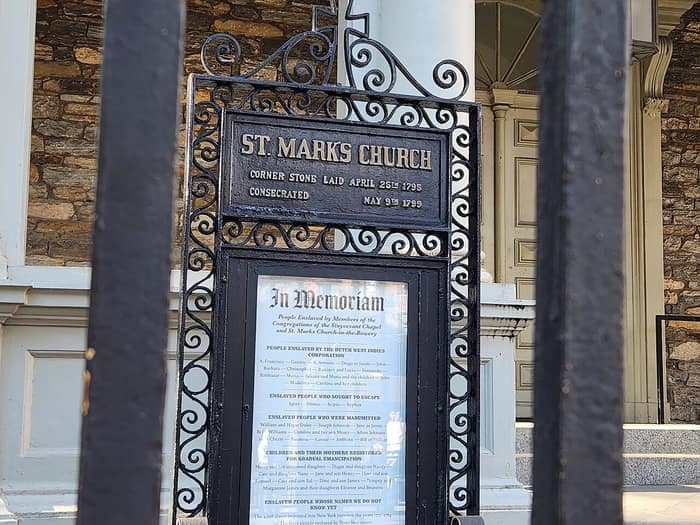
Questions
Is St. Mark’s Church in-the-Bowery worth visiting?
Yes, if you like layered New York history. The site has hosted worship since the mid-17th century, the building dates from 1799, and the church has been a home for poetry, dance and theater.
Who is buried at St. Mark’s Church in-the-Bowery?
Petrus Stuyvesant, the Dutch director general, is buried in a vault, along with prominent New Yorkers including Daniel D. Tompkins, a vice president of the United States, and Philip Hone, a mayor of New York. Check the church for any access information.
Where is St. Mark’s Church in-the-Bowery?
It is at 131 East 10th Street in the East Village of Manhattan, near Stuyvesant Street and Second Avenue.
Why is it called “in-the-Bowery”?
Petrus Stuyvesant bought the land in 1651 for a bowery, a farm, and the community that grew around his family chapel was known as Bowery Village.
What happened to the church in 1978?
A fire on July 27, 1978, nearly destroyed it. A community effort rebuilt it, and the restoration was completed in 1986.
Is St. Mark’s still used for the arts?
Yes. The Poetry Project and the Danspace Project hold events there, and its rectory also houses preservation organizations.
Also nearby
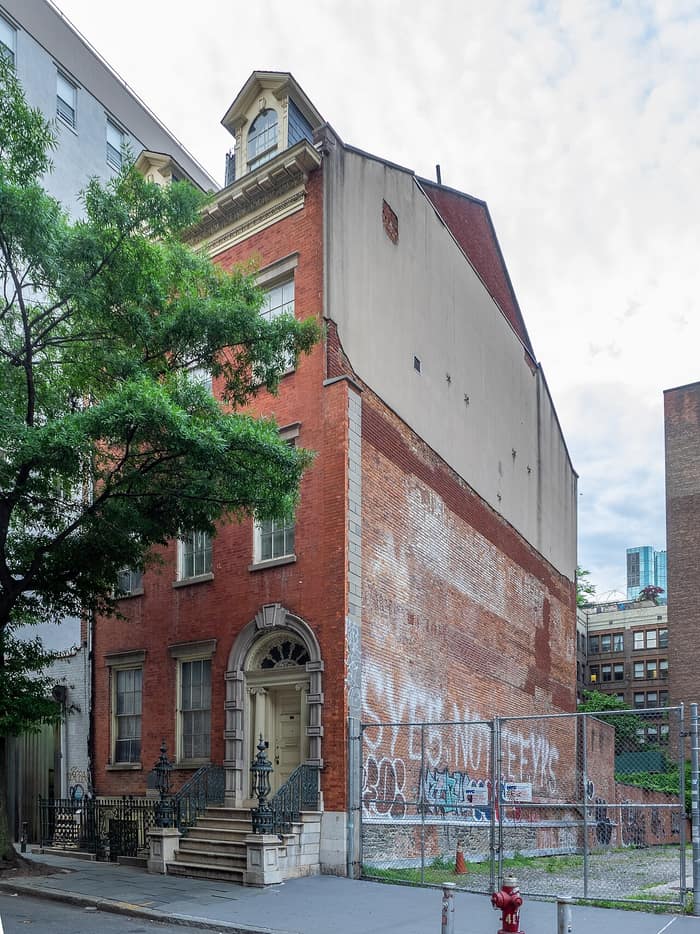
Merchant’s House Museum
Merchant’s House Museum · NoHo home with its original interior
500 m away

New York Marble Cemetery
New York Marble Cemetery · a hidden 1830 graveyard of marble vaults
600 m away
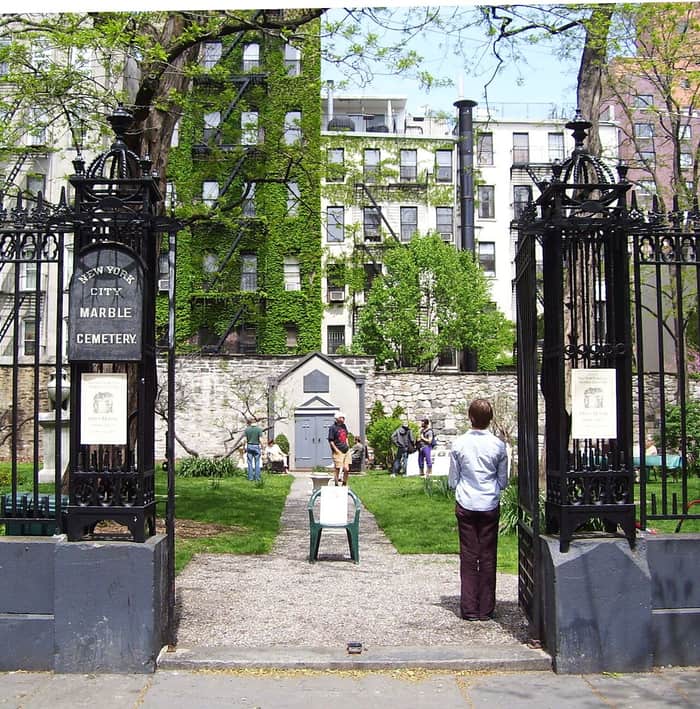
New York City Marble Cemetery
NYC Marble Cemetery · 258 marble vaults behind a wall
650 m away
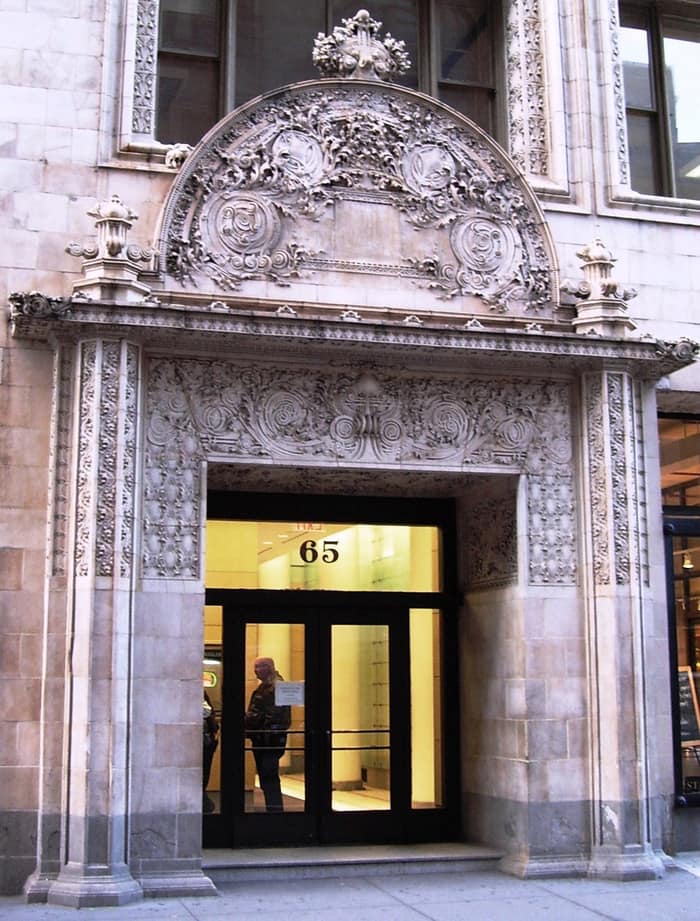
Bayard-Condict Building
Bayard-Condict Building · Sullivan’s only NYC skyscraper, with winged angels
750 m away