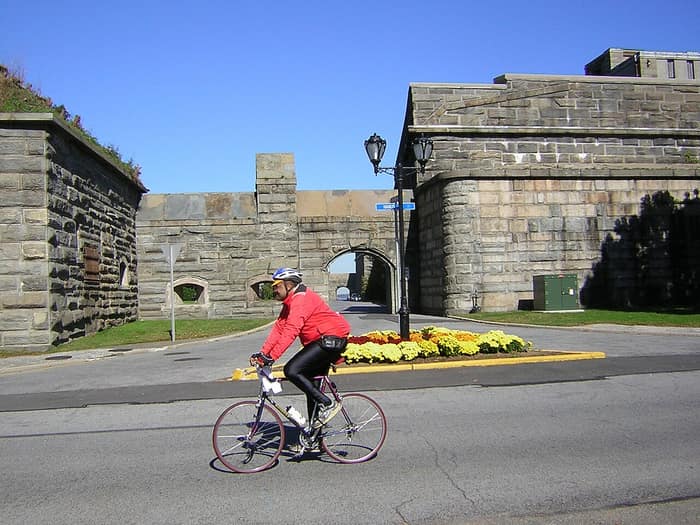
Fort Schuyler, the 19th-Century Fortress at the Bronx’s Edge
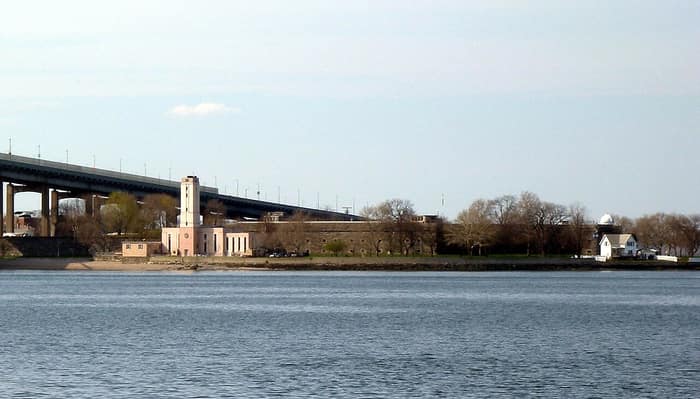
Fort Schuyler is a preserved brick-and-granite coastal fortress on Throggs Neck, the southeastern tip of the Bronx, where the East River meets Long Island Sound. Begun in the 1830s, it is considered one of the finest examples of early 19th-century fortification in the country. It is easy to overlook, but it is a real off-the-beaten-path stop for fort fans, and it now shares its grounds with a maritime college and a small museum.
It was built to hold 312 guns against a naval attack that never came. Instead, this Bronx fort became a Civil War prison and hospital, and today a college campus.
The history of Fort Schuyler, from coastal defense to college
Fort Schuyler was one of many forts built along the East Coast under the “Third System” of United States fortifications, a program that followed the War of 1812, when it became clear that the coast was poorly defended against a foreign invasion. Work began in 1833, and the fort was dedicated in 1856 when it was about 75 percent complete, although it was not garrisoned until 1861. It stands on Throggs Neck, the southeastern tip of the Bronx, where the East River meets Long Island Sound, and it was named for Major General Philip Schuyler of the Continental Army. Fort Totten, on the opposite shore in Queens, was its partner: together their batteries formed a bottleneck of fire for ships trying to approach New York City.
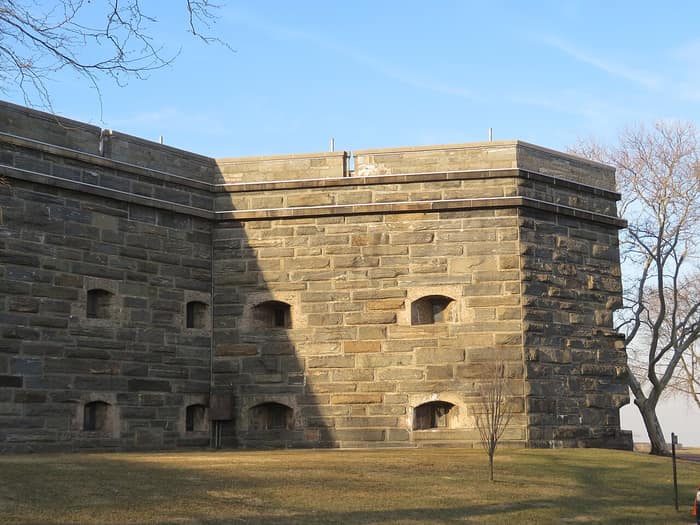
The Army Corps of Engineers designed it so that four of its five sides could cover the water. At its peak it was planned for 312 guns and a garrison of 1,250 men. The seaward fronts had three tiers of cannon, the lower two inside the masonry in casemates and the third on the roof. Small “tower bastions”, a type developed by the engineer Joseph G. Totten, guarded the corners. Behind the fort stood a large hornwork, which was unique among Third System forts, and an advanced redoubt that was later demolished.
During the Civil War the fort held as many as 500 Confederate prisoners of war and Union military convicts. It also had the McDougall Hospital, with a capacity of 2,000 beds, and it is said to have had one of the most effective waste-removal systems of any fort of its time. Fort Schuyler was also a mobilization and training center. Units that drilled here before heading to the front included Duryee’s Zouaves and two regiments of Meagher’s Irish Brigade, the 69th and 88th New York. Duty was reported to be dull, since many of the men worked as guards and hospital stewards rather than as artillerymen.
A ten-gun battery and a mine casemate were added in the 1870s. Under the Endicott Program, modern batteries named Gansevoort, Hazzard, Bell and Beecher were completed around 1898 to 1900, but the East River defenses were soon superseded by forts farther east on Long Island Sound. Some guns were removed in World War I, and in 1934 the fort was disarmed and handed to New York State. All of the Endicott-era batteries were demolished in the 1950s.
In the late 1920s the Army placed the fort on its abandoned list. Robert Moses wanted it for a state park and as a permanent home for the New York State Merchant Marine Academy, and after a long political struggle the academy prevailed. The site passed to the state in 1934, the Works Progress Administration rehabilitated it, and it was dedicated to the school in 1938. That school, founded in 1874, became the State University of New York Maritime College in 1948. The fort has been on the National Register of Historic Places since 1976, and in 1986 part of it opened as the Maritime Industry Museum.
Little-known facts about Fort Schuyler
- At its peak the fort could mount 312 guns and house 1,250 soldiers, yet it never fired on an enemy ship.
- Its hornwork, a large outer defensive work facing the land, is described as unique among all Third System forts.
- The fort is said to have had one of the most effective waste-removal systems ever seen in a fort of its period.
- The 5-inch guns of Battery Bell were removed during World War I for possible use in France as field guns, but they never came back and were scrapped around 1920.
- Fort Schuyler is named for Philip Schuyler, a major general of the Continental Army.
- The Army’s old engineer, Joseph G. Totten, gave his name to the fort across the water, Fort Totten, and designed the small tower bastions seen here.
Tours near Fort Schuyler
Experiences in the area that you can book online with Viator:


Visiting Fort Schuyler: what you can see
- The fort is part of the campus of the State University of New York Maritime College, so it is an active school and not a regular city park. Check the current opening hours and access rules before you go.
- A portion of the fort houses the Maritime Industry Museum, with exhibits on commercial shipping, the merchant marine, the port of New York and the history of the fort itself. It has been open to the public on weekdays with guided tours and on weekends without tours.
- The brick walls, the south gate and the bastions can be appreciated from the outside as part of a visit to Throggs Neck, with views over the water where the East River meets Long Island Sound.
- Fort Totten, its partner across the water, is also a short distance away in Queens, so the two can be combined into a day on the forts of the East River entrance.
Opening hours, access and conditions can change. Check before you go.
Map: where Fort Schuyler is
Photos of Fort Schuyler
Where to stay near Fort Schuyler
Hotels close by, with ratings and current availability.

Marco LaGuardia Hotel
Check availability ›
Hotel Indigo Flushing - LaGuardia by IHG
Check availability ›
Melrose Hotel
Check availability ›Hotel photos: Expedia Group. Ratings are shown as published there. Availability and conditions change; check the booking page. Affiliate links: we may earn a commission at no extra cost to you. All hotels by borough
Questions
Can you visit Fort Schuyler?
Parts of it, yes. The fort sits on a college campus, and the museum inside has been open to the public on set days. Check the current opening hours and access rules before you go.
Where is Fort Schuyler?
It is in the Bronx, on Throggs Neck, the southeastern tip of the borough, where the East River meets Long Island Sound.
Why was Fort Schuyler built?
It was built after the War of 1812 to protect New York City from naval attack through Long Island Sound. Together with Fort Totten across the water, it formed a bottleneck of defenses.
Did Fort Schuyler ever see battle?
The sources do not describe any naval battle here. During the Civil War it served as a prison, a hospital and a training and mobilization center.
Who is Fort Schuyler named after?
It was named in honor of Major General Philip Schuyler of the Continental Army.
What is the fort used for today?
It is part of the State University of New York Maritime College campus and houses a library, offices and the Maritime Industry Museum.
Also nearby
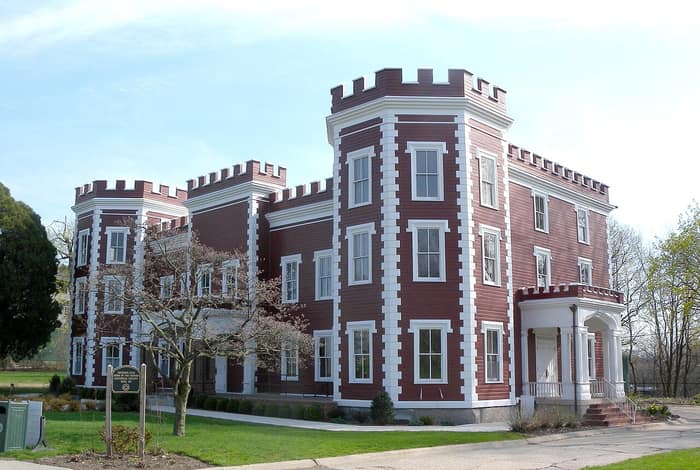
Fort Totten
Fort Totten · unfinished fort, neo-Gothic Castle and bay views
2 km away
Hart Island
Hart Island · New York City’s public cemetery off the Bronx
5.5 km away
Bartow-Pell Mansion
Bartow-Pell Mansion · a Greek Revival manor hidden in the Bronx woods
7.5 km away
Long Island Motor Parkway
Long Island Motor Parkway · the first car-only highway, now a Queens trail
8 km away