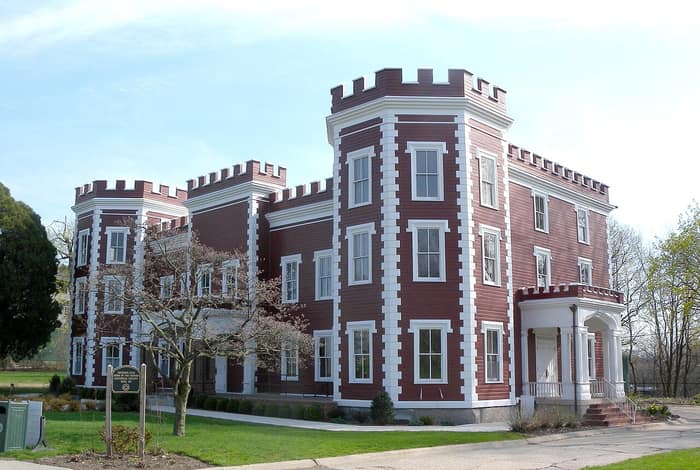
Fort Totten, the Castle and Civil War Fort of Queens
Fort Totten is a former Army fort at the head of Little Neck Bay in Bayside, Queens, where the East River widens into Long Island Sound. Begun in 1862, it was left unfinished, yet its layered history includes an engineer school, a Cold War air-defense headquarters and a neo-Gothic officers’ club nicknamed the Castle. Much of it is now a city park with a visitor center and water views, which makes it an easy off-the-beaten-path stop in northeastern Queens.
This Queens fort was designed by Robert E. Lee before the Civil War, never finished, and later became a mine-warfare school and a Cold War air-defense headquarters. Its “Castle” still stands.
The history of Fort Totten, from Civil War fort to city park
The U.S. government bought the land from the Willets family in 1857, and construction of the fort at Willets Point began in 1862. The first design was drawn up in 1857 by Robert E. Lee and was modified during construction by the Chief Engineer, Joseph G. Totten. Unusually, it was planned with four tiers of cannon facing the water, for a total of 68 guns, a feature shared in the United States only by Castle Williams on Governors Island, Fort Wadsworth on Staten Island and Fort Point in San Francisco. Its role was to defend the East River approach to New York Harbor together with Fort Schuyler, which faces it from Throggs Neck in the Bronx.
Work was abandoned after the war, since masonry forts were by then considered obsolete. Only one tier and part of a second tier of the two seaward walls were finished, and the three landward walls received little work. From 1861 to 1898 the area was known as Camp Morgan. In 1869 the Engineer School of Application was established here, and it remained until 1901. One of its first missions was to develop underwater minefields, which would stay an important element of coast defense through World War II. Its first commander, Major Henry Larcom Abbot, helped create them and also developed the “Abbot Quad” arrangement of mortars. In 1890 the school experimented with the Sims torpedo, an electric, self-propelled torpedo partly designed by Thomas Edison.
The fort was named Fort Totten in 1898 after the former Chief of Engineers. New gun batteries were built between 1897 and 1904 under the Endicott Program, and a mine casemate for a controlled minefield was added around 1900. The defenses of the East River were soon superseded by those farther east on Long Island Sound. Many guns were taken away in World War I for use as railway or field artillery, and by 1935 almost the whole fort, apart from its 3-inch guns, was disarmed. In December 1941 Fort Totten became the headquarters for the antiaircraft portion of the Eastern Defense Command, which organized antiaircraft defenses for the whole East Coast.
In 1954 the fort became part of the Nike air-defense program. No Nike missiles were based here, but it was the regional headquarters for the New York area, with offices and housing for personnel. By 1966 it was home to the headquarters of the 1st Region, Army Air Defense Command. The missiles of its battalion were placed at nearby Hart Island, and the radars at Fort Slocum on Davids Island. According to rumor, the Genovese family turncoat Joe Valachi was hidden in a safe house here in 1970.
In 1974, after defense cuts following the Vietnam War and the end of the Nike system, the fort closed as a Regular Army installation and an Army Reserve presence took over. Today the city owns the property. Much of the fort has become a public park run by the city’s Parks Department, with a visitor center and museum. The New York Police Department and the Fire Department use parts of it for training, and the area is a New York City Historic District.
Little-known facts about Fort Totten
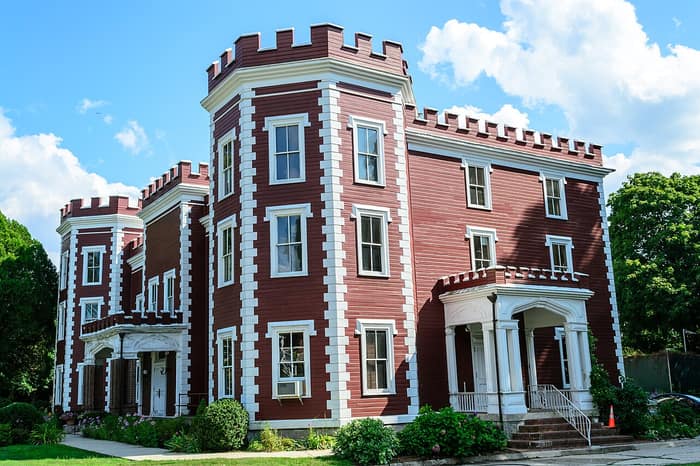
- The Fort Totten Officers’ Club, known as the Castle, was designed by Robert E. Lee in his pre-Civil War role as a military engineer, although some historians think a subordinate did the real design. It was not built until the 1870s.
- The Castle’s neo-Gothic design was a generic one approved by the Army for use at military installations, and identical buildings were built at other forts.
- The castle is the symbol of the Army Corps of Engineers. A local tradition says it came from this building, but the reverse is more likely: the engineer castle symbol dates from about 1840, and the club was built in the 1870s.
- In 1871 a tunnel was built to connect the upper 27-gun battery with the incomplete fort.
- The Engineer School experimented here in 1890 with the Sims torpedo, an electric, self-propelled torpedo partly designed by Thomas Edison.
- The Castle, now home to the Bayside Historical Society, has been on the National Register of Historic Places since 1986.
Fort Totten on screen
The fort’s drill grounds and old buildings have also appeared in popular culture. The source clearly says that one music video was filmed here.
- Run This Town (2009) – The music video for Jay-Z’s collaboration with Kanye West and Rihanna was filmed at Fort Totten on August 6, 2009.
Tours near Fort Totten
Experiences in the area that you can book online with Viator:

Visiting Fort Totten: what you can see
- Much of the fort is a public park, and the New York City Department of Parks & Recreation has offered tours. Parts are used by the Army Reserve, the NYPD and the FDNY, so not everything is open. Check the current access rules before you go.
- The refurbished Fort Totten Visitor Center houses a museum with exhibits on the history of the fort.
- The Officers’ Club, the Castle, is home to the Bayside Historical Society, which hosts events, historical exhibitions and cultural programs.
- In the winter months a large variety of migratory waterfowl can be seen in the surrounding waters of Little Bay, Long Island Sound and Little Neck Bay.
- Most of the other buildings are dilapidated and unused; admire them from the outside. The grounds also include a sports complex with an outdoor pool and playing fields.
Opening hours, access and conditions can change. Check before you go.
Map: where Fort Totten is
Photos of Fort Totten


Questions
Can you visit Fort Totten?
Largely yes. Much of the fort is a public park with a visitor center and tours run by the city’s Parks Department. Parts are used by the Army Reserve and city agencies, so check the current access rules.
Where is Fort Totten?
It is in Queens, in the Bayside area, at the head of Little Neck Bay, where the East River widens into Long Island Sound.
What is the Castle at Fort Totten?
It is the former Officers’ Club, a neo-Gothic building from the 1870s designed in the name of Robert E. Lee. It now houses the Bayside Historical Society.
Was Fort Totten ever finished?
No. Construction was abandoned after the Civil War, when masonry forts were considered obsolete. Only one tier and part of a second were completed on the two seaward walls.
Did Fort Totten have missiles?
No Nike missiles were based here, but it was the regional headquarters of the Nike air-defense system for the New York area from 1954. The missiles were placed on nearby Hart Island.
Was anything filmed at Fort Totten?
The music video for “Run This Town” by Jay-Z, Kanye West and Rihanna was filmed here on August 6, 2009.
Also nearby
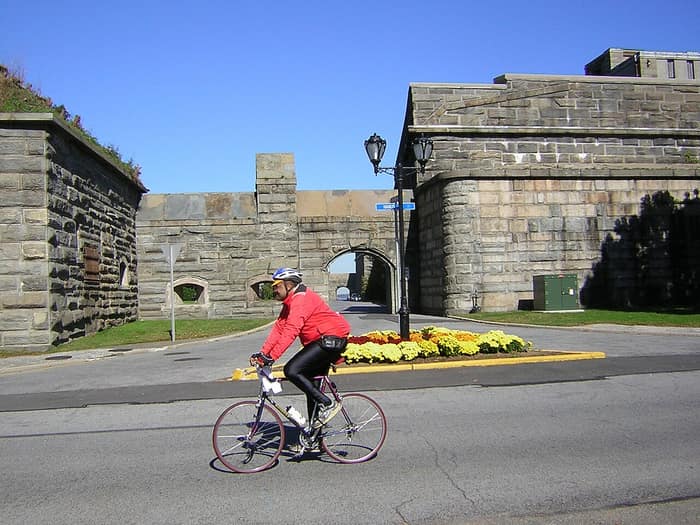
Fort Schuyler
Fort Schuyler · a brick coastal fort that became a college
2 km away
Long Island Motor Parkway
Long Island Motor Parkway · the first car-only highway, now a Queens trail
6.5 km away
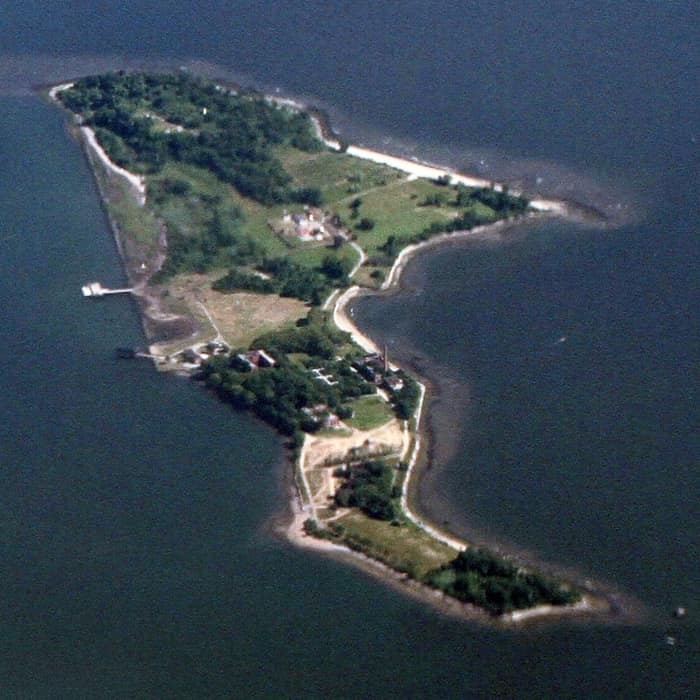
Hart Island
Hart Island · New York City’s public cemetery off the Bronx
7 km away
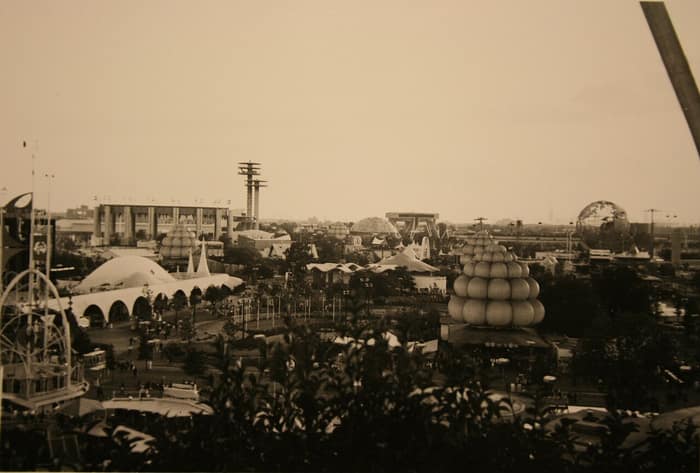
New York State Pavilion
New York State Pavilion · World’s Fair towers and Tent of Tomorrow
8 km away