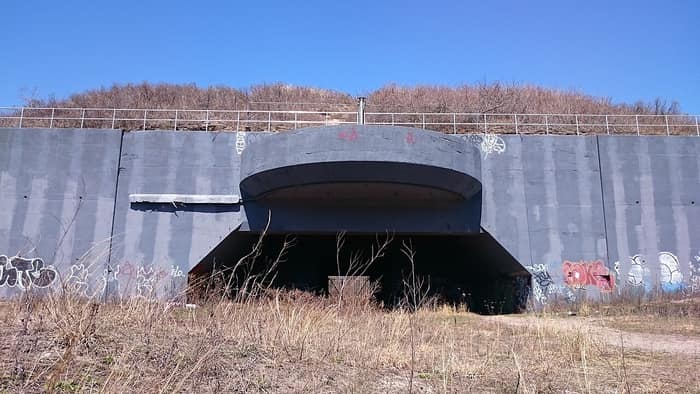
Fort Tilden, the Abandoned Coastal Fort of the Rockaways
Fort Tilden is a former Army coastal fort on the Rockaway Peninsula in Queens, now part of the Gateway National Recreation Area. Between Jacob Riis Park and Breezy Point, its beaches, dunes and maritime forest hide abandoned gun batteries and magazines left over from two world wars and the Cold War. It is one of the most atmospheric abandoned places in the five boroughs, and one of the few where you can walk to a viewing platform on an old battery.
Two of the most powerful guns in the American arsenal once pointed at the Atlantic from this Queens beach. Today graffiti-covered bunkers sit among dunes and nesting birds.
The history of Fort Tilden, from Camp Rockaway Beach to national park
The fort was set up as Camp Rockaway Beach shortly after the United States entered World War I in April 1917. Several temporary military installations had stood at or near the site since the War of 1812. It was named after Samuel J. Tilden, a one-term governor of New York and the Democratic candidate for president in 1876. The first unit here, a battery of the Coast Artillery Corps, had four 12-inch mortars. It was joined by two batteries of 6-inch guns, and in 1918–1919 two 3-inch antiaircraft guns were added. The post became part of the Harbor Defenses of Southern New York, together with Fort Hamilton in Brooklyn and Fort Wadsworth on Staten Island.
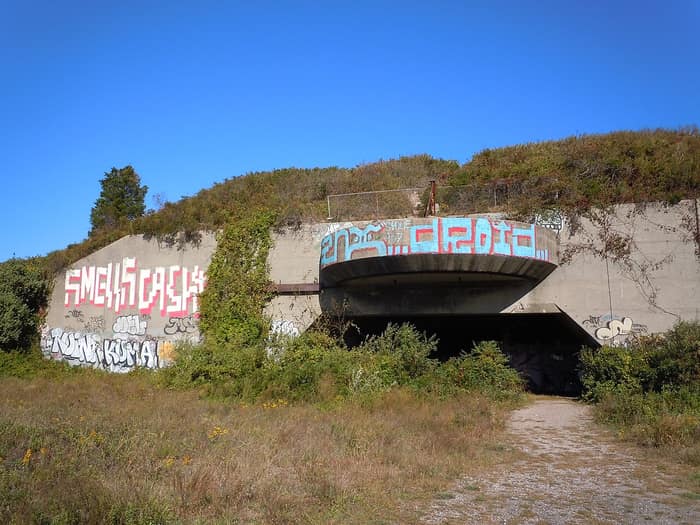
In March 1921 work began on Battery Harris, which made New York one of the first places in the country defended by 16-inch M1919 guns, then the most powerful weapon in the American arsenal. The battery became operational in December 1924. At first its two guns stood in the open, spaced 850 feet apart, with ammunition delivered on a railway system. In 1941–1942, as World War II loomed, a massive concrete casemate was built to enclose the guns, with magazines and the fire-control system inside, to protect them against air attack. Several smaller batteries followed, including Battery 220, an ammunition bunker for guns that were never delivered, and anti-motor-torpedo-boat batteries at Norton Point and Rockaway Point.
After the war the old gun defenses were judged obsolete, and in 1948 all the guns at Fort Tilden were removed for scrap. As the fear of Soviet air attack grew, the fort was renamed Site NY-43 in 1950 and received a battalion of 90 mm guns, with more 90 mm and 120 mm batteries in the early 1950s. In 1955 antiaircraft guns gave way to a Nike Ajax missile site, known as NY-49, which was converted in 1958 to the nuclear-capable Nike Hercules. The Nike Hercules system was deactivated across the country in 1972.
From the late 1960s, Fort Tilden was an Army Reserve post, home to units such as a Signal Corps detachment and the 411th Engineer Brigade, which was headquartered here from 1968 to 1978. It remained an Army installation until the late 1970s, when it was decommissioned and turned over to the National Park Service as part of the Gateway National Recreation Area. A number of its structures, including the two concrete casemates of Battery Harris for the 16-inch guns, form a historic district listed on the National Register of Historic Places.
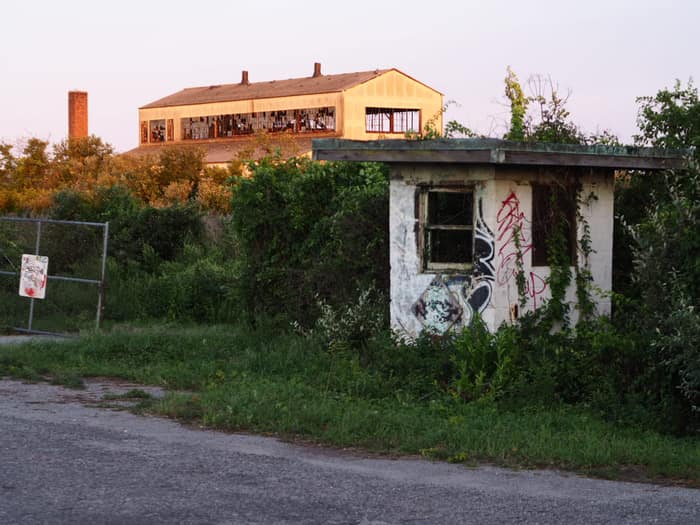
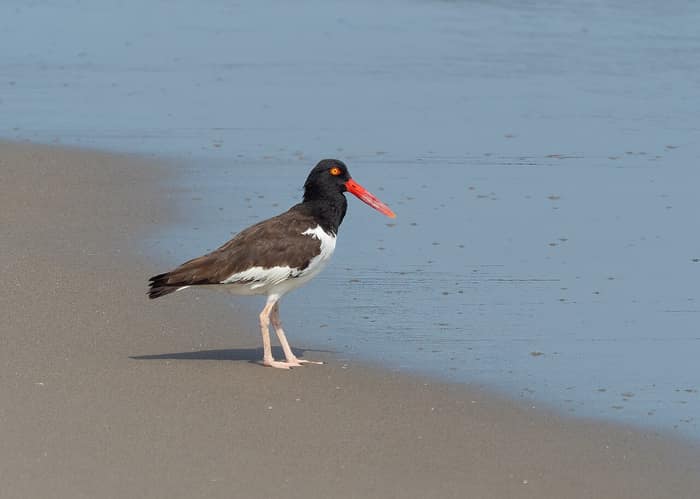
Since then the fort has largely returned to nature. Most of the old installations are abandoned and covered in graffiti, a few buildings have been renovated for local arts groups, and some of the open areas are used as sports grounds. One hangar stood abandoned until it was demolished in 2024. The wild stretches of the park are popular with bird-watchers, and the beach is an important nesting area for threatened species.
Little-known facts about Fort Tilden
- Fort Tilden is named for Samuel J. Tilden, a New York governor who ran for president in 1876.
- Battery Harris carried two of the first 16-inch guns deployed in the country, in 1924 mounted in the open and spaced 850 feet apart, about twice the usual distance for earlier batteries of 12-inch guns.
- In its first form Battery Harris was supplied with ammunition by railway; the tracks were part of the original design.
- Battery 220 was completed as an ammunition bunker for two 6-inch guns that were never delivered.
- In 1948 all the guns at the fort were removed for scrap, but the fort later got a second military life with antiaircraft guns and then Nike missiles in the 1950s.
- Atop the old Battery Harris East there is a viewing platform with 360-degree views over the city, New York Harbor and the Atlantic Ocean.
Tours near Fort Tilden
Experiences in the area that you can book online with Viator:


Visiting Fort Tilden: what you can see and what is closed
- Fort Tilden belongs to the Gateway National Recreation Area and is run by the National Park Service. It lies between Jacob Riis Park to the east and Breezy Point to the west, on the Rockaway Peninsula.
- The historic gun batteries and other fortifications are closed to the public, and some of the structures are described as very hazardous. They are best seen from the outside; do not enter them.
- A viewing platform on top of one of the old batteries, Battery Harris East, offers 360-degree views of the city, New York Harbor and the Atlantic Ocean.
- The beach and the dunes are an important nesting area for the threatened Piping Plover, as well as for common terns and least terns. Stay out of areas marked with string fences and signs, because disturbing nesting birds can bring fines.
- Check the current opening hours and access rules, including seasonal beach closures, before you go.
Opening hours, access and conditions can change. Check before you go.
Map: where Fort Tilden is
Photos of Fort Tilden


Questions
Can you visit Fort Tilden?
Yes, the grounds, beach and trails are part of a National Park Service site. The old gun batteries and fortifications, however, are closed to the public and some are hazardous. Check the current rules before you go.
Where is Fort Tilden?
It is in Queens, on the Rockaway Peninsula, between Jacob Riis Park to the east and Breezy Point to the west.
Is Fort Tilden abandoned?
Most of the old military installations are abandoned and covered in graffiti, but the area is a managed park. A few buildings have been renovated for local arts groups, and some areas are used as sports grounds.
What was Battery Harris?
It was a coastal artillery battery with two 16-inch guns, operational in December 1924 and enclosed in a concrete casemate in 1941–1942. It is one of the most important structures of the Fort Tilden historic district.
Was Fort Tilden a missile site?
Yes. In 1955 a Nike Ajax missile site, called NY-49, replaced the antiaircraft guns, and in 1958 it was converted to the nuclear-capable Nike Hercules. The system was deactivated across the country in 1972.
Are there nesting birds at Fort Tilden?
Yes. The beach is an important nesting area for the threatened Piping Plover and for common terns and least terns. Keep out of the fenced and signed areas.
Also nearby
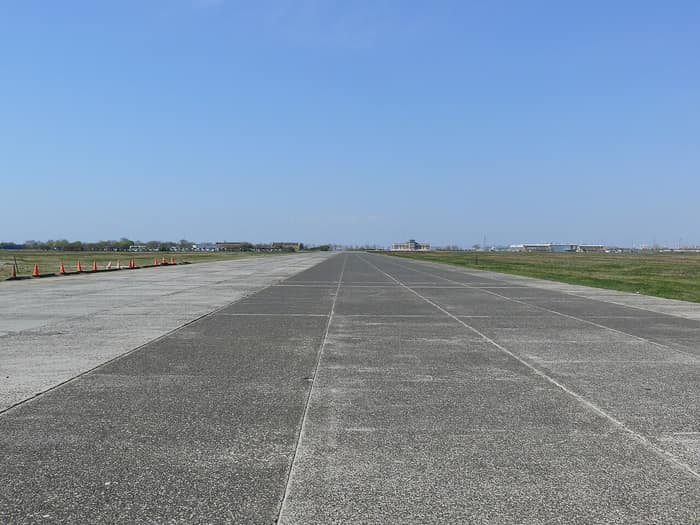
Floyd Bennett Field
Floyd Bennett Field · Brooklyn’s historic airfield on Jamaica Bay
3.5 km away
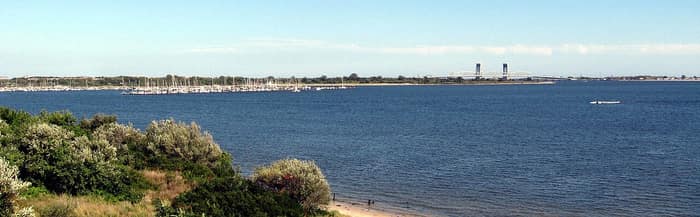
Barren Island
Barren Island · former island of fish oil, garbage and Dead Horse Bay
3.5 km away

HMS Liverpool
HMS Liverpool · a Royal Navy frigate wrecked in Jamaica Bay
5 km away
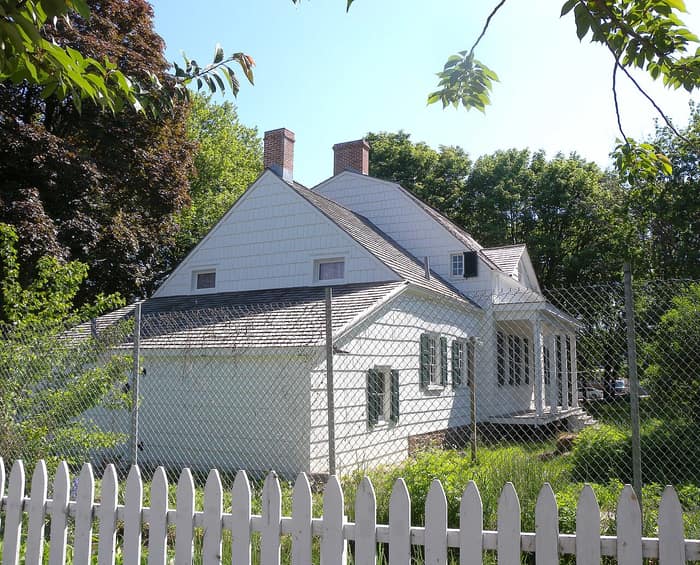
Hendrick I. Lott House
Hendrick I. Lott House · a Dutch colonial farmhouse in Marine Park
6.5 km away