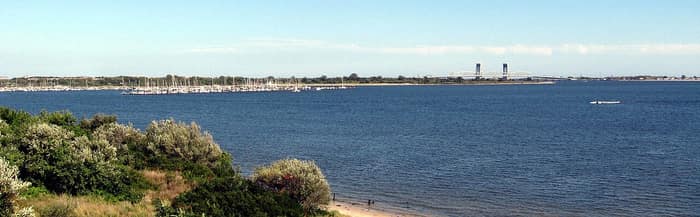
Barren Island, the Vanished Industrial Island of Brooklyn
Barren Island is a peninsula and former island on the southeast shore of Brooklyn, on Jamaica Bay. From the 1850s to the 1930s it was an industrial outpost of fish-oil plants, horse-rendering factories and a garbage incinerator, with its own community of laborers. Landfill later joined it to the mainland, and Floyd Bennett Field now covers it. Its only memory is the name Dead Horse Bay.
Brooklyn once had an island where up to 20,000 dead horses a year were turned into glue and fertilizer, and where 1,500 people lived. Today almost nothing of it is left to see.
The history of Barren Island, from Canarsee land to Floyd Bennett Field
Barren Island was originally one of the barrier islands that protected Jamaica Bay. It was the homeland of the Canarsee, a Lenape group, who likely fished here. Their name for the archipelago is transcribed as “Equandito”, meaning “Broken Lands”. When Dutch settlers arrived, the island was called Beeren Eylandt, “Bears’ Island”; the English word “barren” is a corruption of that Dutch name and has nothing to do with the landscape. In 1664 the island was sold to John Tilton Jr. and Samuel Spicer, and it remained sparsely used for farming and grazing for generations. Around 1800 a man named Nicholas Dooley opened an inn for fishermen and hunters on its east side.
Its isolation turned out to be its main feature. From 1859 to 1934 about 26 industries opened plants here, mostly on the eastern and southern coasts. The first were fish-rendering plants, which turned menhaden into oil, and fertilizer plants that processed animal remains. Horse carcasses were turned into glue, fertilizer, buttons and materials used in gold and sugar refining. At their peak the plants processed almost 20,000 horses a year, which is where Dead Horse Bay got its nickname, because the waste was dumped into the water. By 1883 the oil factories employed 350 men. In 1891 vacationers in the Rockaways complained about the smell, and the governor declared four companies public nuisances.
In 1896 the city gave a contract worth one million dollars to the New York Sanitary Utilization Company, which burned garbage from hotels across the city and turned it into fertilizer, grease and soap. Barren Island became a dump for waste and carcasses from Brooklyn, Manhattan and the Bronx. A fire in 1906 burned down 16 buildings. Around the plants grew a community that peaked at about 1,500 people in the 1910s, mostly African American laborers and immigrants from Italy, Ireland and Poland, with a school, a church, a post office, a police precinct, inns, stores, saloons and three ferry routes. There was no running water or sewage treatment. Workers formed a hierarchy of scavengers, and children were sent home early from school to help their parents pick through the trash.
The industries faded after 1916, when the city planned a new landfill on Staten Island, and the city started dumping garbage into the ocean in 1919. The Sanitary Utilization Company closed in 1921, the same year the last horse plant shut. In 1925 Flatbush Avenue was extended and a municipal ferry to the Rockaways opened. In the final years the school’s principal, Jane F. Shaw, nicknamed the “Angel of Barren Island”, won the island a new name, South Flatlands, and kept the school open until the evictions of 1936. Landfill joined the island to the mainland in the 1920s for Floyd Bennett Field, which opened in 1931 and was taken over by the Navy in 1941. The Navy then burned and cleared all remaining structures. Floyd Bennett Field became part of the Gateway National Recreation Area in 1972.
Little-known facts about Barren Island
- The name has nothing to do with barren land: it is an English version of the Dutch Beeren Eylandt, “Bears’ Island”.
- At its peak the horse-rendering industry processed almost 20,000 carcasses a year. By 1918 the island processed 600 a year, a number it once handled in 12 days.
- The National Park Service states that the pirate Charles Gibbs buried Mexican silver here around 1830; some of it was reportedly recovered, but not all.
- The teacher Jane F. Shaw, known as the “Angel of Barren Island”, persuaded the Census Bureau to count the residents that the 1930 census had missed.
- The Navy’s 1940s expansion of the airfield removed every trace of the old community and its original landscape.
- Carol Zoref’s novel Barren Island reached the 2017 National Book Award longlist, and Miriam Sicherman’s 2019 book tells the island’s forgotten history.
Tours near Barren Island
Experiences in the area that you can book online with Viator:


Visiting the site of Barren Island
- No building or street of the old community survives. The site lies within Floyd Bennett Field, part of the Gateway National Recreation Area managed by the National Park Service.
- The shore of Dead Horse Bay, on the former island’s western edge, became known for old bottles and trash from the 1950s landfill that washed out of the shore. In August 2020 the Park Service announced the bay would be closed indefinitely because of radiological contamination, although the risk was described as low. Check the current status before you plan a visit.
- Floyd Bennett Field is the nearest accessible point of interest and is only a short distance away; its own rules and open areas should be checked with the National Park Service.
- Other places in the guide nearby include HMS Liverpool, Fort Tilden and the Hendrick I. Lott House, each within a few kilometers.
- This is a place for imagination rather than sightseeing: the story of Barren Island is told by books, old maps and the shoreline itself.
Opening hours, access and conditions can change. Check before you go.
Map: where Barren Island is
Where to stay near Barren Island
Hotels close by, with ratings and current availability.
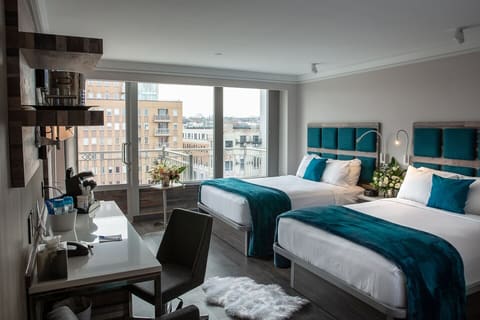
Hotel Le Bleu
Check availability ›
EVEN Hotel Brooklyn by IHG
Check availability ›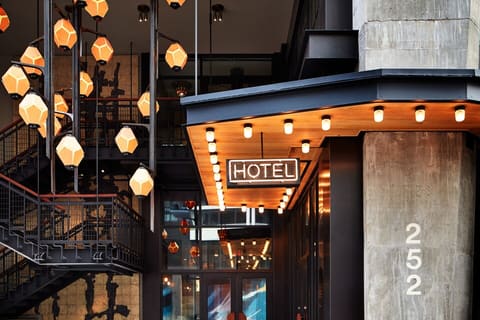
Ace Hotel Brooklyn
Check availability ›Hotel photos: Expedia Group. Ratings are shown as published there. Availability and conditions change; check the booking page. Affiliate links: we may earn a commission at no extra cost to you. All hotels by borough
Questions
Where was Barren Island?
It was on the southeast shore of Brooklyn, on Jamaica Bay. Landfill joined it to the mainland in the 1920s, and its site is now occupied by Floyd Bennett Field.
Why is it called Dead Horse Bay?
Because horse-rendering plants on Barren Island processed almost 20,000 horses a year at their peak and dumped the waste into the bay on the island’s western shore.
Can you visit Barren Island today?
Not as an island, since it no longer exists. The area is part of Gateway National Recreation Area, and access to the Dead Horse Bay shore was closed indefinitely in 2020, so check the current rules.
Did people live on Barren Island?
Yes. At its peak in the 1910s about 1,500 people lived there, with a school, a church and a post office. The last residents were moved out in the early 1940s.
What does the name Barren Island mean?
It comes from the Dutch Beeren Eylandt, “Bears’ Island”. The English word “barren” is a corruption and does not describe the land.
What happened to the community on Barren Island?
Industry faded after the 1910s, landfill connected the island to the mainland for an airfield, and the last residents were evicted. The Navy cleared all remaining structures in the 1940s.
Also nearby
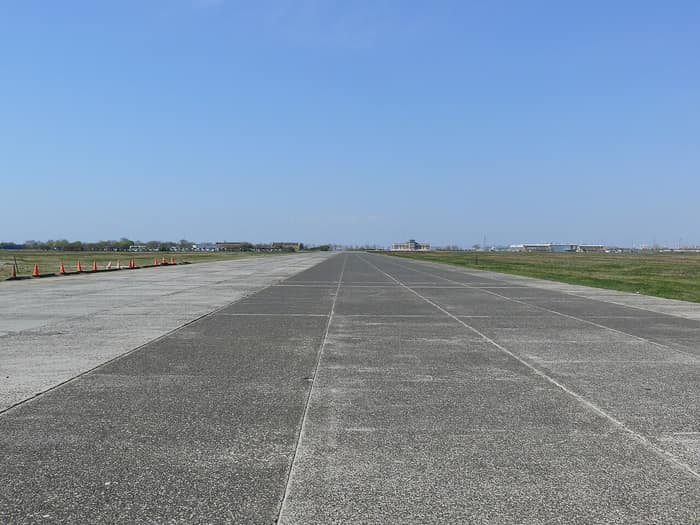
Floyd Bennett Field
Floyd Bennett Field · Brooklyn’s historic airfield on Jamaica Bay
300 m away

HMS Liverpool
HMS Liverpool · a Royal Navy frigate wrecked in Jamaica Bay
3.5 km away
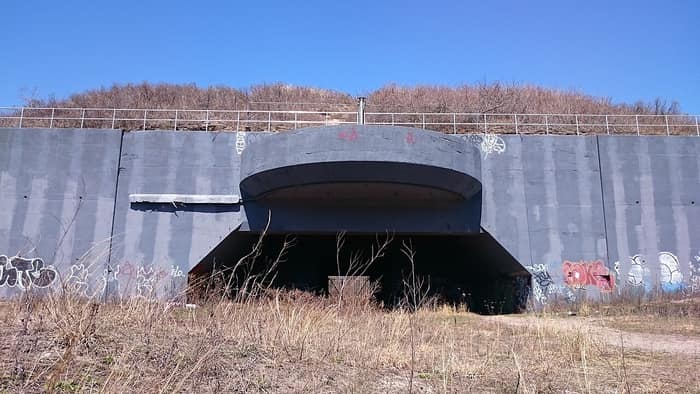
Fort Tilden
Fort Tilden · graffiti-covered batteries between dunes and sea
3.5 km away
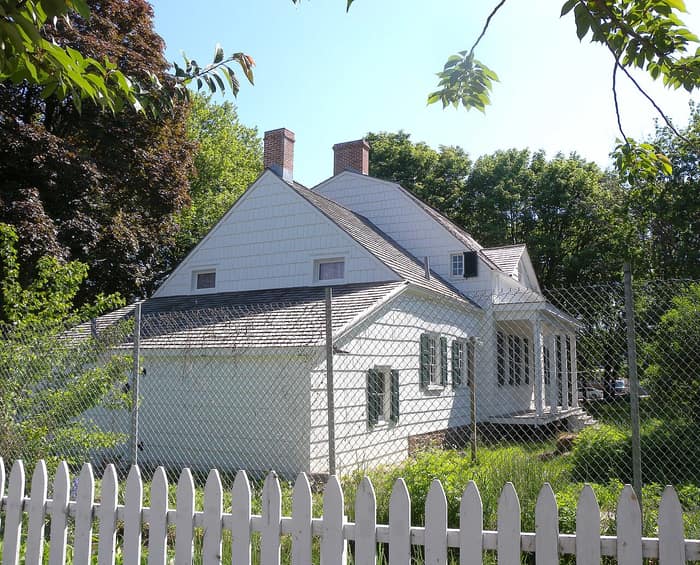
Hendrick I. Lott House
Hendrick I. Lott House · a Dutch colonial farmhouse in Marine Park
4 km away