
Pomander Walk, the Hidden Tudor Lane of the Upper West Side
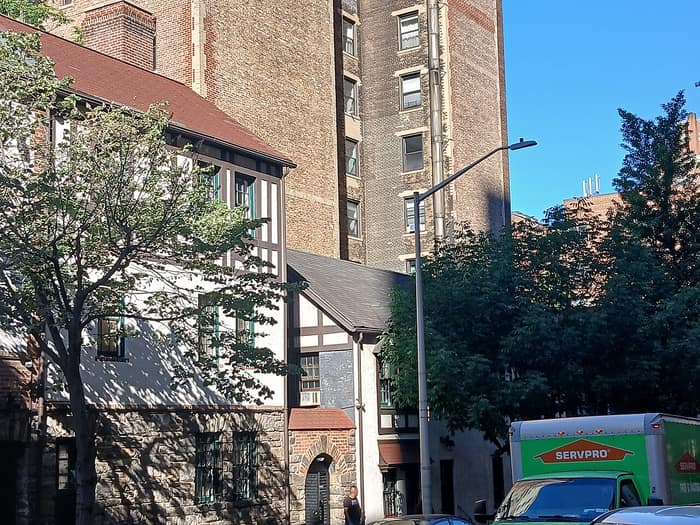
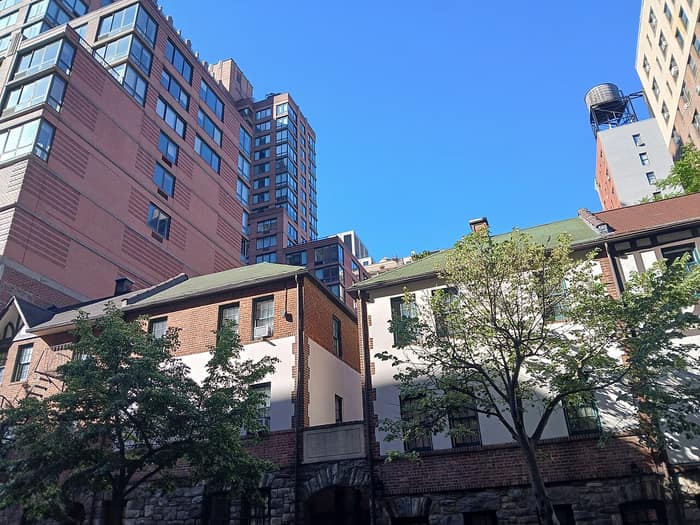
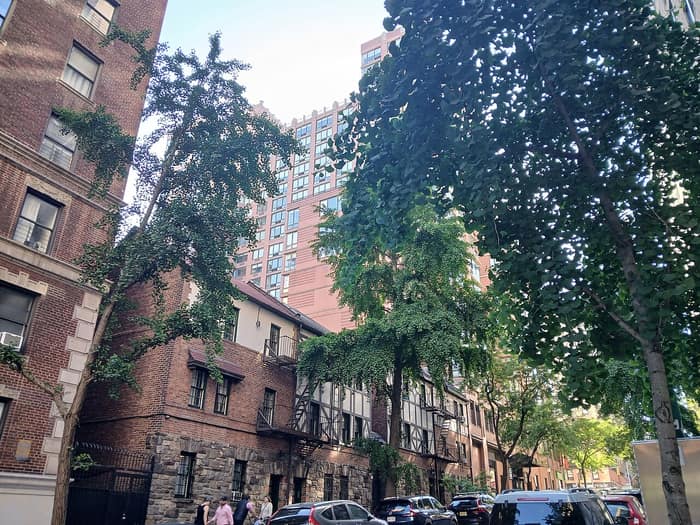
Pomander Walk is a cooperative apartment complex of 27 small buildings in the Upper West Side of Manhattan, between Broadway and West End Avenue. Built in 1921, its Tudor-style houses are out of scale with the tall buildings around them, which is why it is one of the best hidden gems in NYC. It is private, so it is enjoyed mostly as a curiosity from the outside.
A mid-block lane of Tudor-style cottages, named for a London stage comedy, sits between towering apartment buildings. It was meant as a stopgap until a hotel could be built, and the hotel never was.
The history of Pomander Walk on the Upper West Side
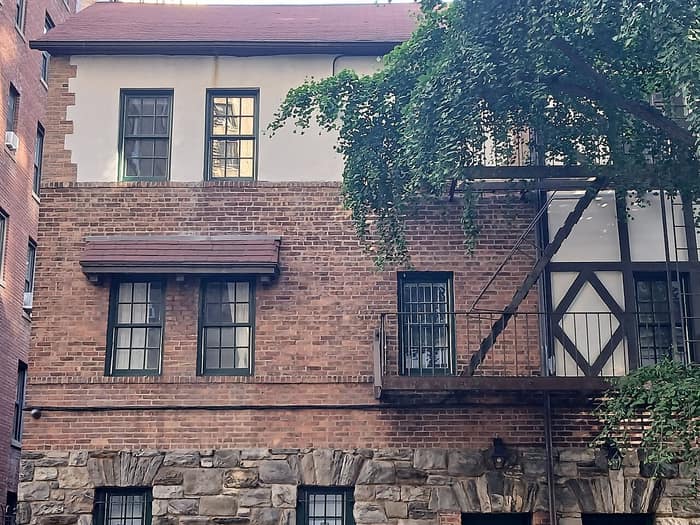
The complex takes its name from Pomander Walk, a romantic comedy by Louis N. Parker that opened in New York in 1910. The play is set on an imaginary byway near London, described as a retired crescent of five very small, old-fashioned houses near Chiswick on the river bank. The place as built has only a tenuous resemblance to that setting. It is often called a mews, but it has no history as stables. Its Tudor-style look, popular in America in the years after World War I, makes it an example of the storybook houses that were an architectural trend of the 1920s in England and the United States.
Pomander Walk was built in 1921 by the nightclub impresario Thomas J. Healy, who planned a major hotel on the site. According to the historian Christopher Gray, Healy could not get financing for the hotel, so he put up the houses to provide cash flow while he waited to tear them down and build the hotel. The design was by the New York architecture firm King and Campbell. Healy died in 1927, and Pomander Walk remained.
The complex is made up of 27 buildings. Four face West 94th Street and another seven face West 95th Street, one with a return facade on West End Avenue. The “Walk” itself runs through the middle of the block, two rows of eight buildings facing each other across a narrow courtyard, with a locked gate at each end. Each building originally had one apartment on each floor, and in recent years some have been reconfigured as single-family homes.
By the 1970s the complex was rundown and at risk of demolition. An earlier application for city landmark status had been rejected in 1966, but tenants banded together to block redevelopment, and in the early 1980s it was protected with city landmark, state landmark and National Register of Historic Places designations. Sources differ slightly on the exact year of the national listing. In 2009 the owners completed a four-year facade renovation that restored architectural details lost for decades, and in 2008 Landmark West! gave the complex its Building Rehabilitation Award. Past residents include the actors Nancy Carroll, Paulette Goddard and Rosalind Russell.
Little-known facts about Pomander Walk
- The name comes from a 1910 comedy by Louis N. Parker, set on an imaginary lane near London.
- Pomander Walk was probably meant as a temporary project: the builder wanted a hotel on the site and put up the houses while he waited for financing.
- Although it is often called a mews, it was never a stable lane.
- The author Darryl Pinckney, a former resident, described it as an insertion of incredible whimsy into the Upper West Side.
- The complex has been protected as a city landmark, a state landmark and a National Register historic district since the early 1980s.
- The 2022 novel This Time Tomorrow by Emma Straub has a protagonist who grew up living on Pomander Walk.
Tours near Pomander Walk
Experiences in the area that you can book online with Viator:


Visiting Pomander Walk: what you can and cannot do
- Pomander Walk is private housing. It is not open to the public, and visits are by invitation only.
- The courtyard has a locked gate at each end, so do not try to enter. Respect the privacy of the residents.
- Four of the buildings face West 94th Street and seven face West 95th Street, so part of the complex can be seen from the sidewalks of those streets.
- The complex is a good detour on a walk through the Upper West Side, a neighborhood of much taller buildings that makes the small scale of the houses stand out.
- If you want to know more, local walking tours of the Upper West Side exist, but check the current rules and whether they include the lane.
Opening hours, access and conditions can change. Check before you go.
Map: where Pomander Walk is
Photos of Pomander Walk

Questions
Can you visit Pomander Walk?
Not freely. It is a private cooperative and visits are by invitation only. Parts of the complex can be seen from the streets on either side.
Where is Pomander Walk?
On the Upper West Side of Manhattan, between West 94th and West 95th streets, in the middle of the block between Broadway and West End Avenue.
Why is it called Pomander Walk?
It is named for a 1910 romantic comedy by Louis N. Parker that opened in New York.
When was Pomander Walk built?
In 1921, by the nightclub impresario Thomas J. Healy, to a design by the firm King and Campbell.
Is Pomander Walk a mews?
It is often called one, but it has no history as stables. It is better described as a group of storybook houses.
Is Pomander Walk a landmark?
Yes. It was saved from redevelopment and given city, state and National Register designations in the early 1980s.
Also nearby
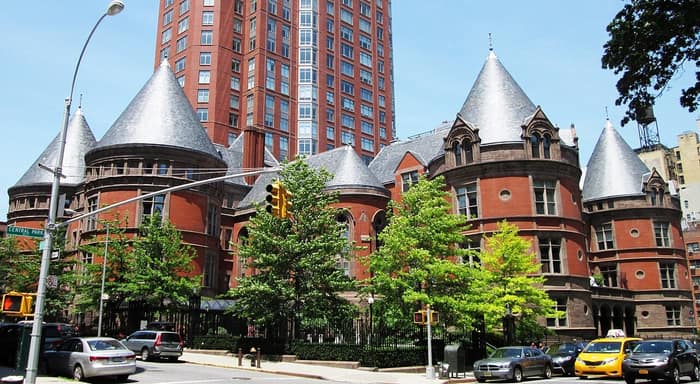
New York Cancer Hospital
New York Cancer Hospital · a French château built as a hospital
1 km away
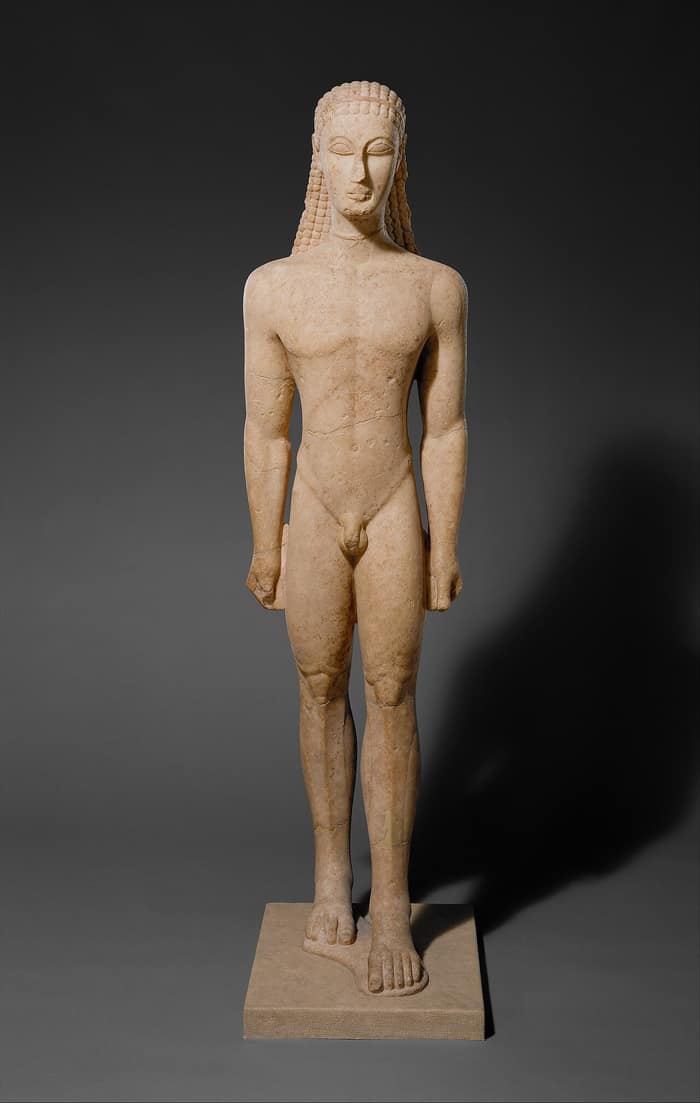
New York Kouros
New York Kouros · an Athenian grave statue at the Met
2 km away

Minton’s Playhouse
Minton’s Playhouse · the Harlem club where bebop took shape
2 km away
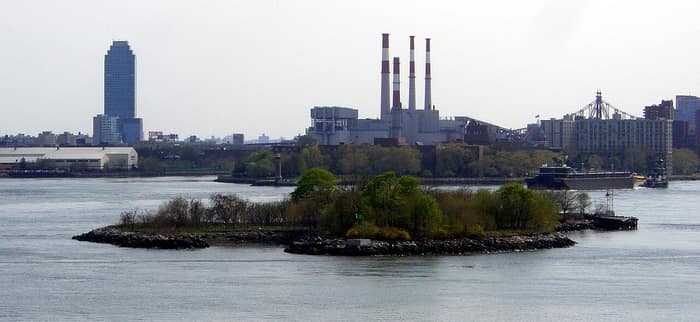
Mill Rock
Mill Rock · a tiny island joined by a huge blast
3.5 km away