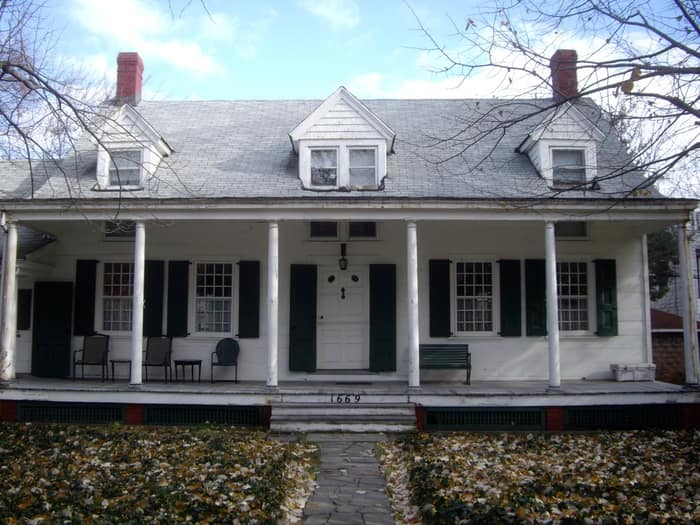
Wyckoff-Bennett Homestead, a Brooklyn Farmhouse from the Revolution
The Wyckoff-Bennett Homestead stands in Flatlands, Brooklyn, along Kings Highway. Believed to date from about 1766, this Dutch Colonial farmhouse is a National Historic Landmark and one of the last Dutch farmhouses in New York City that was long kept in private hands. It is a hidden gem for anyone exploring off the beaten path in Brooklyn, but it is a private property, so it is best admired from the street.
Two Hessian soldiers quartered in this Brooklyn farmhouse in 1776 scratched their names and units into the windowpanes. Nearly 250 years later, their signatures are still part of the story.
The history of the Wyckoff-Bennett Homestead, from farm to landmark
The house was built in about 1766 by Hendrick H. Wyckoff, a descendant of the Dutch settlers who had farmed Kings County since the 17th century. He chose a site along Kings Highway, then the main east-west road of the county. At the time Kings County, the area that is now the borough of Brooklyn, was still farm country with fewer than 4,000 inhabitants, according to the plaque outside the house. One third of them were enslaved people who worked on land owned by families of Dutch descent.
A few years later the Revolutionary War reached these fields. After the British invasion of 1776, Hessian soldiers, German troops who fought for the British, were quartered in the house. Several of them etched their names and ranks into windowpanes, among them Captain Toepfer of the Ditfourth regiment and Lieutenant M. Bach of the Hessen-Hanau Artillerie. The plaque notes that when the Battle of Brooklyn began on August 27, 1776, these men may well have taken part in the attack that drove American defenders from the pass in what is now Prospect Park and nearly destroyed the army of George Washington.
The Wyckoff family owned and lived in the house until 1835, when Cornelius W. Bennett bought it together with a farm of about 100 acres. Four generations of the Bennett family lived here, until Gertrude Ryder Bennett Williams died in 1982. In 1975 she had tried to give the property to the National Trust for Historic Preservation, but the transfer was never completed. The house was declared a National Historic Landmark in 1976 and is part of the New York State Revolutionary War Heritage Trail.
After 1982 the house passed to a couple who also hoped to see it preserved. An agreement with the city was reached in 1999, and the land was even re-mapped as parkland, but after years of public meetings and revisions the deal never came to fruition. In the early 2020s the heirs sold the property, and according to the Wikipedia article it was sold again in December 2024, this time to a Chabad congregation. Sources differ on some details of these recent sales, so the current plans for the house should be checked locally.
Little-known facts about the Wyckoff-Bennett Homestead
- Window glass here carries the scratched names of two Hessian officers, Captain Toepfer and Lieutenant M. Bach, left during the British occupation of Kings County in 1776.
- The plaque points out that the Battle of Brooklyn took place when Kings County was still mostly farm country, with fewer than 4,000 inhabitants.
- The Bennett family owned the house from 1835 until 1982, four generations living under the same roof.
- The property once belonged to a farm of about 100 acres, a size that is hard to picture in today’s dense neighborhood.
- It is described as one of the last privately owned Dutch Colonial farmhouses in New York City, which is why a deal to turn it into parkland drew so much attention.
- It is part of the New York State Revolutionary War Heritage Trail and is listed as a National Historic Landmark.
Tours near Wyckoff-Bennett Homestead
Experiences in the area that you can book online with Viator:


Visiting the Wyckoff-Bennett Homestead in Flatlands
- The house is private property and is not run as a museum. Access to the grounds and the interior is restricted or limited; check the current rules before you go.
- You can see the house from the public street along Kings Highway, where a plaque outside explains its history and the Hessian soldiers.
- Please respect the property and do not enter without permission. The window glass with the soldiers’ names is not something visitors should expect to see up close.
- For a fuller picture of Brooklyn’s Dutch past, the Wyckoff House in East Flatbush, a museum, is also listed on this site.
- The surrounding area of Flatlands is residential, so combine the visit with other nearby historic sights in southern Brooklyn.
Opening hours, access and conditions can change. Check before you go.
Map: where Wyckoff-Bennett Homestead is
Photos of Wyckoff-Bennett Homestead


Questions
What is the Wyckoff-Bennett Homestead?
It is a Dutch Colonial farmhouse in Flatlands, Brooklyn, believed to have been built in about 1766 and declared a National Historic Landmark in 1976.
Can you visit the Wyckoff-Bennett Homestead?
It is private property and not a museum. Access is restricted or limited, so view it from the street and check the current rules before you go.
Why is the Wyckoff-Bennett Homestead famous?
Hessian soldiers quartered in the house in 1776 scratched their names and units into windowpanes, and it is one of the last Dutch Colonial farmhouses in New York City that stayed in private hands.
Who built the Wyckoff-Bennett Homestead?
Hendrick H. Wyckoff built it in about 1766. The Wyckoff family owned it until 1835, when Cornelius W. Bennett bought it.
What happened at the Wyckoff-Bennett Homestead in the Revolutionary War?
After the British invasion of 1776, Hessian soldiers were quartered here. They may have taken part in the Battle of Brooklyn that began on August 27, 1776.
How do I get to the Wyckoff-Bennett Homestead?
It is in Flatlands, Brooklyn, along Kings Highway. Check current transit options and access rules before you go.
Also nearby
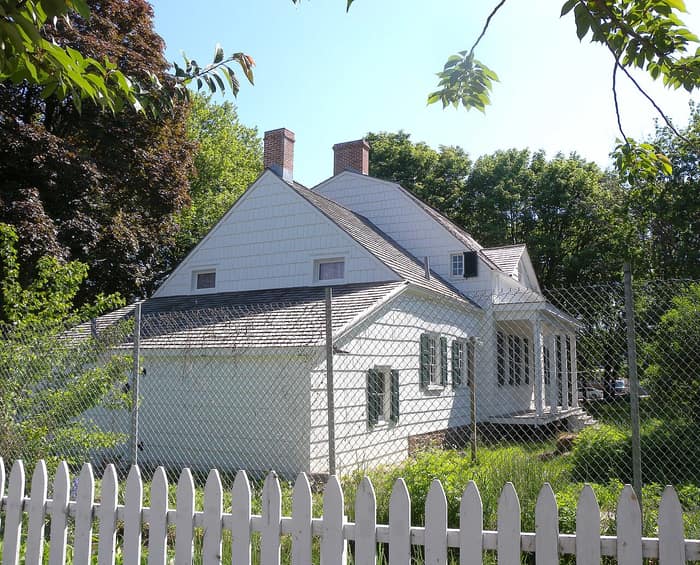
Hendrick I. Lott House
Hendrick I. Lott House · a Dutch colonial farmhouse in Marine Park
1.5 km away
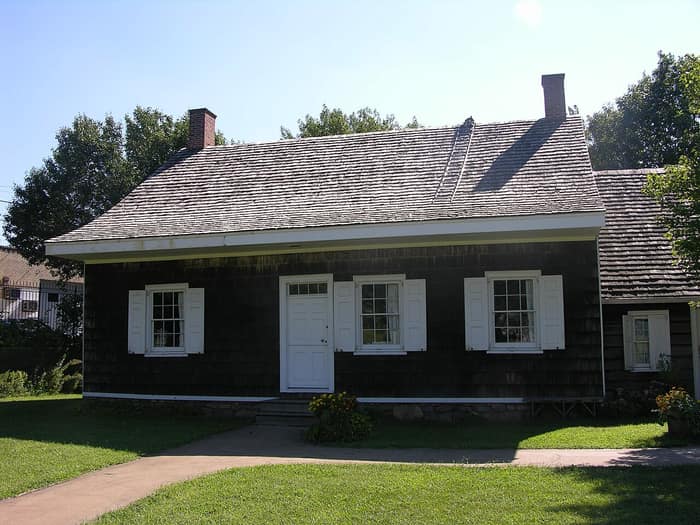
Wyckoff House
Wyckoff House · Dutch frame house in East Flatbush
4.5 km away

Parachute Jump
Parachute Jump · retired 1939 World’s Fair ride at Coney Island
5 km away
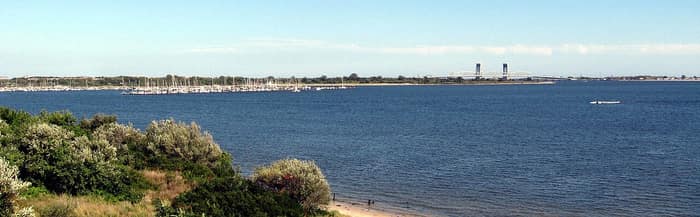
Barren Island
Barren Island · former island of fish oil, garbage and Dead Horse Bay
5.5 km away